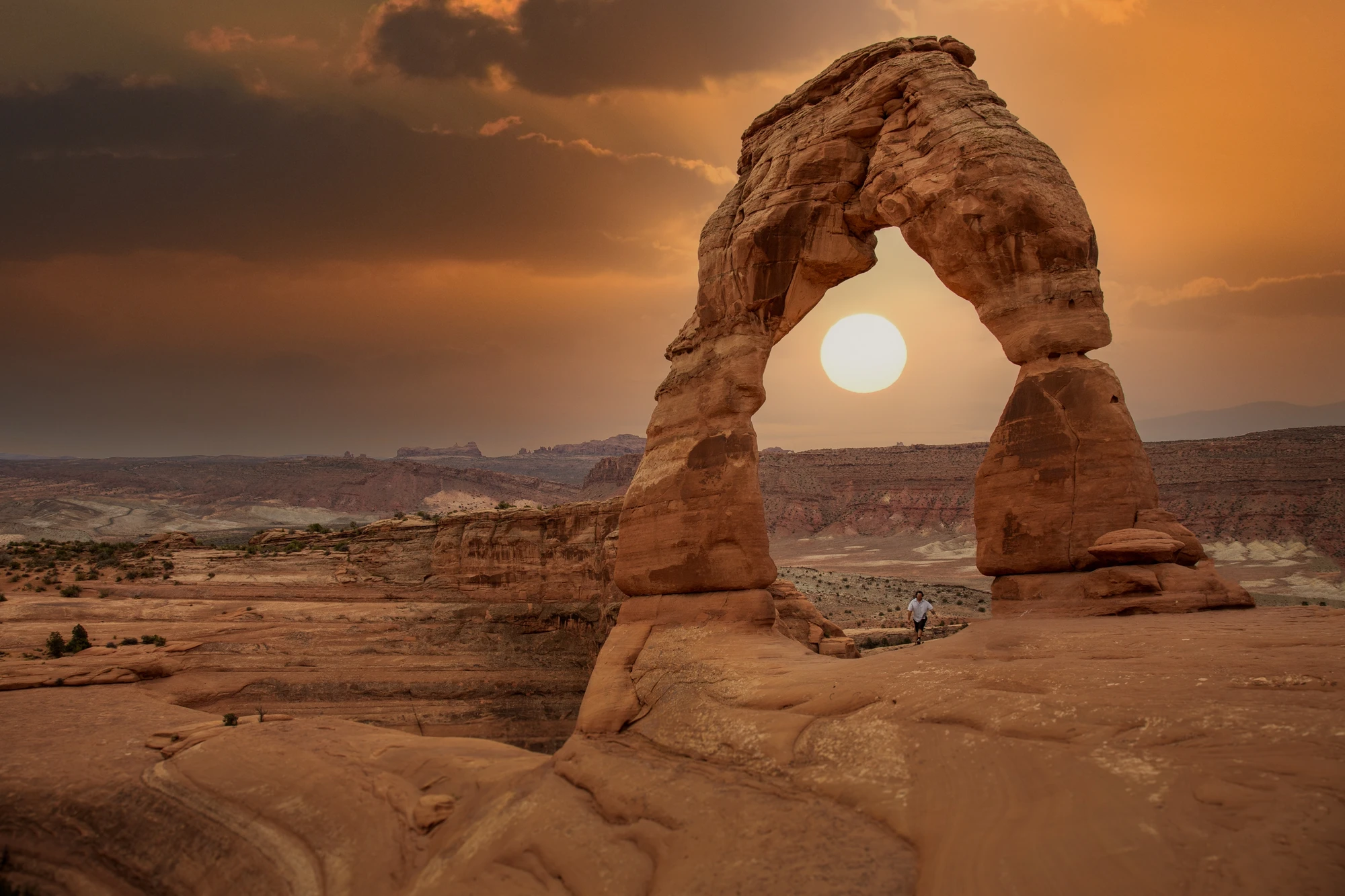
Walking Into the Frame: Experiencing Delicate Arch at Arches National Park

Walking Into the Frame: Experiencing Delicate Arch at Arches National Park

A classic desert day-hike where light, stone and timing make all the difference.

Continue Reading

You arrive at the trailhead when the world is still cool and the parking lot is half-full—an uneasy truce between locals who rise early and tourists who learned too late that sunrise is the only time to beat the crowd. The trail begins with a wash of slickrock that seems to lean away from your boots; it’s subtle at first, as if the rock is testing your attention. A quarter-mile in you pass Wolfe Ranch, an old homestead with a wooden corral and a stack of story-weathered timbers, then the desert opens into a wide sweep of rounded fins and rubbed sandstone. The horizon is a bruise of purple and orange. You feel a small but real pull: ahead, a lone arch will frame the sky.

Delicate Arch is both a geological wonder and an American cultural shorthand—its silhouette stamped on Utah license plates, postcards, and the imaginations of anyone who’s seen a photograph at sunset. But the arch is not a postcard; it's a place you have to walk to. The 3.0-mile round-trip trail gains only about 480 feet, but numbers lie about the desert. Short sections of steep, exposed slickrock and shallow steps demand scrubbed focus. The path’s cadence changes from soft sand to polished stone to a final climb across a tilted slab. The land doesn’t rush; it insists you match its pace.

Geology explains the method behind the majesty. The Entrada Sandstone that creates Delicate Arch was deposited as windblown sand dunes in the Jurassic, later cemented and tilted by tectonic forces. Erosion—chiefly water, ice, and wind—picks at seams and weak spots, eventually freeing arches and windows. Across the park, more than 2,000 natural arches mark the handiwork of time and gravity; Delicate stands out because it seems improbably balanced and theatrically placed on a freestanding fin.

Human history here predates those modern license plates by millennia. Ute and Paiute ancestral lands encompass the park; petroglyphs and artifacts are reminders that this landscape has hosted many stories. The pioneer legacy lingers at Wolfe Ranch, whose modest cabin and fruit trees hint at a tough, quiet life in a raw climate. Today, Moab services the park’s visitors—outfitters, guides, and a strong outdoor-culture economy that makes the desert feel both visited and lived-in.

There’s a rhythm to doing Delicate Arch well. Early morning light is soft and empty; late afternoon brings dramatic side-lighting and crowds. Sunset is cinematic: the arch turns molten, and cameras multiply, but you also get the highest concentration of people and the deepest colors. If you want solitude and light, plan for the shoulder hours—the hour after sunrise or the first hour of evening, outside the heaviest tourist windows.

Practicalities matter. The walk is moderate: expect 2–3 hours round-trip with stops. Trail conditions vary by season; slickrock heats quickly in summer, and winter ice can make the final approach treacherous. There is no potable water on the trail—pack at least 2 liters per person in warm months. Wear sturdy, broken-in trail shoes with enough traction for polished stone. Use a hat and sunscreen; the desert sun is political and persistent.

Access and logistics have shifted as visitation grows. Arches National Park may require timed entry reservations during peak months—check the National Park Service website before you go. Parking at Wolfe Ranch fills early; if it’s full you can use the Delicate Arch Viewpoint lot, which offers a distant perspective without the scramble. Dogs are not allowed on the Delicate Arch trail; pets are restricted to roads and some developed areas. Leave no trace strictly applies: the sandstone is fragile and social trails damage cryptobiotic soils that take decades to recover.

The payoff is exact. When you step into the amphitheater and turn a corner, the arch hangs in the sky as if cut from it. Sunlight pours through and changes the stone’s temperature with your perception—the arch can glow a warm orange, then flatten to silhouette in the space of ten minutes. It’s a scene that rewards patience and perspective: make space for people to photograph, pick your frame, and stay mindful of the edge—there are dramatic drop-offs nearby.

Beyond Delicate Arch, Arches has routes for several appetites. The Devil’s Garden loop offers longer scrambling and narrow fins. The Windows Section is good for short, dramatic exposures if you’re traveling with someone who prefers less walking. Local guides in Moab run half- and full-day excursions that add geology and native history to the walk, or help you find quieter spots for sunset if the arch’s crowds aren’t your thing.

If you plan to bring a camera, give yourself time to experiment: bracket exposures for sky and shadow, use a wide-angle for foreground-to-arch compositions, and try a telephoto to compress the landscape and pull the La Sal Mountains into the background. Above all, be patient. Delicate Arch asks you to arrive on its terms—respectful, curious, prepared—and rewards you with a moment where the desert finally feels like it was waiting for you all along.

Duration2–3 hours
Plan your visit

Trail Wisdom

Beat the crowds

Hike at sunrise or the first hour of evening to enjoy light and fewer people; parking fills quickly later in the day.

Carry plenty of water

No water on trail—bring at least 2 liters per person in shoulder months and 3+ liters in summer.

Footwear matters

Use grippy trail shoes for slickrock sections; sandals and worn sneakers increase the chance of slips.

Respect fragile surfaces

Stay on the designated trail—cryptobiotic soil and social trails take decades to recover from damage.

Local Knowledge

Hidden Gems

  • Wolfe Ranch homestead and corral near the trailhead—small, evocative, and easily missed
  • Devil’s Garden and The Windows sections for longer hikes and dramatic rock formations with fewer people

Wildlife

desert bighorn sheep, red-tailed hawk

Conservation Note

High visitor numbers stress fragile soils and sandstone—stay on marked trails, pack out all waste, and avoid climbing on unstable formations to protect the landscape.

Arches sits on ancestral lands of the Ute and Paiute peoples; later homesteaders like the Wolfe family lived here in sparse, resilient conditions reflected by remaining structures.

Seasonal Guide

spring

Best for:cooler hiking temperatures, wildflower accents, balanced daylight
Challenges:occasional high winds, variable daytime temps

Spring offers comfortable hiking and dramatic light; mornings can be chilly and winds pick up in the afternoon, so layer smartly.

summer

Best for:long daylight hours, combining with other nearby hikes, clear blue skies
Challenges:extreme heat, risk of heat exhaustion, crowds

Summer is hot and intense—start pre-dawn, bring ample water, and avoid the midday sun when the slickrock radiates heat.

fall

Best for:crisp evenings and warm afternoons, prime sunset colors, fewer crowds than peak summer
Challenges:shorter daylight windows, possible early cold snaps at night

Fall is the sweet spot: stable weather, rich light, and typically fewer visitors—ideal for photography and longer outings.

winter

Best for:quiet trails, crisp, clear air, snow-dusted contrasts
Challenges:icy patches on slickrock, short daylight, cold temperatures

Winters can be quiet and beautiful but slippery—microspikes and careful footing are often necessary on the final approach.

Photographer's Notes

Shoot during golden hour for warm side-light; use a wide-angle for foreground-to-arch compositions or a telephoto to compress the La Sal Mountains behind the arch—a tripod is invaluable at sunset for lower shutter speeds and silhouette shots.

What to Bring

Sturdy trail shoes

Essential

Provide traction on polished sandstone and protection across varied terrain.

Hydration system (2–3 L)

Essential

No water on trail—carry enough to stay hydrated in the desert heat.

Sun protection (hat + SPF 30+ sunscreen)

Essential

Direct sun and reflection off sandstone make sun protection crucial year-round.

○

Headlamp or small flashlight

Useful if you plan to stay through sunset and walk back after dark.

Common Questions

How long is the hike to Delicate Arch?

The trail is roughly 3.0 miles round-trip with about 480 feet of elevation gain and typically takes 2–3 hours depending on stops and fitness.

Do I need a permit or reservation?

The park may require timed-entry reservations during peak seasons—check the National Park Service website before your visit and pay the park entrance fee.

Is the trail suitable for kids or inexperienced hikers?

Families can do the hike, but expect exposed sections and slickrock; supervise children closely and plan for extra time and water.

Can I bring my dog to Delicate Arch?

Pets are not allowed on the Delicate Arch trail; they are restricted to roads, parking areas, and some developed sites in the park.

Is there an accessible viewpoint?

Yes—the Delicate Arch Viewpoint along the road offers a distant, shorter walk from a parking area that is more accessible but not the same experience as walking to the arch.

Are guided hikes available?

Yes—local outfitters in Moab offer guided hikes that include geology, history, and photography tips; private guides can also help you avoid crowds.

What to Pack

Water (2–3L), sturdy trail shoes for slickrock traction, sun protection (hat + sunscreen), lightweight layers for changing desert temperatures

Did You Know

Arches National Park contains over 2,000 natural stone arches—the highest concentration of natural arches on the planet, a geological record of Jurassic sand dunes.

Quick Travel Tips

Check timed entry reservations on NPS; arrive at sunrise to secure parking; wear closed-toe shoes with traction; pack out all trash and wipe down any sunscreen from rock surfaces.

Local Flavor

Moab is a compact outdoor town with a robust guide and gear scene—brewpubs, barbecue, and Navajo-influenced eateries fuel hikers; local outfitters offer shuttle services, 4x4 trips, and cultural talks that deepen the visit.

Logistics Snapshot

Distance: 3.0 miles RT | Elevation gain: ~480 ft | Trailhead: Wolfe Ranch/Delicate Arch Viewpoint | Park fee and possible timed-entry reservations required; limited parking—plan early or use shuttles.

Sustainability Note

Protect cryptobiotic soils and fragile sandstone—stay on trails, avoid chalking rocks, and carry out all waste; consider visiting during shoulder seasons to reduce peak congestion.

Topics