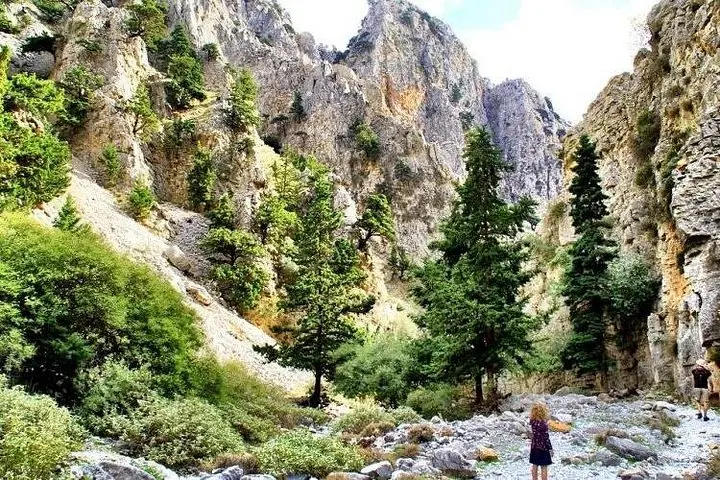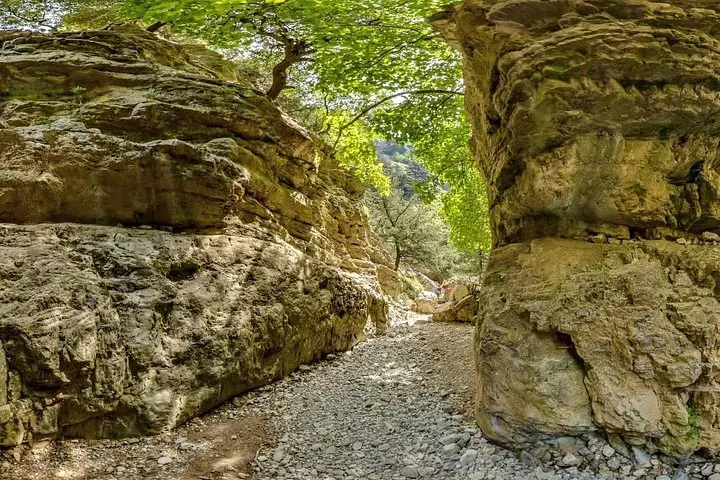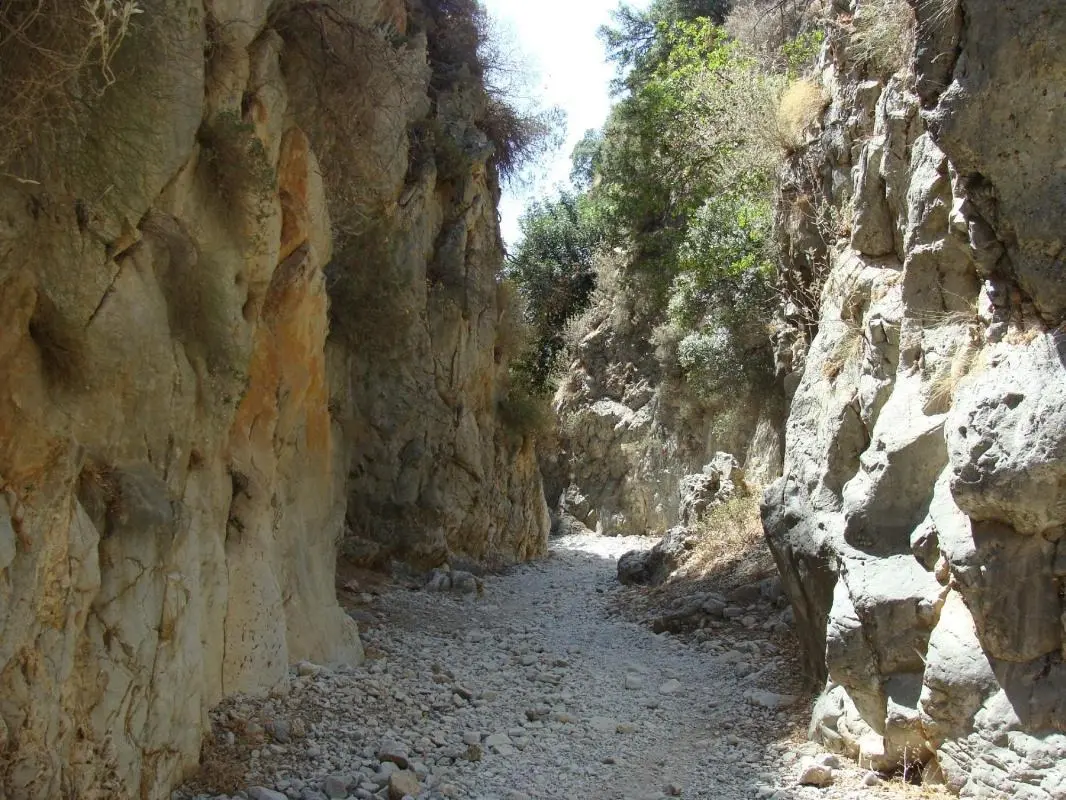
You round a bend and the valley narrows to a coin-width of shadow. Limestone walls climb straight up, staining the path cool gray. The rock exhales a dry, ancient smell — sun and stone, thyme and dust — while a thin corkscrew of a trail slides between them. That is Imbros Gorge: a corridor carved by millennia, a lived-in route that asks little and returns much. For a few hours you trade the fairways of western Crete for the raw, intimate geometry of the White Mountains; the island feels smaller, and somehow more honest.
Imbros is easy to romanticize because it is approachable. Unlike Samaria’s endurance test, Imbros is compact: roughly 8–9 km (about 5 miles) from the village entrance down to Komitades and the Libyan Sea, typically covered in 2.5–3 hours at a measured pace. The path gently descends, rarely steep, but the terrain is stony and sometimes slick with river-worn pebbles; narrowest point: 1.6 meters. Where the gorge pinches, walls rise to about 300 meters, creating those theatrical slices of sunlight and shade that photographers and midday wanderers treasure.
The trail is part geology lesson, part cultural archive. Geologically, Imbros is a karstic ribbon through the Lefka Ori — the White Mountains — their limestone skeleton folded and exposed by tectonic patience. Botanically, scrub and cedars trade places with wildflowers in spring: sage, thyme, and pink oregano scent the air if you bend low. Culturally, this corridor was once the main artery between Chania and remote Sfakia; in May 1941 it became a route to safety for Allied troops fleeing the German advance, a fact that hangs heavy and proud among locals. Today shepherds still graze the uplands, and small tavernas in Imbros and Komitades serve Sfakian pie and raki to hikers who prefer stories with their coffee.
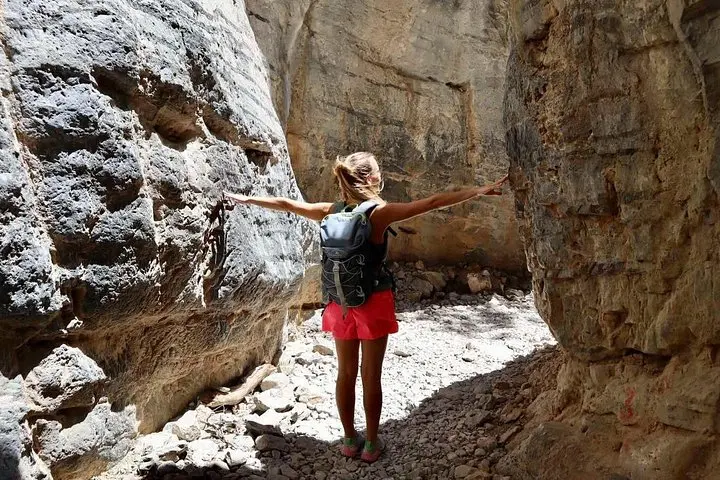
What travelers notice most is how the gorge shapes pace. The rocks have a personality: patient, indifferent, sometimes playfully intimate where the walls narrow so you can touch both sides. Birds — kestrels and swift-moving swifts — patrol the canyon above, while griffon vultures ride thermals farther afield in the White Mountains. At the exit, the trail releases you onto limestone terraces and the sea’s blue promise; many hikes end with a cooling swim in bays like Frangokastello or the quieter coves near Chora Sfakion.
Why go now? Imbros was built for accessibility: families, first-time gorges, and travelers who want the drama of a canyon without full-commitment logistics. Guided day tours from Chania or Rethymno are common and efficient — hotel pickup, a comfortable drive through olive country, the hike itself, and usually a seaside finish with lunch. Private guides add context — pointing out wartime markers, the gorge’s narrow “Stenada,” and the natural stone arch called Xepitira — and they make the route feel lived-in rather than labeled for tourists.
Practical matters matter here. Wear hiking shoes with grippy soles; the ground is stony, and even an “easy” gorge walk can twist an ankle if you’re careless. Bring sun protection and at least 1–1.5 liters of water per person in warm months; much of the trail threads shade, but the approach and exit can be exposed. Timing is a choice: arrive early to catch cooler air and quieter moments inside the gorge; late afternoon brings softer light but warm returns.
Seasonality is another advantage. Imbros can be done year-round; spring brings wildflowers and flowing streams, summer offers the post-hike swim, and autumn cools the heat that can make other parts of Crete oppressive. Winter rains can make the trail muddier and narrow sections more dramatic, but closures are rare because Imbros drains easily compared with higher canyons.
The best itineraries thread the hike into a larger day: a morning coffee and sfakian pie in Imbros village, the gorge descent, a late lunch at Komitades or Chora Sfakion, and a swim at Frangokastello with its Venetian castle. For serious hikers, Imbros can be one segment on a multi-day traverse of the E4 trail, linking mountain villages and smaller, less-traveled gorges.
A final, practical primer: treat this as both nature walk and cultural step-through. Respect grazing lands and shepherds’ fences, keep noise modest around villages, and consider hiring a local guide — their storytelling and route-savvy turn a fine walk into an immersive day. Walk slowly enough to notice the smell of thyme between the stones; Imbros rewards careful feet and an unhurried curiosity.
If you want a gorge that fits into a day without compromising on scale or story, Imbros is Crete in microcosm: rugged, honest, generous. The rocks are patient hosts; bring sturdy shoes, a good guide or map, and an appetite for a seawater dip. The gorge will give you cool shade, narrow theatrics, and the satisfaction of a route that still feels like a secret, even when the buses stop at its edge.