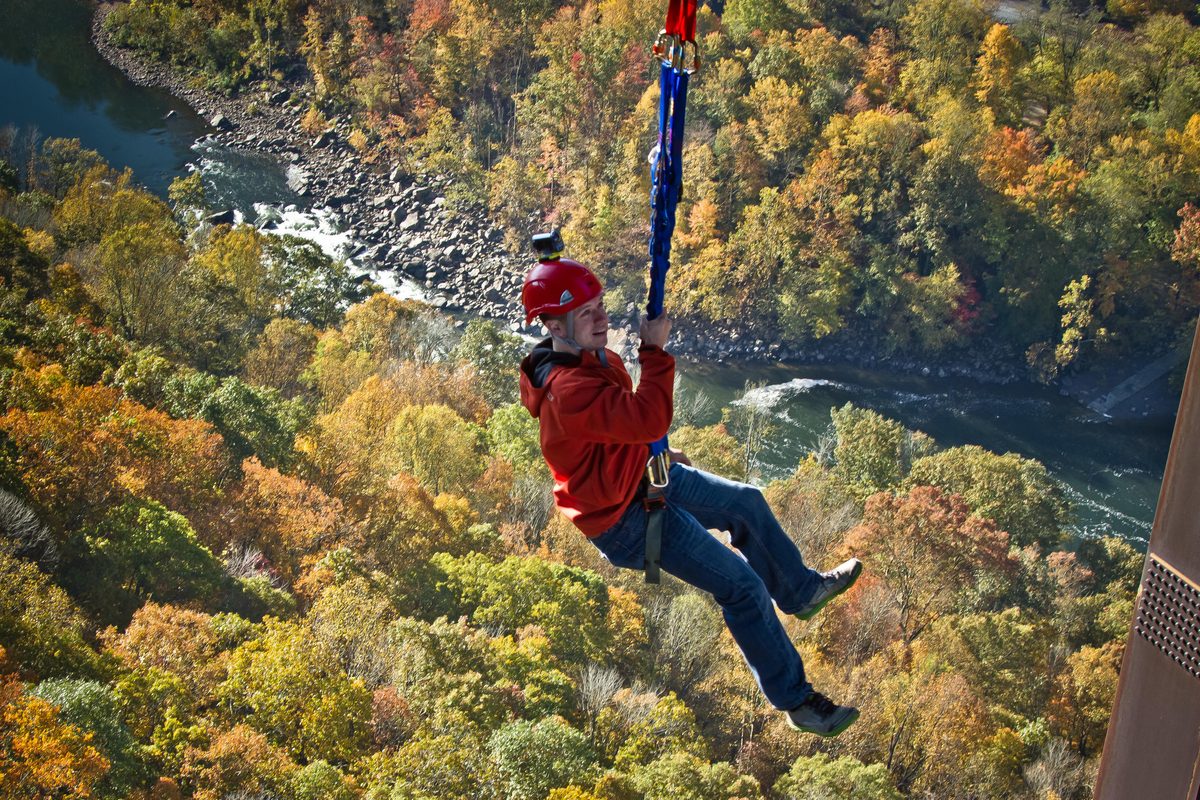
You step onto the catwalk and the world shifts. The concrete deck of the New River Gorge Bridge is a few feet above you, but it's the void beyond the steel lattice that rearranges perception: the canyon yawns three hundred feet below, a ribbon of river threading through a patchwork of oak and maple. Above, the bridge's arch frames a broad swath of West Virginia sky. Around you, other walkers move methodically, tethered to a safety line, while a cluster of BASE jumpers prepares on the north span — helmets bright as berries — and a rappel team lowers themselves like punctuation marks into the gorge.
This is Bridge Day, and the standard tourist vantage point is replaced by something closer, rawer. The Bridge Day Bridge Walk is a 90-minute, guided passage along the catwalk beneath the roadway—part behind-the-scenes look, part adrenaline-viewing platform. It's designed for people 8 and older who want to be near the action without strapping on a parachute. You feel the bridge as a machine—its coffered belly, threaded bolts, and the hum of traffic above—while the gorge insists on being immediate: wind that dares you to lean, cliffs that look like opened books.
The bridge itself is relatively young in American infrastructure terms. The New River Gorge Bridge opened in 1977, ending a long era of slow, serpentine drives through the gorge. Its single-span arch was, at the time, the world’s longest steel arch; today it is an iconic American span and the centerpiece that made Bridge Day possible. The event began in 1980 when locals and thrill-seekers first used the structure for legal rappel and BASE jumping; since then, Bridge Day has evolved into an annual collision of engineering, spectacle, and small-town hospitality that draws tens of thousands.
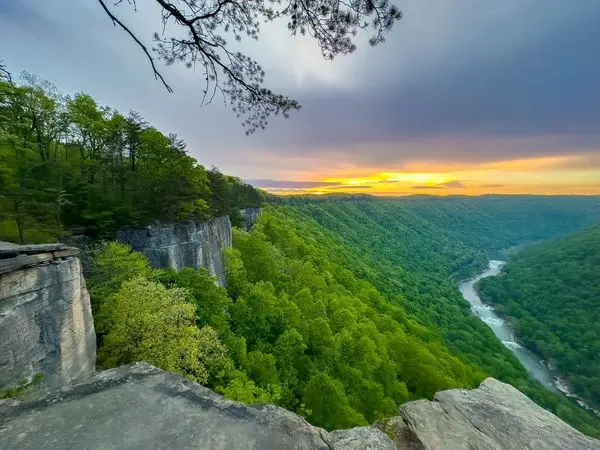
Geologically, the gorge is older than the nation—layers of Pennsylvanian-era sandstone and shale carved by the New River, which is paradoxically one of the oldest rivers on the continent. The cliffs are vertical classrooms for climbers and nesting falcons; the river's current tempts kayakers and anglers below. Politically and culturally, the bridge and its festival are woven into the region’s identity: the town of Fayetteville and neighboring communities support the event with vendors, music, and interpretive displays that celebrate Appalachian craft and outdoor life.
Practicalities are part of the appeal. The guided Bridge Day Bridge Walk is curated for safety and sightlines: groups are briefed, clipped in, and led along the catwalk for about ninety minutes. You don't need to rappel or jump—just be steady on your feet and ready for exposure. Guides point out the high lines, give background on the jump teams, and time the walk to watch rappellers and jumpers stage from the midspan. If you go on an October event day, expect the town to be thick with viewers, street vendors, and a celebratory atmosphere that feels Appalachian but outward-looking.
When to go: fall is the showstopper. The trees flare in russet and gold, air is cool and clear, and the bridge backdrop has cinematic contrast. That said, the catwalk operates in various seasons for special events; spring and summer offer lush canopies and loud river scenes, while winter is quiet, cold, and sometimes closed for safety.
Getting there and what to expect: the walk assembles near the bridge access points on County Route 85/9 in Lansing; Fayetteville is the nearest practical basecamp for lodging, food, and post-walk beers. You'll walk on grated metal sections that provide a good grip but show the drop, so closed-toe shoes are mandatory. Bring a camera with a secure strap—there are photographic moments from both wide-angle vistas and long-telephoto captures of descending jumpers.
Safety and etiquette matter. Park where directed, expect road closures on Bridge Day, and follow all guide instructions—do not cross safety lines to get a better shot. The jumpers are licensed, the rappellers are trained, and your guide is there to give context and keep the flow moving.
For planners: reserve early, check weather, and be flexible on timing. The bridge walk is short but dense; it pairs well with a longer day in the gorge—hiking the Endless Wall Trail or driving to Long Point for a sunset vista. And when you’re done, step into town for local hospitality. Savor a hearty sandwich, find a craft beer, and compare notes with other walkers—Bridge Day is as much about the communal thrill as the views.
If you go, you'll leave with two things: a clear memory of vertigo-stoked wonder and a practical sense of how fragile, useful, and beautiful infrastructure can be when it meets wild landscape. For a concentrated dose of Appalachian scale and bravura, the Bridge Day Bridge Walk is an unusually intimate way to stand where engineers and daredevils converge, and to watch gravity do its work with composure and spectacle.