Start Early
Begin the tour in the morning to avoid heat and heavy traffic; mornings also bring softer light for photos and quieter memorials.
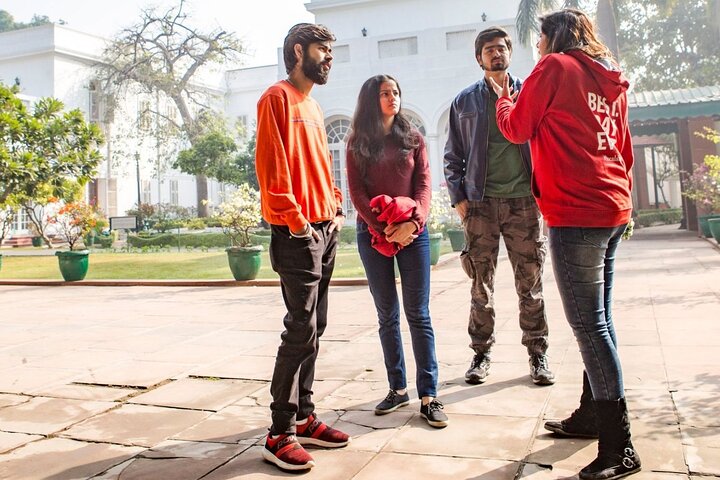
A contemplative, four-hour walking tour through Gandhi’s memorials and the neighborhoods that still carry his legacy.
Continue ReadingThe sun has just cleared the low concrete teeth of New Delhi when the group steps away from the traffic and into a quieter history. The air carries the clatter of a city waking up—bicycle bells, a chaiwala lighting a brazier, the distant honk of a bus—but here, between a fold of mango trees and a line of low memorial walls, the pace slows. A short walk brings you to a simple black marble platform framed by a ring of flame: Raj Ghat, the place where Mahatma Gandhi was cremated, and where his life is marked by absence as much as presence. It is startling in its restraint. In a city of color and noise, the memorial is an invitation to listen.
Begin the tour in the morning to avoid heat and heavy traffic; mornings also bring softer light for photos and quieter memorials.
Carry a reusable water bottle and take breaks—this tour includes several short walks and museum time over four hours.
Wear modest clothing and be prepared to remove hats inside memorial spaces; a light scarf is useful at indoor sites.
You may need ID for entry at some sites and small purchases in nearby markets; keep both accessible.
Rhesus macaque (urban-adapted monkeys), Black kites and other urban raptors that patrol Delhi skies
These memorial sites prioritize quiet reflection and minimal intervention—respect plants and memorial structures, and dispose of waste in designated bins to preserve the gardens.
Spring offers mild temperatures and greener public gardens—good walking weather before summer heat sets in.
Summer is hot and oppressive; schedule the tour at dawn and plan indoor museum time to avoid peak heat.
Autumn balances comfortable weather with cultural events—expect more domestic visitors around major holidays.
Winter is the optimal season for this tour—cool mornings, clear skies, and a comfortable walking pace.
Shoot early morning for soft light and fewer crowds; use a wide-angle for memorial architecture and a 50mm/35mm equivalent for candid street portraits; ask permission before photographing people and be mindful of no-photo zones in museum interiors.
Paved streets and museum floors demand supportive, breathable footwear.
Staying hydrated is critical in Delhi’s heat; many guides can refill bottles between stops.
Useful for modesty at memorials and for warmth in winter mornings.
Capture architectural details and candid street scenes; battery life matters for long days.