By the time the chartered car separates from the smooth ribbon of the expressway and slips into narrow lanes framed by cedar and cryptomeria, the city’s cadence loosens. The guide points out small shrines tucked like punctuation marks in village corners, and the road opens onto the mossed stone steps of Oiwa Shrine—your gateway to a mountain that has been part chapel, classroom, and gymnasium for ascetics for centuries.
Mt. Oiwa doesn’t try to be Alpine. Its trails are narrower, lined with ferns and cedar roots that seem to have a mind of their own, and the summit is a stitched-together place of stone altars, torii gates, and the quiet, close presence of worship. The mountain has long been a site of shugendō and yamabushi practice—mountain ascetics who threaded religion into their walks—so the hike feels less like a conquest and more like a dialogue. Expect roughly two hours to the summit on a steady, sometimes steep trail; the route is rocky in stretches but shaded by canopy, with the scent of leaf mold and cedar sap underfoot.
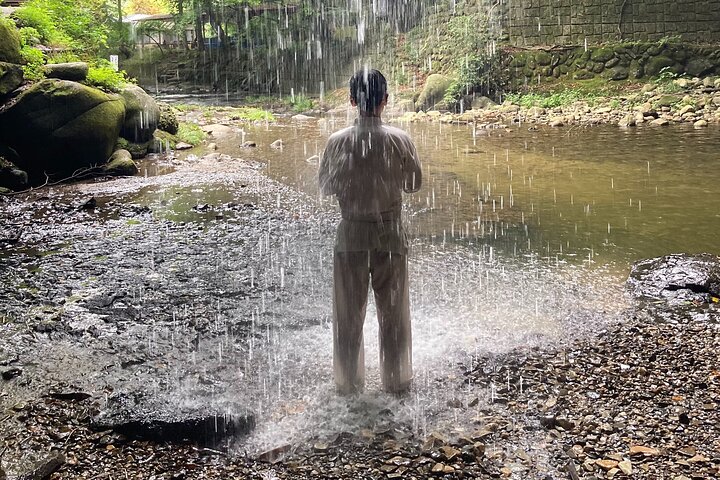
Halfway up, the forest widens around a stream that gains urgency as it approaches a drop. Here you’ll meet the waterfall chosen for ‘taki-gyo’—the practice of meditative standing beneath falling water. The guide and shrine attendant explain the etiquette: quiet, slow breathing, and letting the cold sheets of water move rather than resisting them. Physically, a five- to ten-minute plunge under the cascade is bracing—your lungs tighten, the steam of your thoughts clears—and mentally, it’s an efficient reset. The water demands attention in the most literal, pleasurable way; it pulls you into its work. Bring a lightweight towel and be prepared to feel unexpectedly elated.
After descending, the tour shifts textures. You trade the damp chill of mountain moss for the warm, woody air of a washi workshop. The artisan demonstrates the unique fibers—usually kozo (paper mulberry)—and the special techniques that give washi its tensile strength and translucence. The demonstration is hands-on: you learn to form a sheet, couch it, and press it, then add a brush-painting step that lets you carry a piece of the day home. Washi is both craft and conversation; the makers will talk about how paper has been used for everything from ritual shōji screens to legal documents, and how the tactile memory of a hand-made sheet can be a quiet keepsake of a place.
Practical notes are baked into the itinerary. The private car means you’re not racing buses; you’re moving deliberately from Tokyo (pick-up options can be arranged) to northern Ibaraki and back within a twelve-hour window. The day is balanced—about two hours of guided hiking, time at the waterfall and shrine, a multi-part washi session, and meals or stops at local cafés. The experience caters to travelers who want fresh-air exertion without technical climbing—good, steady legs and a head for uneven ground are important, but you don’t need mountaineering skills.
Culture and geology meet at every turn. The volcanic and sedimentary layers that made the Kanto lowlands also shaped the granite and conglomerate outcrops you’ll pass; stones weather into natural altars and places for prayer. The human history is equally layered: farms, shrines, and paper makers have shared this landscape for generations, and the artisans are eager to show how local materials and a particular climate produce a paper that behaves unlike any Western stock.
Plan for weather changes. Spring and early summer keep the stream lively for meditation; autumn paints the forests in near-theatrical color. Midday can be warm at low elevation yet cool in shaded ravines and at the waterfall—dress in breathable layers and bring footwear with confident traction. Finally, don’t expect heavy crowds: this is a private, curated experience, designed to feel like a personal invitation to a place many visitors pass by but few truly enter.
Why do this tour? Because it’s compact and whole-bodied: you move through silence and sound, devotion and craft, a landscape that asks for attention in both physical and cultural terms. It’s the kind of day that returns you to the city a little quieter, with a small handmade object that smells faintly of wood smoke and river—proof that hands-on learning still matters. And because it’s private, the itinerary flexes: spend more time at the shrine with the miko, pause for extra frames of the waterfall, or linger in the workshop and try another wash.
If you’re planning, think pragmatically. Hydrate before you start. Choose shoes that can handle mud and roots. Bring a small, waterproof bag for your phone and wallet during the waterfall practice. And go with curiosity: ask the maker questions about fiber sourcing and the shrine maiden about local rites. The day is generous to those who enter it with both humility and interest.