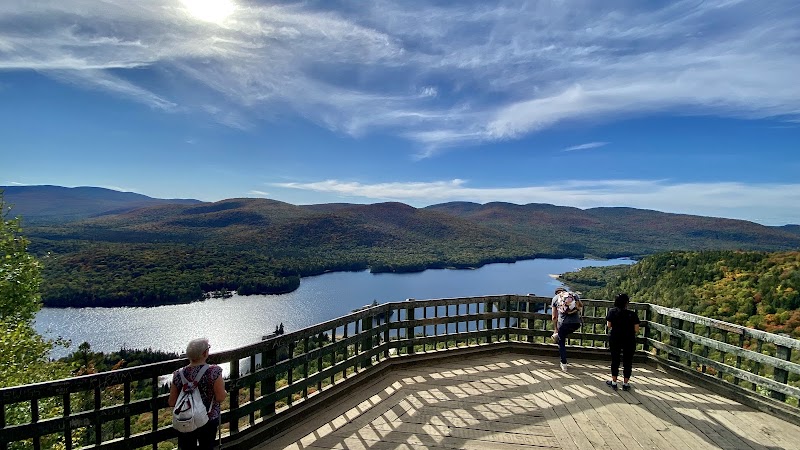
Wilderness Landscape & Natural Heritage
Parc national du Mont-Tremblant, established in 1895, covers over 1,500 square kilometers of the Laurentian Mountains in Quebec, Canada. It is renowned for its varied terrain of rocky hills, deep valleys, pristine lakes, and wetlands. The park lies within the Canadian Shield, featuring ancient bedrock and mixed boreal and deciduous forests that provide habitats for a wide array of wildlife, including moose, black bears, beavers, and a variety of bird species. Historically, the area was used by Indigenous peoples for fishing and hunting, and later developed for recreation and conservation. Today, the park draws outdoor enthusiasts year-round with its extensive network of hiking trails, backcountry camping, mountain biking routes, canoe routes, and winter activities such as snowshoeing and cross-country skiing. Key landmarks include the dramatic elevated viewpoints like Mont Tremblant summit, the beautiful Lake Monroe, and the forested areas around La Diable sector. Visitors appreciate the park for both its rugged natural beauty and well-maintained recreational infrastructure. Its large size and ecological diversity make it an important conservation area while offering accessible wilderness experiences close to urban centers such as Montreal and Ottawa.


