The Adventure Collective Journal · Regional guide

Central Iowa: The Country Between the Grasses

A long weekend of river shade, restored prairie and patient wildlife watching, with Des Moines as your anchor and Iowa City saved for another stay.

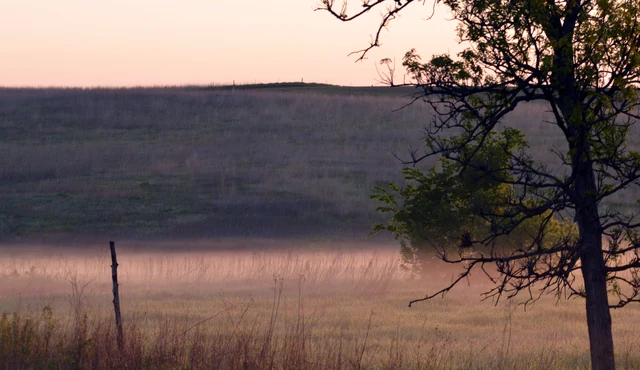
A misty prairie hollow and grassy hill framed by a tree beneath a pale warm sky.
Mist and grassland at Neal Smith National Wildlife Refuge, photographed in May 2016. · Photo: Joanna Gilkeson / USFWS / Wikimedia Commons, CC BY 2.0 · CC BY 2.0 — image and resized versions · Copyright (c) 1998 Hewlett-Packard Company (ICC profile notice, not photo copyright) · Full-frame proportional Lanczos resizing and WebP compression; no crop, retouching or generative change. Embedded ICC profiles converted with Pillow ImageCms to sRGB before resizing where present, output sRGB ICC embedded; original EXIF stripped, credit/license/provenance retained in XMP and manifest.

A little less driving. A little more time outside.

The prairie asks you to change your scale. A horizon that looks empty from the highway becomes a whole country when you stop: seed heads at eye level, a moving seam of shade, grass bending in a wind you can hear before you feel. Central Iowa rewards that slower attention. There is no summit to collect. The point is to stay long enough for the landscape to stop looking like background.

Build a trip around the contrast between open ground and river woods. Around Des Moines, a bottomland walk can occupy one day and a prairie refuge the next. Farther east, Iowa City gives a different weekend its center of gravity. Let those be two generous trips rather than one long chase between trailheads.
Choose where to linger

Choose your patch of Iowa

Keep one place to return to each evening. These two bases support different stays.

02

Iowa City

Make Iowa City the base of a separate eastern stay. Give Kent Park an unhurried day rather than tagging it onto the western itinerary. Its mixture of prairie, forest and wetland lets you change scenery without constantly changing destinations. A notebook and binoculars suit this weekend as well as a mileage goal.

Ways into the landscape

Follow shade, grass and water

01

Neal Smith: let the grass set the pace

The refuge protects and reconstructs tallgrass prairie, oak savanna and sedge meadow. Come for that living work as much as for a possible bison sighting. Pick a short walk first, pause, and only then decide whether you need a longer one.

The visitor listing identifies the half-mile Overlook loop as paved and accessible; the two-mile Tallgrass loop is paved but rated moderate. These are different commitments. Ask about current approach conditions and available toilets before relying on either route for an accessibility-specific visit.

02

Walnut Woods: the river under the trees

Trade the open sky for the Raccoon River bottomland. Walk softly, leave room for birdwatching, and treat the return leg as another chance to notice something rather than the part to finish quickly.

Natural-surface paths here can flood and stay muddy. For a firmer-surface option, the park describes a relatively flat half-mile paved approach to the Athene pedestrian bridge from the southeast trailhead. Verify present conditions; a paved route is not a promise of an unobstructed visit.

03

Jester Park: a day with room around it

Jester Park brings woodland, trails and the Saylorville Lake setting into one outing. Start with the nature center if it is open, choose a modest walk from the current map, then leave the rest of the day unassigned. A long lunch and a second short stroll often reveal more than an ambitious route completed with your head down.

The county directory describes a bison-and-elk exhibit and a natural playscape. Keep wildlife viewing observational, and confirm the center schedule directly rather than building a rainy day around assumed opening hours.

04

Kent Park: an eastern prairie-and-lake day

From an Iowa City stay, use Kent Park to look closely at the seam between woodland and prairie. The county describes grass and crushed-rock trails, including a shoreline route connected by relocated historic road bridges. Choose your turn-around point for the surface and weather, not a number on a watch.

The Bluebird shelter area has an accessible playground. That designation does not establish the accessibility of the whole trail network. Ask county staff about grades, surfaces and facilities for your particular needs.

A suggested journey

Three days based in Des Moines

Use the same Des Moines lodging throughout. Each day has one main outdoor destination; rearrange them for weather and closures rather than adding mileage.

  1. Day 1

    Day 1: arrive, then find the river

    Settle into Des Moines and keep the first outing deliberately light. Head to Walnut Woods for a short river-side walk or the paved bridge approach. If the ground is saturated, turn around rather than trying to rescue the afternoon with a longer route. Return to the city for dinner and prepare tomorrow’s picnic.

    Des Moines
  2. Day 2

    Day 2: spend the day with the prairie

    Check Neal Smith’s current notice before leaving. Choose an open walking route, allow time to sit, and bring everything needed for an outdoor-only visit. Make the auto tour optional and use it only if the enclosure road is confirmed open. Inside the enclosure, remain in your vehicle and on the road.

    If access is disrupted, swap this day with Jester Park rather than gambling on a closure. Return to the same Des Moines lodging; the evening is part of the rest, not another transfer.

    Des Moines
  3. Day 3

    Day 3: one park, no hurry

    Give Jester Park the morning. Consult the map, pick a walk that fits the group, and visit the nature center only after confirming its hours. Finish with enough energy for an easy departure or a final evening in Des Moines. Keep Iowa City for a different stay instead of adding a cross-state detour to the last day.

    Des Moines

Plan for the elevation

Four ways to read the prairie

Spring: make room for wet ground

Let spring be a listening season: short walks, frequent stops, and a willingness to turn back. Rain can make a wooded path more consequential than its modest distance suggests. At Walnut Woods, respect wet-ground closures rather than widening a trail around the mud. A flexible day is better than a rut left behind.

Summer: go slowly in the open

Give exposed prairie a morning window and carry your own water, sun protection and insect protection. Stop while the outing still feels good; the afternoon can belong to a meal and a notebook. At Neal Smith, do not count on indoor exhibits or the visitor center as a cooling break while its closure remains posted.

Autumn: follow the seed heads

The appeal shifts toward texture: grass stems, open views and the shape of bare branches. Use shorter daylight as permission to do less. Check park facilities before a late-season camping trip; Iowa DNR warns that water and modern facilities begin shutting down around mid-October, depending on weather.

Winter: a smaller, sharper outing

A brief walk can be the whole day when wind and ice take over. Choose a route with an easy retreat, bring warm layers and do not use frozen water as a shortcut. Walnut Woods lists cross-country skiing as a winter activity, but snow cover and safe conditions decide whether it belongs in your plans.

Make the trip work

Plan the details that matter.

Read the alert before the brochure

On October 17, 2026, Neal Smith’s official notice said the Prairie Learning Center was closed after storm damage. Its heading called the enclosure road closed, while the text said it was open temporarily with further construction closures expected. Treat road access as unconfirmed until the refuge clarifies it. The notice also reported a phone outage; use the official email contact when needed.

Use sunrise-to-sunset planning for walks while that notice applies. General rules allow a wider window, but the more conservative current notice is the basis for this guide. Do not rely on old indoor-program descriptions.

Before you settle on a plan

A few useful questions.

Can I do Des Moines and Iowa City in this three-day plan?

Choose one base. The itinerary stays in Des Moines; use Iowa City and Kent Park for a separate eastern weekend so the trip remains about being outside rather than changing locations.

Is there a paved prairie walk?

Neal Smith lists the Overlook loop as paved and accessible. Verify the current approach, facilities and closures with the refuge before departure, especially while the visitor center is closed.

Before you go

Check the day’s conditions.

Recheck Neal Smith’s storm-damage and road-construction notices, Walnut Woods trail conditions, and county park access before leaving. Current closures and posted instructions override this itinerary.

Keep the essentials simple.

  • Carry water, a packed lunch, weather layers and an offline map. Plan exposed walks around the forecast and return to shelter when thunderstorms threaten.
  • Use marked parking and obey closures. A natural-surface route that is described as easy may still be muddy, uneven or unsuitable for wheels.
  • At Neal Smith, keep pets leashed, do not camp or park overnight, and leave the drone packed. Commercial photography requires a special-use permit; ordinary trip planning is not permission for commercial activity.
  • If camping at Walnut Woods, reserve a site through the state system; the park requires reservations. Confirm seasonal toilets and water before traveling. This itinerary assumes lodging in Des Moines rather than camping at the refuge.
Sources & editorial scope

Research checked 2026-10-17. Agency and county planning sources were checked October 17, 2026. Recheck closures, access and facilities before departure; current notices take precedence over general descriptions.