The Adventure Collective Journal · Regional guide

Central Nebraska: Give the Platte Your Time

Crane country rewards a slower kind of trip: three days based in Kearney, with prairie paths, river bridges and one carefully planned encounter at Rowe Sanctuary.

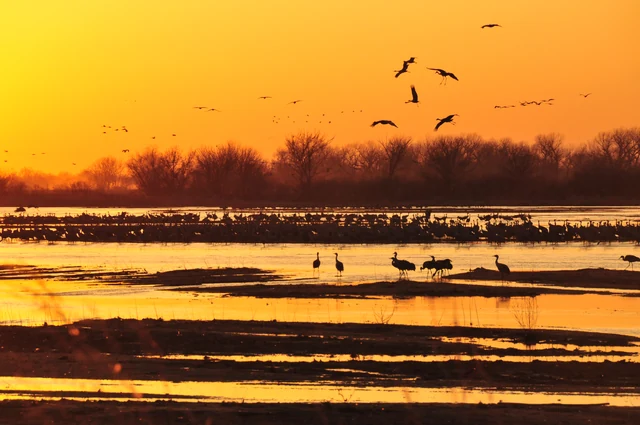
Cranes fly above shallow river channels and roosting flocks against an orange sunset.
Sandhill cranes gather at sunset on the Platte River near Kearney, photographed in April 2013. · Photo: Tom Koerner / USFWS / Wikimedia Commons, CC BY 2.0 · CC BY 2.0 — image and resized versions · Full-frame proportional Lanczos resizing and WebP compression; no crop, retouching or generative change. Embedded ICC profiles converted with Pillow ImageCms to sRGB before resizing where present, output sRGB ICC embedded; original EXIF stripped, credit/license/provenance retained in XMP and manifest.

A little less driving. A little more time outside.

The Platte asks you to look sideways. Follow the low line of the river, the edges of a field, the space between cottonwoods. In spring, that attention can be rewarded by sandhill cranes gathering along the central river corridor. The scale is enormous; the right way to meet it is surprisingly small. Stand where you are allowed, keep your distance and let the birds choose the next movement.

Kearney makes room for that kind of travel. Unpack once, keep the early and late hours flexible, and spend the middle of the day on a trail rather than collecting miles behind a windshield. Cottonmill brings prairie and lake into the same outing. Fort Kearny opens a view across the river. Near Gibbon, Rowe Sanctuary gives the migration a conservation context. Even when the cranes have moved on, those three places offer a satisfying way into the valley.

Choose where to linger

One stay, two useful starting points

Use Kearney for the overnight stay and Gibbon for the sanctuary approach. There is no need to change lodging to follow this route.

01

Kearney

Make Kearney your reset point: a place to sleep through the same night twice, dry a jacket and decide whether tomorrow belongs to birds or bicycles. Its outdoor options allow a short outing to remain a complete day. You do not have to turn every river visit into an endurance ride.

Cottonmill is the western trail anchor; the city's mapped trail network links it with other parks and the Fort Kearny corridor. Choose individual sections instead of assuming the whole system must be tackled in one go. The point of this stay is time outside, with enough energy left to pay attention.

02

Gibbon

Gibbon is the nearby eastern starting point for Rowe Sanctuary on Elm Island Road. Put the sanctuary, rather than an arbitrary driving loop, at the center of this side of the trip. A reserved crane experience can dictate the day's rhythm; outside migration, the visitor center provides a quieter introduction to the river and its habitat.

Treat Gibbon as a daytime gateway while sleeping in Kearney. Check the sanctuary's directions and meeting instructions before leaving, especially for a program that begins in darkness. An early arrival should mean time to settle in, not extra wandering into habitat.

Ways into the landscape

Where to slow down

01

Let the cranes set the pace

A guided Rowe experience offers a deliberate way to watch spring roosting activity. Think of the discovery station as a place to wait, not a stage on which the birds must perform. Leave space in the schedule for the whole experience and resist arranging another dawn commitment immediately afterward.

Check the current tour type before reserving: photography rules, age requirements and mobility arrangements differ. Standard guided experiences require guests to stay quiet for an extended period. Pack warm dark layers and binoculars; reserve the close-up expectations for the birds themselves. Outside the crane season, choose the center and open trails without expecting the spring spectacle.

02

Read the river from Fort Kearny

At Fort Kearny State Recreation Area, the hike-bike route reaches across Platte River channels on former railroad infrastructure. The bridges offer a way to see how much of this landscape is horizontal: water, sand, trees and sky arranged in long bands.

Make this a modest out-and-back, choosing a turnaround that suits wind, footing and your group. Bring binoculars in any season. Before committing to the crossing, ask the park about current bridge and trail access; a past construction notice is not proof that a route is open. If access is restricted, use permitted lakeside day-use areas instead.

03

Find the prairie beyond the pavement

Cottonmill rewards leaving room for a second look. The city trail map identifies Oldfather Prairie loops, a wooded Red Cedar route and Beck Memorial Trail. Pick one natural-surface walk, then spend a little time by the lake. The contrast is the pleasure: exposed grassland, enclosed trees, open water.

Do not confuse the paved trail connection with the park's uneven natural paths. Choose a short route first and extend it only if the ground and weather cooperate. For a cycling day, begin on a mapped paved section and turn back before fatigue makes the return a chore. A picnic and a slow loop can carry the day perfectly well.

A suggested journey

Three days with Kearney as home

Arrange the Rowe day around a confirmed program if you want a spring crane tour. Otherwise use the same day for the visitor center and permitted daytime trails. Swap days to suit opening hours, weather and access.

  1. Day 1

    Day 1: arrive, then walk into the landscape

    Settle into Kearney and keep the first afternoon local. Go to Cottonmill for a short natural-trail walk chosen from the city map, followed by an easy pause beside the lake. Arriving late or finding soft ground is a reason to shorten this outing, not to rush it.

    Over dinner, check the next day's Rowe instructions, weather and route. Pack binoculars and layers now. If the center or your selected program will not operate tomorrow, swap days two and three while keeping the same lodging.

    Kearney, Nebraska
  2. Day 2

    Day 2: give Rowe the best part of the day

    Travel from Kearney to the sanctuary near Gibbon for your confirmed crane program in season. Build the day's meal and rest breaks around the operator's arrival instructions. Keep the hours afterward open; the value of the experience does not depend on how many more stops follow it.

    Without a reservation, or outside crane season, visit during confirmed center hours and ask staff which trails are open. Spend time with the exhibits and whatever permitted walk fits the day. Return to Kearney rather than adding a second overnight location.

    Kearney, Nebraska
  3. Day 3

    Day 3: follow the Platte, then leave slowly

    After checking current access with Fort Kearny, walk an appropriate portion of the hike-bike trail and pause wherever the river view invites it. If the bridge route is restricted, keep to open day-use areas or return to a Kearney trail section. No part of the plan requires crossing a closure.

    Finish with a relaxed lunch and enough time to repack before onward travel. If you are staying another night, remain in Kearney; there is no logistical reward for moving beds on this final day. Leave the river with a few things still unhurried.

    Kearney, Nebraska; depart after the outing if ending the trip

Plan for the elevation

A valley with four different tempos

Spring: protect the hours around the roost

Crane migration generally occupies March into early or mid-April, with timing shaped by the birds and conditions. Plan around an actual reservation rather than a remembered annual date. Keep the rest of the visit loose enough to accommodate weather and a slower morning after an evening outing.

Closed sanctuary trails are part of protecting the spectacle. Accept them as the day's boundary and move the walk elsewhere. In later spring, Fort Kearny's birding interest shifts toward smaller migrants; bring curiosity beyond a single species.

Summer: small distances, generous pauses

Use the cooler part of the day for your longest walk, then give yourself shade, water and a proper break. Cottonmill's combination of natural trails and lakeside spaces makes an unhurried day easier to shape. Check seasonal facility operation rather than counting on a marina or nature-building visit.

Treat a hot, windy afternoon as permission to shorten the plan. The route needs no summit and no finish-line photograph. Return another morning for the part you skipped.

Autumn: trade the crowd for the grass

Let the prairie walks take the lead. Shorter days favor an early start and a comfortable turnaround, with enough daylight to notice the changing textures along the trail. Revisit the same patch of grass rather than chasing a new attraction every hour.

Rowe remains a worthwhile habitat stop outside crane season, but check the visitor center's weekly schedule. Fall is its own trip; do not sell it to yourself as a replay of spring's mass gathering.

Winter: make the outing easy to abandon

Keep the winter plan compact. A brief river look or a cleared city-trail section can be enough when wind cuts across the valley. The state birding guide identifies winter opportunities for eagles, geese and ducks around Fort Kearny, without promising any particular sighting.

The city asks trail users to wait until snow has been cleared. Skip icy surfaces and carry warm layers even for a short walk. Confirm indoor opening hours before making a visitor center your warming stop.
Make the trip work

Plan the details that matter.

Choose access by the actual route

Rowe's current tour page describes ramps, wheelchair-height viewing windows and limited cart support, plus access to a closer station by paved trail. Arrange the support you need before reserving and confirm the specific tour's route and restroom arrangements. Do not rely on an old brochure or assume every program has identical access.

Fort Kearny lists accessible fishing decks, but that does not certify the whole hike-bike outing for every visitor. Cottonmill's natural paths differ from the paved city route. Ask managers about surface, slope, distance, recent damage and accessible facilities, then choose the portion that works for you.

Make the last check before the first walk

Recheck Rowe's live program and visit pages, the city trail information and Fort Kearny's current notices shortly before travel. The park's November 2025 construction announcement projected completion in February 2026; an estimate alone cannot establish today's bridge access.

Keep a simple fallback: a shorter permitted park walk, an open visitor center or a rest break in Kearney. A useful itinerary gives you options without requiring you to make the landscape cooperate.

Before you settle on a plan

A few useful questions.

Can I do this trip from a single hotel?

Yes. Keep the stay in Kearney and treat the sanctuary near Gibbon as a day outing. Arrange the three days around your confirmed program and opening hours.

Is crane viewing available all year?

The large spring gathering is seasonal. Outside that period, visit for the river habitat and open trails, without expecting the same crane concentrations.

Must I book a blind to enjoy the region?

No. The trip also includes park and prairie walks. A guided sanctuary program is a separate reservation decision, and public trail access remains subject to local restrictions.

Before you go

Check the day’s conditions.

Check current Rowe programs and wildlife closures, Fort Kearny bridge access and city trail conditions. No tour inventory, same-day trail opening or future weather is verified by this guide.

Keep the essentials simple.

  • Check the Nebraska park-entry permit requirement before bringing a vehicle into Fort Kearny; a tour booking elsewhere does not replace it. This itinerary does not depend on fishing, boating or camping, which need separate planning.
  • Do not enter private fields or approach crane roosts. Use designated viewing places and legal parking; never block a road, driveway or farm entrance for a photograph. Keep binoculars handy so distance does not become a temptation to trespass.
  • Rowe prohibits drones and pets on sanctuary trails; check service-animal arrangements directly if relevant. Staff may close trails for wildlife. A line on a map is not permission to pass a closure.
  • Carry water, sun protection and layers. Check the forecast before exposed outings, and leave the trail for safe shelter when severe weather threatens. Do not use river shallows as an improvised walking route.
Sources & editorial scope

Research checked 2026-10-17. Official land-manager, city and visitor-bureau sources checked October 17, 2026. Recheck opening hours, reservations, trail restrictions and park notices before departure.