The Adventure Collective Journal · Regional guide

Central Ohio: River Paths, Ravines, and Room to Slow Down

Make Columbus your anchor for three days of city water, wooded bluffs, and restored prairie, then save the farther horizons for another stay.

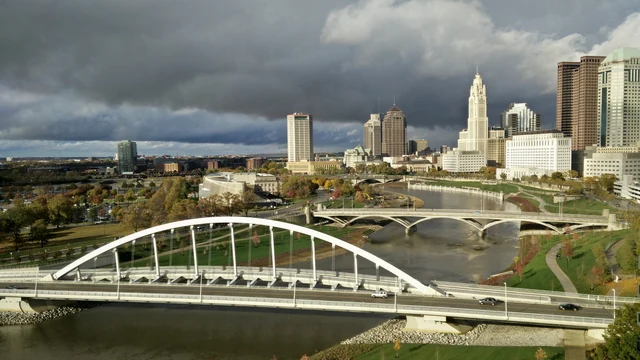
Bridges cross the Scioto River below Columbus towers and dark clouds.
The Scioto Mile and downtown Columbus, photographed in October 2015. · Photo: Scott (Flickr: skpy/skippy) / Wikimedia Commons, CC BY-SA 2.0 · CC BY-SA 2.0 — image and resized versions · Full-frame proportional Lanczos resizing and WebP compression; no crop, retouching or generative change. Embedded ICC profiles converted with Pillow ImageCms to sRGB before resizing where present, output sRGB ICC embedded; original EXIF stripped, credit/license/provenance retained in XMP and manifest.

A little less driving. A little more time outside.

Start with the river rather than the highway. Along the Scioto Mile, Columbus gives you a walking-scale introduction to a trip that can easily become too ambitious on paper. Leave space for a bench, a changing reflection, an unhurried return. This is a good place to practice doing less before the park days begin.

Central Ohio rewards attention more than a checklist. Let the next two days shift the frame from the city waterfront to Highbanks and Battelle Darby Creek. You do not need to change beds to change the character of the day. A single Columbus base makes room for weather, tired legs, and the possibility that one good walk is enough.

Choose where to linger

Choose one home base

Columbus anchors the itinerary below. The other destinations deserve their own nights and their own plans; do not stitch them into a long weekend of transfers.

01

Columbus

Choose Columbus for this trip and keep your luggage there. A downtown stay makes the Scioto Mile an easy focus for the arrival day; arrange transport separately for the Metro Parks outings. Choose accommodation for your actual access needs, including step-free entry and parking, rather than assuming a central address answers those questions.

The pleasure of this arrangement is repetition: an evening meal in the same city after two very different outdoor days. Leave the arrival afternoon lightly scheduled, and keep a spare layer and walking shoes reachable instead of buried in a bag.

02

Morgantown

Plan Morgantown as a separate West Virginia stay. Coopers Rock State Forest brings sandstone cliffs and canyon overlooks into the picture, with hiking choices that warrant their own map and conditions check. This is a change of landscape and destination, not a Central Ohio afternoon detour.

Build a later trip around the forest rather than treating the overlook as a roadside trophy. Ask the park about the particular approach you intend to use if distance, uneven footing, or seasonal access will decide whether the outing works.

03

Dayton

Dayton belongs to a separate western Ohio trip. Start its outdoor planning at RiverScape, where the Great Miami River and Mad River trails meet. That trail junction gives a cycling-focused visit a clear starting point without requiring you to pack another city into the Columbus weekend.

Choose a route that matches the group, check the current trail map, and decide on a turnaround before setting off. Reserve the river itself for a separately planned outing with appropriate skills and current conditions.

04

Deep Creek Lake (McHenry)

Save this for a western Maryland lake stay. McHenry is the base named here; Deep Creek Lake State Park is a separate destination in Swanton. The park offers a lakefront and Discovery Center, but a place to sleep near the lake does not establish public shoreline access.

Make each day's launch point explicit. For a low-commitment introduction, choose the state park and check its current access arrangements. Swimming is permitted when swim lines are installed; a lake view alone is no invitation to enter the water.

Ways into the landscape

Three ways into the landscape

01

Let the Scioto set the pace

Use the downtown riverfront as a walk with an adjustable end point. The Scioto Mile combines parks and walking paths, so the outing can be a first look at Columbus rather than a mileage project. Pick a return point while everyone still feels fresh.

Pause away from the moving trail to look across the water. If an event changes the atmosphere or interrupts your intended route, shorten the walk and return another day. The city part of this itinerary should leave you with energy for the woods.

02

Trade the skyline for the bluff

At Highbanks, a shale bluff rises above the Olentangy River and ravines cut into the woods. The Overlook and Dripping Rock trails are rated moderate to difficult, with gravel surfaces. Choose one considered walk rather than assuming the park's proximity to the city means easy footing.

For another approach, the park lists Scenic River and Sycamore as ADA-designated gravel trails. Verify the precise entrance and present surface conditions with staff. Accessibility is route-specific; a designation does not tell you how yesterday's weather left the trail.

03

Give the prairie a whole morning

Battelle Darby Creek holds restored prairie, wetlands, and two enclosed bison pastures. The Darby Creek Greenway is a gravel, ADA-designated route through prairie and woodland; Camp Chase offers a paved ADA-designated option. Select the surface first, then the distance.

Bring binoculars if you have them and let distant wildlife stay distant. Treat the bison as a possibility rather than an appointment. A visit can still be satisfying when the most memorable detail is the movement of grass, and the nature center offers another way into the landscape.

A suggested journey

Three days, one Columbus base

Keep all three overnights in Columbus. The order is flexible: choose the most suitable weather window for each park, and reduce the walking rather than chasing a fixed mileage target.

  1. Day 1

    Day 1: arrive with time for the river

    Settle into Columbus, then make the Scioto Mile the day's only outdoor commitment. Walk until you have a feel for the riverfront, choose a comfortable place to pause, and turn back before the walk becomes a duty.

    Over dinner, check the next day's park map and weather. Pick a specific trailhead and one main route, with a shorter option agreed in advance. Keep the evening open rather than adding an excursion just because there is room on the schedule.

    Columbus, Ohio
  2. Day 2

    Day 2: a measured day at Highbanks

    Travel from Columbus to Highbanks with the chosen route already identified. Decide between the more demanding bluff-side hiking and an appropriate easier option using the park's current map and access advice. Have a snack before making any decision to extend the walk.

    Leave a little time for the nature center if it is open, then return to Columbus. The afternoon is intentionally loose: resting now is a better investment in tomorrow than adding a second park out of obligation.

    Columbus, Ohio
  3. Day 3

    Day 3: prairie, then back to Columbus

    Head to Battelle Darby Creek for a deliberately slower morning. Choose a section of the Greenway or a suitable paved alternative, set a turnaround, and stop often enough to notice what a rushed walk would miss. Keep the nature center as an option rather than a requirement.

    Return to Columbus for the final overnight. If weather cuts the outing short, that is still a complete three-day trip. Save Dayton, Morgantown, and the Maryland lake country for journeys with enough room to stay there.

    Columbus, Ohio

Plan for the elevation

A different rhythm in every season

Spring: keep the route changeable

Give the weather the deciding vote. If unpaved ground is soft, favor a suitable paved option and leave the longer walk for another visit. Pack for a damp pause as well as the moving part of the day; a dry layer can make a short outing feel complete.

Summer: make room for shade

Begin with a manageable morning outing, carry water, and resist filling every hour. Keep the open-country day flexible when heat or storms make it a poor choice. A city walk can also be shortened without losing the sense of arrival.

Autumn: spend the daylight well

Put the main walk early enough that lunch need not become a race against dusk. Bring a warm layer for stops and judge the ground beneath the leaves before extending the route. Check the park's seasonal hours rather than relying on a summer routine.

Winter: choose the surface before the scenery

Shorten plans when ice or cold changes the effort. Highbanks reserves Coyote Run and Scenic River for cross-country skiing when suitable conditions apply, so confirm permitted use before a winter walk. Keep an indoor pause in reserve, and do not treat frozen water as an extension of the trail.

Make the trip work

Plan the details that matter.

Keep the simple trip simple

The itinerary uses ordinary daytime walks and Columbus overnights. Camping and organized events need separate planning: Metro Parks restricts overnight use to authorized arrangements and requires permits for special events. Check with the managing park before adding those activities.

Give the farther destinations their own trip

Choose Dayton for a river-trail-centered western Ohio stay, Morgantown for a West Virginia forest visit, or McHenry for western Maryland lake country. Do not infer that one destination's access rules apply to the others. In particular, check Maryland's seasonal gates and the precise public access point before setting out.

Before you settle on a plan

A few useful questions.

Can I visit all four bases in this three-day plan?

The recommended plan stays in Columbus throughout. Treat Dayton, Morgantown, and Deep Creek Lake (McHenry) as separate stays so transfers do not consume the outdoor time.

Is there a less demanding alternative to the bluff trails?

Highbanks lists ADA-designated gravel routes, while the Metro Parks accessibility guide identifies paved and accessible options across the system. Confirm the route and current conditions with park staff before choosing.

Before you go

Check the day’s conditions.

Check city and park notices, trail surfaces, weather, and seasonal hours shortly before travel. Winter use restrictions, event activity, and closures can change the route; the itinerary remains flexible.

Keep the essentials simple.

  • Download the relevant park map and verify the correct entrance before departure. A park name is not a sufficiently precise destination when different trailheads serve different routes.
  • Use current posted closures and ranger advice over any itinerary. Leave extra margin for weather and daylight; this guide does not establish that a trail is open on your travel date.
  • Ask about surfaces, gradients, accessible parking, and restrooms for the exact route you intend to use. The Metro Parks accessibility list is a planning aid, not an individual suitability assessment.
  • Keep wildlife encounters observational. Stay outside bison enclosures, leave animals space, and follow posted restrictions.
  • Do not convert a day visit into an improvised overnight. Battelle Darby Creek's backpacking sites require reservations; organized special events have separate Metro Parks permit requirements.
Sources & editorial scope

Research checked 2026-10-17. Official park and city sources checked October 17, 2026. Consult linked operators again for closures, access details, seasonal services, and activity requirements.