The Adventure Collective Journal · Regional guide

Dallas-Fort Worth Metroplex: Follow the Water, Find the Prairie

Trade a weekend of cross-town errands for lake edges, limestone trails and the quiet work of watching wildlife.

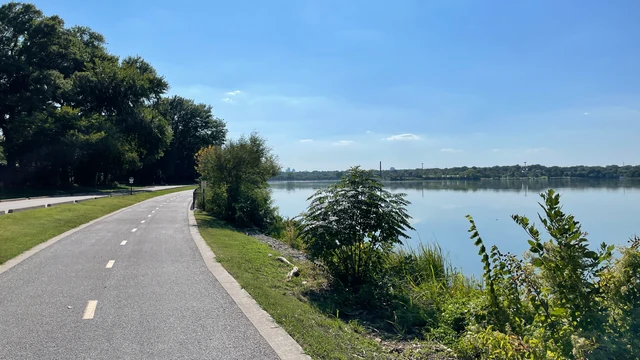
Paved lakeside path curves past trees beside calm White Rock Lake.
The shoreline path at White Rock Lake in Dallas, photographed in September 2022. · Photo: Vulturesong / Wikimedia Commons, CC0 1.0 · CC0 1.0 — image and resized versions · Copyright Apple Inc., 2022 (ICC profile notice, not photo copyright) · Full-frame proportional Lanczos resizing and WebP compression; no crop, retouching or generative change. Embedded ICC profiles converted with Pillow ImageCms to sRGB before resizing where present, output sRGB ICC embedded; original EXIF stripped, credit/license/provenance retained in XMP and manifest. Decoded SDR base rendition used; source HDR gain map omitted after proper Display P3 to sRGB conversion.

A little less driving. A little more time outside.

A lake shore is a good place to loosen the city's grip. At White Rock, the trail keeps company with water, and a pause at the wetland can become the most absorbing part of the morning. Farther south, Cedar Hill puts limestone and prairie into the picture. West of Dallas, Fort Worth's nature refuge asks for another kind of attention: slower feet, a map in hand, time left over to look.

The temptation in a large metro area is to collect stops. Resist it. Give each landscape a morning, keep a familiar place to sleep, and let weather decide how ambitious the day should become. This is an outdoor trip that works best with room around its edges.

Choose where to linger

Choose the place you want to wake up

Use Dallas for the three-day plan below, Fort Worth for a west-side alternative, or Shreveport for its own Louisiana visit.

01

Dallas

Choose Dallas if you want the lake to be the easy first chapter of the trip. White Rock gives the day a clear focus without demanding that you complete a circuit. Keep your overnight base unchanged as you head south to Cedar Hill and west for a single Fort Worth outing.

Favor a lodging location that suits your actual arrival and transport plans. A Dallas address alone does not mean a trailhead is walkable; check the connection rather than assuming the city's parks join up conveniently.

02

Fort Worth

Fort Worth is the alternative for travelers who would rather give the Nature Center and Refuge more than one unhurried visit. Start with a map at the gatehouse and build the outing around a few points of interest, leaving space for the interpretive center.

If this is the landscape that draws you, stay on this side of the region instead of repeatedly crossing it. The Dallas itinerary below still works as written, but it is deliberately a different choice of base.

03

Shreveport

Make Shreveport its own Louisiana chapter. Across the river in Bossier City, Red River National Wildlife Refuge concentrates much of its walking, birding and wildlife photography around the Headquarters Unit. That is a focused outing to build a separate stay around, not a reason to stretch a Dallas weekend across two states.

Sleep in town rather than at the refuge: its rules prohibit overnight use. Allow a fresh morning for the visit and ask refuge staff which routes fit the weather and your mobility needs.

Ways into the landscape

Four ways to spend a morning outside

01

Leave the full loop optional at White Rock

Choose a lake-edge segment and walk it slowly enough to notice the change from open water to wetland. The city's listed hike-and-bike circuit is 9.33 miles, but a short out-and-back is a complete outing in its own right. Give faster trail users room and stop clear of the path when something catches your attention.

Use the city map to locate your starting point and facilities, then read the construction notices. A loop drawn on a map is not proof of an uninterrupted route today.

02

Read the landscape at Cedar Hill

The Talala Trail offers a moderate 2.3-mile introduction to the park's habitat mosaic and prairie restoration. Choose it for a walking morning with time to stop, rather than tacking it onto an already crowded day. For a lighter outing, consider the 0.6-mile Penn Farm Trail and its historic buildings.

TPWD describes the one-mile Shoreline Trail as accessible. Treat that as a useful starting point for planning, then confirm present conditions and the route from parking. A shorter route chosen well can reveal more than a longer one hurried through.

03

Give Fort Worth a walking day

Begin at the gatehouse, pick up a map and choose a route around the Marsh Boardwalk or the refuge's other signed points of interest. Leave the destination list loose: a boardwalk deserves time for waiting, and an interpretive stop can change what you notice on the next stretch.

These are hiking trails, not a running or cycling circuit. Keep dogs leashed, leave natural objects where you find them and use designated picnic areas. Professional photography needs a permit; a camera assignment requires different preparation from an ordinary walk.

04

Start a separate Louisiana stay at Red River

From a Shreveport base, aim for the Headquarters Unit in Bossier City. Let one modest walk and a spell of birdwatching be the day's anchor. The refuge's visitor page provides directions and trail-map links; consult them before setting out rather than navigating to an unspecified stretch of river.

Keep this outing within daylight hours and leave drones at home. Wildlife viewing has its own pace, and a quiet return visit can be more rewarding than trying to cover every corner at once.

A suggested journey

Three days, one Dallas base

Sleep in Dallas throughout. The plan makes one west-side excursion and leaves Shreveport for another stay. Arrange transport to each park and check the actual route before leaving.

  1. Day 1

    Day 1: learn the lake

    Settle into Dallas and make White Rock the only outdoor anchor. Pick a starting point from the city map, check detours, and take a manageable shoreline out-and-back. Turn around while there is still time and energy to sit by the water.

    Keep the rest of the day local to your lodging. Review tomorrow's Cedar Hill alerts and arrange the day pass before committing to the park morning. There is no need to fit a second major trail into this first day.

    Dallas
  2. Day 2

    Day 2: limestone, prairie and a slower afternoon

    Head to Cedar Hill with the route chosen for current conditions. If open and suitable for your group, make Talala the main walk. Choose Penn Farm instead for a shorter outing, or discuss the Shoreline Trail and accessible facilities with staff before arrival.

    Eat a packed lunch in an appropriate park area and return to the same Dallas base. When wet-weather closures intervene, move the park visit to another day or keep the day in town; do not improvise a walk onto a closed trail.

    Dallas
  3. Day 3

    Day 3: one deliberate trip west

    Set aside the morning for Fort Worth Nature Center and Refuge. Check its hours before leaving Dallas, stop for a map and make a modest walking plan. Add the interpretive center if it fits the day's opening schedule.

    Make this the day's principal excursion and return to Dallas for your final night. Keep Shreveport off the checklist: it deserves its own departure, overnight base and fresh start in Louisiana.

    Dallas

Plan for the elevation

Let the season set the pace

Spring: leave space for rain

Spring invites longer looks at growing landscapes, but Cedar Hill lists April and May as its wettest months. Treat a trail closure as a change of plan, not a challenge to work around. Keep a flexible city day available when natural-surface routes need time to dry.

Summer: make the morning count

Cedar Hill's climate summary puts the average July high at 95°F. Shorten the walking plan, carry water and leave the afternoon open for cooling down indoors. Start only when the destination is open; the Fort Worth refuge uses earlier summer opening hours, not overnight access.

Autumn: follow your curiosity

Use autumn as a reason to revisit a familiar route with a different question: what has changed at the water's edge, or which plants still hold color? Fort Worth's seasonal programs can add a naturalist's perspective. Check the current calendar before building a day around one.

Winter: keep the plan compact

Cedar Hill reports a January average low near freezing. Bring layers, read the forecast and choose a route you can shorten. At Fort Worth, winter opening hours differ from summer and some holidays bring closures. Plan the walk around the gate schedule instead of the sunset alone.

Make the trip work

Plan the details that matter.

Build an outing around the access you need

Cedar Hill provides a boardwalk connection to Perch Pond and its birdwatching station, and lists assistive chairs for advance arrangement. Call the park at 972-291-3900 for a day-visit equipment request and current facility information.

The reviewed White Rock and Fort Worth pages do not establish a fully accessible end-to-end outing for every visitor. Ask about your specific route before traveling. Red River's generic hiking page likewise does not verify accessibility of a named local trail; contact the refuge rather than relying on that general description.

Admission, reservations and permits

Reserve Cedar Hill day access ahead, especially on busy dates, and check alerts again before departure. At Fort Worth, ordinary self-guided visits use the gatehouse admission process; professional photography requires separate permission.

The itinerary is for walking and wildlife watching. If you add fishing, hunting, a commercial shoot or organized activities, check that manager's specific rules and required permits first. No activity-specific license is implied by general park entry.

Before you settle on a plan

A few useful questions.

Can I include Shreveport in this three-day loop?

Plan a separate Louisiana stay. This itinerary keeps every overnight in Dallas and uses Fort Worth as one deliberate excursion; Shreveport and the refuge in Bossier City belong to another chapter.

Must I walk all the way around White Rock Lake?

No. Choose an out-and-back that suits the day, and check the city construction notices before committing to a continuous circuit.

Is Cedar Hill a useful choice for an accessible outing?

It has specific accessible features and assistive equipment. Confirm the route and equipment with park staff in advance; the whole park should not be treated as uniformly accessible.

Before you go

Check the day’s conditions.

Recheck Cedar Hill alerts, White Rock construction notices, Fort Worth hours and the relevant refuge rules shortly before travel. This guide is a planning framework, not a live trail-status report.

Keep the essentials simple.

  • Treat reservations and route access as separate checks. A Cedar Hill day pass does not establish that a particular trail is open; wet-weather and maintenance restrictions still apply.
  • Do not equate a boardwalk or an easy trail rating with access for every wheelchair. Confirm parking connections, surface condition, grade, restrooms and any equipment needs with the relevant manager.
  • Pack drinking water, sun protection and a plan to shorten the outing. Keep rain and heat alternatives simple enough that changing course does not become another cross-city expedition.
  • Follow each site's own rules. Fort Worth refuge trails exclude cycling and jogging; Red River is daylight-use only. Permission at one destination does not carry over to another.
Sources & editorial scope

Research checked 2026-10-17. Planning details were checked against official park and refuge pages on October 17, 2026. Follow linked managers for current access and conditions.