The Adventure Collective Journal · Regional guide

Delmarva & the Jersey Shore

Dune paths, rescue-station history, and boardwalk evenings: settle into Delaware for three days, then give the other shores their own stay.

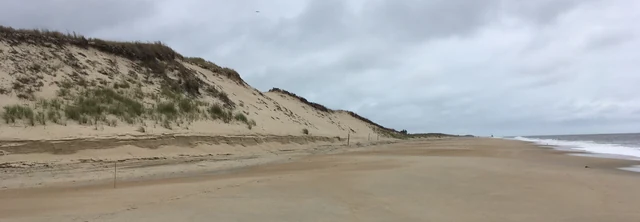
A broad sandy beach stretches between a dune ridge and the sea beneath a cloudy sky.
Beach and dunes north of Herring Point at Cape Henlopen State Park, photographed in October 2018. · Photo: Beach at Cape Henlopen State Park in Delaware USA.jpg — Nolabob, CC BY-SA 4.0 · CC BY-SA 4.0 — image and resized versions · Full-frame proportional Lanczos resizing and WebP compression; no crop, retouching or generative change. Source ICC profile retained where present; original EXIF stripped, credit/license/provenance retained in XMP and manifest.

A little less driving. A little more time outside.

The beach is only one edge of this landscape. Behind it lie ponds, dune crossings, paths through coastal woods, and towns where a museum can change what you notice when you return to the water. Around Lewes and Rehoboth Beach, a good day can hold both a salt-air walk and a long lunch without turning into a coastal endurance event.

Begin by choosing the kind of evening you want. Lewes makes a useful anchor for Cape Henlopen and local history; Rehoboth puts the boardwalk at the center of the holiday. Across Delaware Bay, Cape May offers a different shore stay, while Atlantic City brings an urban oceanfront. Ocean City, Maryland, is another deliberate choice farther down the coast. These places share an appetite for the sea, but they do not need to share one rushed itinerary.

Choose where to linger

Choose your shore

Stay in Lewes or Rehoboth for the Delaware itinerary. Choose the other towns when you want a different coastal trip.

01

Lewes

Choose Lewes if you want the trip to turn around Cape Henlopen and a town-based history stop. The park brings bay and ocean landscapes into the same outing; the Zwaanendael Museum brings the Lewes area’s maritime and social history into focus. Leave time for both rather than treating the museum as a rain-only consolation.

The museum’s first floor is wheelchair accessible, but it has no public restrooms inside; the museum directs visitors to the park behind it. Check its limited weekly opening days before assigning it a place in your itinerary.

02

Rehoboth Beach

Choose Rehoboth when returning to the boardwalk is part of the pleasure. A morning outdoors can give way to an afternoon by the beach and an evening with no more ambitious objective than finding dinner. Look carefully at the actual location of your lodging and its parking arrangements.

If beach access equipment matters, contact the patrol before travel. The city’s beach chairs are seasonal and first come, first served; they cannot be reserved. A boardwalk outing is the dependable starting plan while you confirm what is possible on the sand.

03

Cape May

Give Cape May its own New Jersey stay, especially when birds and coastal walking are the reason for coming. Nearby Cape May Point State Park combines freshwater habitat, dunes, and shoreline beneath the lighthouse. Its short Red Trail has an official wheelchair-accessible designation; that does not extend to every trail or the lighthouse.

Treat the ferry from Lewes as a booked travel leg with a fallback plan. Decide whether to take a vehicle or travel on foot, then solve the journey from the arrival terminal to your lodging.

04

Atlantic City

Choose Atlantic City for an urban oceanfront stay organized around a manageable stretch of Boardwalk and beach. Decide which section you want to use before choosing a hotel; a waterfront address alone does not resolve the distance to the access point your group needs.

The official visitor bureau lists beach ramps and accessible restrooms, with some facilities seasonal. Confirm the relevant entrance and facilities rather than assuming every stretch offers the same access. This is a separate New Jersey visit, not a late addition to a Delaware beach day.

05

Ocean City

This Ocean City is in Maryland. Choose it for a separate resort-coast stay and plan around the beach entrance nearest your accommodation. The town’s official visitor information lists designated access points and a beach-wheelchair program.

A designated accessible entrance does not necessarily have a wheelchair storage box. Confirm equipment arrangements and the route from parking or lodging to the beach before arrival. Keep this stay distinct from the Lewes/Rehoboth itinerary so another transfer does not consume the last day.

Ways into the landscape

A coast beyond the beach towel

01

Follow the pond instead of chasing the horizon

Make Gordons Pond a walk with a chosen turnaround, allowing time to watch the landscape rather than requiring a full circuit. A short out-and-back can be a complete outing. For riders, decide the route and return before leaving; a trail ride need not become a tour of every town.

DNREC lists Gordons Pond among Cape Henlopen’s existing accessible trails. Ask the park about present surface conditions and your intended entrance, especially after storms; the designation is not a guarantee that every beach approach or connecting path will suit your equipment.

02

Read Cape Henlopen in two directions

Cape Henlopen sits where Delaware Bay meets the Atlantic. Choose a bay-facing walk or an ocean-side stop and give it your attention; the contrast is more rewarding when there is time to notice it. Fort Miles adds a military-history dimension to the park, with individual facilities and programs requiring their own opening checks.

Keep every walk inside currently permitted areas. Nesting-bird closures protect habitat that can look deceptively empty. Binoculars are a better way to get closer than stepping beyond a barrier.

03

Give the rescue station a place in the day

The restored Indian River Life Saving Station offers a human-scale way into the coast’s maritime history: people watched these waters because ships and lives depended on it. Pair a museum visit with a modest Delaware Seashore outing after checking the station’s opening arrangements.

Do not translate an appealing view of Indian River Inlet into a swimming plan. Strong tidal currents make inlets a different environment from a guarded ocean beach. Stay on authorized approaches and choose a staffed swimming area separately if swimming is the goal.

04

Let Rehoboth be the whole afternoon

There is no obligation to turn every beach day into a long route. Walk the boardwalk, pause for food, and leave room to linger. If swimming is part of the afternoon, choose a guarded location and ask the patrol about the day’s water conditions.

Keep bikes and beach gear within the city’s rules. Boardwalk cycling has seasonal time limits, and beach tents and canopies are restricted. Check the current city guidance before bringing equipment or assuming a trail ride can continue along the boards.

A suggested journey

Three days from Lewes or Rehoboth

Keep the same room for all three nights. Swap the outdoor days around wind, surf conditions, museum hours, and the needs of your group.

  1. Day 1

    Cape Henlopen, then Lewes

    Begin with one Cape Henlopen shoreline area, choosing a short walk that suits the conditions and your group. Keep the afternoon for the Zwaanendael Museum when open, followed by time in Lewes. If the museum is closed, exchange this day with another rather than filling the gap with a distant destination.

    Stay at your Lewes or Rehoboth Beach lodging.
  2. Day 2

    Gordons Pond and a Rehoboth afternoon

    Use the morning for a chosen section of Gordons Pond Trail. Turn back while everyone still has energy for the return, then make Rehoboth the afternoon’s destination. Choose boardwalk time, a guarded beach session when conditions allow, or simply a long meal. Keep the afternoon deliberately unbooked.

    Return to the same Lewes or Rehoboth Beach lodging.
  3. Day 3

    The coast through its rescue history

    Head south for the Indian River Life Saving Station if its opening arrangements fit. Pair it with a short, permitted shoreline visit in the Delaware Seashore area, keeping away from inlet currents and respecting any access closures. Return to your base with time to spare. Save Cape May, Atlantic City, and Ocean City for another stay.

    Return to the same Lewes or Rehoboth Beach lodging.

Plan for the elevation

Four ways to meet the coast

Spring

Build spring days around walks, museum time, and watching from a respectful distance. Shorebird habitat protections can change which beach sections you can enter. Plan from posted access and current park guidance rather than a photograph of an open stretch of sand.

Summer

Make room for a slower beach day and treat water safety as a separate decision from the weather on land. Confirm lifeguard coverage at the place you intend to swim. If equipment access is essential, establish a practical alternative before relying on a first-come beach chair.

Fall

Cape May Point’s fall migration makes a strong case for a separate bird-focused stay. In Delaware, keep the walking itinerary flexible as seasonal services change. A warm afternoon does not mean lifeguards or summer facilities are still operating.

Winter

Think in shorter outdoor windows, with a confirmed indoor stop and warm layers close at hand. Check museum days and ferry advisories before departing. Winter is a good reason to simplify the plan, not a reason to assume shore facilities operate on their summer schedule.

Make the trip work

Plan the details that matter.

Cross the bay with a complete plan

For a Cape May extension, verify your dated outbound sailing, any return sailing, check-in instructions, and ground transport on both sides. Reservations are recommended by the operator. Weather can cause departures to be changed or cancelled, so avoid a tight onward commitment.

Contact the ferry about mobility needs before booking. Its FAQ describes accessible boarding through the terminal and passenger walkway because vessels lack an onboard elevator. Confirm how your party and vehicle will be reunited on arrival.

Keep ordinary access separate from special activities

Delaware surf-fishing vehicle access uses its own permit and reservation rules and is not a general beach-driving pass. Consult the current requirements before planning it; the itinerary here does not need vehicle access to sand. Organized events at Cape May Point may require a special-use permit.

Before you settle on a plan

A few useful questions.

Can I fit both sides of Delaware Bay into these three days?

Keep the three days in Delaware. A Cape May visit is better planned as a separate stay with confirmed ferry or road transport and local connections.

Is the itinerary suitable without long hikes?

Yes, the days can be built around shorter out-and-back walks, boardwalk time, and museums. Confirm the specific route and facilities you need; soft sand and beach access equipment require separate planning.

Before you go

Check the day’s conditions.

Before each outing, recheck beach conditions, staffed swimming areas, wildlife closures, museum hours, and ferry advisories if crossing the bay. This guide does not establish live access or equipment availability.

Keep the essentials simple.

  • Choose one Delaware lodging base for the three days, then plan each outing’s parking and return independently. Do not assume a beach parking arrangement applies at a state park or a ferry terminal.
  • Check the beach forecast and ask on-duty lifeguards before entering the water. Sunny skies do not guarantee safe surf; skip swimming when coverage or conditions do not support it.
  • Use marked dune crossings and obey habitat closures. Keep wildlife watching at a distance and remove food scraps.
  • Confirm current park entry charges, museum hours, and any activity-specific permits directly. Ordinary beach access does not authorize driving on sand or fishing.
Sources & editorial scope

Research checked 2026-10-17. Planning information checked against official park, municipal, museum, ferry, and weather sources. Recheck conditions and operating schedules before travel.