The Adventure Collective Journal · Regional guide

Door County & Green Bay: Between the Bay and the Big Lake

Make Sturgeon Bay your anchor for wooded shoreline, living dunes and a limestone rail trail, then give Green Bay a stay of its own.

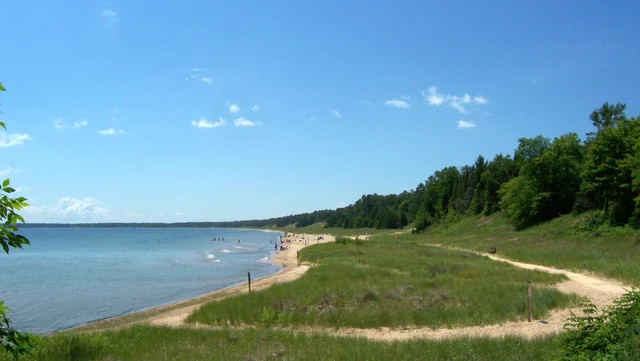
A sandy beach curves beside Lake Michigan with grassy dunes and woodland inland.
Lake Michigan beach and dunes at Whitefish Dunes State Park, photographed in July 2008. · Photo: Royalbroil; horizon/color edit by McGhiever / Wikimedia Commons, CC BY-SA 3.0 · CC BY-SA 3.0 — image and resized versions · Full-frame proportional Lanczos resizing and WebP compression; no crop, retouching or generative change. Embedded ICC profiles converted with Pillow ImageCms to sRGB before resizing where present, output sRGB ICC embedded; original EXIF stripped, credit/license/provenance retained in XMP and manifest.

A little less driving. A little more time outside.

Water gives southern Door County two different moods. At Potawatomi, the shore folds around wooded ground and limestone edges. Across the peninsula, Lake Michigan opens the view at Whitefish Dunes. Between them, Sturgeon Bay makes a useful place to put down your bags and let each day have a single direction.

The rewarding version of this trip leaves room to linger. Read the older shorelines beneath the trees, watch the big lake from firm ground, then trade climbing for the steady rhythm of a rail trail. Green Bay offers another way into the region through its urban wildlife sanctuary. Choose it for a separate stay rather than adding a city detour to every peninsula day.

Choose where to linger

Choose your shore

Sturgeon Bay anchors the peninsula itinerary. Green Bay is a different trip rhythm, centered on city-based nature outings.

01

Door County (Sturgeon Bay)

The single base for this three-day trip

Stay in Sturgeon Bay if your ideal day begins with a trail map and ends without repacking. Potawatomi supplies the wooded bay-side outing, Whitefish Dunes brings the Lake Michigan day, and the Ahnapee gives you a gentler change of pace. This is a compact editorial focus on the southern peninsula, not an attempt to collect every Door County landmark.

Choose lodging around the activities you actually want to repeat. A return to the same shore can be more revealing than another stop further north; leave one evening unscheduled and let the next morning’s conditions make the decision.

02

Green Bay

An alternative stay with nature close at hand

Choose Green Bay when an urban wildlife refuge sounds like the right scale for the day. Bay Beach Wildlife Sanctuary lets you build an outing around observing, walking and taking breaks rather than reaching a distant overlook. Its paved approaches to buildings and viewing areas give this alternative particular value when different members of a group need different kinds of access.

Treat Green Bay as its own overnight choice or add it before or after the peninsula stay. The itinerary below does not shuttle back here each night. A slower sanctuary visit deserves daylight and attention rather than whatever is left after a full Door County day.

Ways into the landscape

Four ways to meet the water

01

Read the shorelines at Potawatomi

Begin with the half-mile Ancient Shores Trail, whose interpretive signs make a small walk feel like a much larger story. If you want a longer outing, the 2.6-mile Hemlock Trail combines shoreline and interior woods. Pick one principal route rather than treating the park map as a checklist.

The Ice Age Trail’s eastern terminus gives the park another thread to follow. A short out-and-back can be enough to appreciate the idea of a path that continues far beyond the day’s ambitions. Carry the current map, allow for uneven ground, and keep your turnaround tied to energy and daylight.

02

Let the dunes frame Lake Michigan

Whitefish Dunes rewards a pause before the walk: look from the forest toward the open lake and notice how differently each space holds the weather. The Red Trail reaches Old Baldy by boardwalk and stairs. Stay on designated routes; the dune landscape is the reason for the visit, not a surface to scramble over.

For a different route, consider the 1.5-mile Brachiopod interpretive loop. Its inclusive design does not erase terrain or weather barriers; some mobility-aid users may need assistance. Build a shorter visit around the viewing platform and nature center when that is a better fit.

03

Find a steady rhythm on the Ahnapee

The Ahnapee’s level grade and limestone tread offer a change from wooded hills and sand. Walk or ride an out-and-back from a mapped Sturgeon Bay access point, setting a turnaround before you start. You do not need to reach another town to make this a complete outing.

Wider bicycle tires are a sensible choice because horses can leave marks in the surface. A level route is not necessarily smooth or easy for every mobility device, especially after wet weather. Leave room to pass other users and keep the day’s ambition adjustable.

04

Give Green Bay a day of close observation

From a Green Bay stay, make Bay Beach Wildlife Sanctuary the main event. Bring binoculars if you have them, choose a marked route, and stop long enough for movement in the landscape to become apparent. Wildlife watching works better when the schedule has some empty space.

Paved routes connect buildings and viewing areas; ask staff which paths suit your needs rather than assuming every woodland trail has the same surface. The sanctuary also offers sensory-inclusive resources. Leave bicycles and pets out of this outing, keep off the lagoons, and check gate hours before extending a walk.

A suggested journey

Three days from Sturgeon Bay

Keep the same lodging for all three nights. These are flexible day outings, not a through-route; swap the lake day with the rail-trail day if conditions favor it.

  1. Day 1

    Day 1: settle into the bay side

    Arrive in Sturgeon Bay and keep the first outing modest. At Potawatomi, choose Ancient Shores for an interpretive introduction or Hemlock for a fuller walk. Stop at the trailhead map before setting off, and avoid stacking both routes simply to fill the afternoon.

    Return to Sturgeon Bay with time to unpack and eat. Use the evening to compare tomorrow’s forecast with the day after: the Whitefish Dunes outing can move, while the lodging stays put. If arrival is late, save the longer hike for another visit.

    Sturgeon Bay, Wisconsin
  2. Day 2

    Day 2: cross to the big lake

    Give Whitefish Dunes the whole outdoor portion of the day. Start with the nature center or viewing area, then choose one trail that matches the group’s mobility and the ground conditions. Bring a picnic so lunch can be a pause rather than another destination.

    Treat the lake as something to assess before approaching. Use the warnings on site to decide whether any beach activity is appropriate, and keep swimming optional. If wind or difficult footing changes the plan, shorten the outing and return to Sturgeon Bay; there is no need to rescue the day with a longer drive.

    Sturgeon Bay, Wisconsin
  3. Day 3

    Day 3: trade viewpoints for a rail-trail rhythm

    Choose an Ahnapee access point from the official trail information and make a measured out-and-back on foot or bicycle. Decide the turnaround before leaving, carry what you need for the return, and shorten the ride if the surface is softer or rougher than expected.

    Finish back in Sturgeon Bay with the afternoon deliberately open. Revisit a favorite place if conditions invite it, or leave the day short. Green Bay belongs to a separate stay before or after these three days, not a final obligation squeezed into this one.

    Sturgeon Bay, Wisconsin

Plan for the elevation

A landscape that changes its rules

Spring: keep the route flexible

Make this a season of shorter choices and spare layers. After wet weather, inspect the trail surface before committing to a longer walk or ride; turning back preserves the rest of the day. At Whitefish Dunes, the viewing platform offers a way to meet the lake without making beach travel the measure of success.

In Green Bay, the sanctuary’s year-round setting supports a patient, observation-led outing. Pick the day’s route from current conditions rather than a mileage goal.

Summer: plan a shore day, not a guaranteed swim

Use the longer day for a picnic and an unhurried trail, with water time optional. Whitefish Dunes has no lifeguards, and Lake Michigan can produce dangerous rip currents. Read the beach’s warnings and flags; a rough-water day can still be an excellent day to watch the lake from land.

Potawatomi’s nature center is seasonal, operating in summer with the park store. Check its opening before building a visit around it, and keep an outdoor alternative ready.

Fall: give the woods the main role

Build an autumn visit around the contrast between forest and shoreline rather than a promised peak-color date. Potawatomi is a good place for that change of scene within one outing. Carry enough warmth for a stop and leave time for an early return if the weather turns.

Recheck park notices and posted seasonal-use information before choosing a trail. The Ahnapee can make a satisfying shorter day when you would rather settle into an even pace than add another viewpoint.

Winter: choose the right track

Potawatomi separates designated winter walking and snowshoe routes from groomed ski trails; do not walk on the ski tracks. Whitefish Dunes also changes trail uses in winter, so consult the seasonal map rather than repeating a summer route automatically.

Beach accesses at Whitefish Dunes are not maintained in winter. DNR warns that Lake Michigan ice off this shoreline is never safe to walk on. Keep the outing on appropriate land routes. On the Ahnapee, winter users share an ungroomed corridor with snowmobiles; choose a different walk if that does not suit your group.

Make the trip work

Plan the details that matter.

Plan access around the actual route

Whitefish Dunes lists an accessible nature center, beach viewing platform and picnic shelter, plus a beach wheelchair for checkout. Call the park before relying on equipment or a particular beach approach. The Brachiopod loop’s terrain caveat matters even though the route is intended for broad access.

Potawatomi lists accessible picnic shelters and a fishing pier. For Green Bay, the sanctuary offers accessible buildings, paved connections, a loan wheelchair and sensory supports. Ask about the specific entrance, surface, restrooms and equipment you need; a park-wide accessibility label cannot answer every route question.

Make a land plan before a water plan

Whitefish Dunes has no boat launch, and wind can carry small craft away from shore. This guide therefore keeps the lake outing on land rather than turning a beach visit into an improvised paddle. Anyone planning water activity should make a separate, conditions-led plan with appropriate skills and safety equipment.

Winter scenery is also best approached from land: do not step onto Lake Michigan ice off Whitefish Dunes. A photograph is not a reason to cross that boundary.

Before you settle on a plan

A few useful questions.

Should I change hotels during the three days?

No. Sturgeon Bay is the overnight base throughout. Choose Green Bay for a separate stay if its wildlife-sanctuary outing better suits your trip, or add it before or after the peninsula days.

Is the Ahnapee suitable for a casual ride?

Its level limestone route can suit an adjustable out-and-back, but hoof marks and wet surfaces may affect the ride. DNR recommends wider tires. It does not require a state trail pass.

Can I use the same trails in winter?

Check each park’s winter map. Some routes become groomed ski trails, and walkers and snowshoers must use appropriate routes. At Whitefish Dunes, beach accesses are unmaintained and the Lake Michigan shore ice is never safe to walk on.

Before you go

Check the day’s conditions.

Check DNR property notices and seasonal maps before each outing, inspect posted beach warnings, and confirm the sanctuary’s gate hours. No live trail, water, ice or equipment conditions are asserted here.

Keep the essentials simple.

  • Potawatomi and Whitefish Dunes require vehicle admission. The Ahnapee does not require a state trail pass; do not assume that exemption applies to every Wisconsin trail.
  • Use current property maps, notices and posted signs. This itinerary does not establish trail openings, available equipment, live weather or lodging availability.
  • Bring water, weather protection and a way to navigate offline. Keep return plans conservative when the surface, wind or daylight changes.
  • Stay on designated dune routes and leave natural features where they are. At Bay Beach Wildlife Sanctuary, follow its separate rules on pets, bicycles and lagoon access.
Sources & editorial scope

Research checked 2026-10-17. Planning details were checked against Wisconsin DNR and City of Green Bay pages on October 17, 2026. Recheck property notices, weather and access before leaving.