The Adventure Collective Journal · Regional guide

Finger Lakes Region

Gorge walls, garden paths, and room beside Cayuga Lake: three days from Ithaca, with Geneva and Syracuse saved for separate stays.

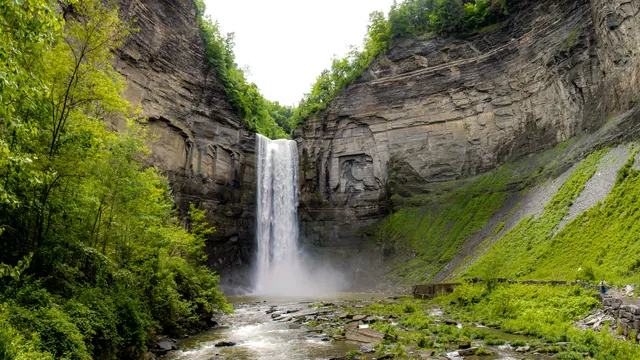
A tall waterfall plunges between layered gorge walls into a stream surrounded by green foliage.
Taughannock Falls and its gorge in New York’s Finger Lakes, photographed in June 2015. · Photo: Taughannock Falls panorama (18712109900).jpg — Philip Cohen / Philip N. Cohen, CC BY-SA 2.0 · CC BY-SA 2.0 — image and resized versions · Full-frame proportional Lanczos resizing and WebP compression; no crop, retouching or generative change. Source ICC profile retained where present; original EXIF stripped, credit/license/provenance retained in XMP and manifest.

A little less driving. A little more time outside.

The Finger Lakes reward a smaller map. Settle in Ithaca and the trip can move between two very different kinds of water: the confined passage of a gorge and the open reach of a lake. One asks you to watch your footing; the other makes a bench feel like a perfectly good destination. The best days leave room for both.

This is an Ithaca trip with a deliberately modest radius. Choose one main walk each day, return to the same bed, and resist turning every waterfall into an obligation. A garden morning or an afternoon along the waterfront belongs in the itinerary as much as the steepest trail. Geneva offers a different stay around Seneca Lake, while Syracuse opens another set of urban and lakeside possibilities. Give each its own time.

Choose where to linger

Choose the water you want to wake up near.

Use Ithaca for this itinerary. Choose Geneva or Syracuse for a different visit rather than connecting all three on a rushed loop.

01

Ithaca

Make Ithaca the place you return to after the walking is done. The waterfront gives the stay a gentle counterpoint to the gorges, while Cornell’s gardens make a worthwhile destination in their own right. Choose lodging for the evening you want: an easy meal, a kitchen, or a quiet place to dry wet shoes.

Before booking, match the room and entrance to your group’s mobility needs. Then solve transport to each outing. This itinerary assumes you can reach the selected entrances; it does not promise a bus connection or an available parking space. Staying in one place keeps that planning manageable.

02

Finger Lakes (Geneva)

Choose Geneva for a separate Seneca Lake stay. Build its first day around the lakefront and Seneca Lake State Park, with enough unscheduled time to enjoy a shore visit without immediately packing for another town. This is an alternative rhythm to Ithaca’s gorge-centered days.

Keep overnight arrangements separate from a park outing: Seneca Lake State Park does not allow camping. Its seasonal facilities also need checking independently of whether the park grounds are open. If your priorities are a short walk, lunch outside, and an afternoon that can end early, that is already a coherent plan.

03

Syracuse

Choose Syracuse when you want a city stay with an outdoor day at Onondaga Lake Park. Decide on one trail area and return to the city afterward; do not bolt this excursion onto the Ithaca itinerary simply to include another lake.

The county distinguishes the Shoreline Walking Trail from other recreation trails. Select the route for the activity you intend, then check its entrance and present conditions. A walk can be an out-and-back with a comfortable turnaround, rather than a commitment to an entire lake circuit.

Ways into the landscape

A gorge day, a garden day, a lakeshore pause.

01

Follow the gorge toward Taughannock Falls

Taughannock offers a long view contained by rock. The park describes its Gorge Trail as a relatively level, three-quarter-mile approach to the waterfall; returning the same way makes a roughly mile-and-a-half walk. Keep the rim trails as a separate decision rather than automatically adding them.

A comparatively level route is not a promise about today’s surface or suitability for every mobility device. Ask about the exact entrance, gravel, gradients and current obstructions. The overlook is another possible way to see the falls; confirm its approach before choosing it as your access alternative.

02

Give Enfield Glen a full morning

At Robert H. Treman State Park, the attraction is the passage through Enfield Glen toward Lucifer Falls. Choose an upper-park walk from the official map that fits your group, rather than assuming every trail bearing the word gorge has the same effort. The park’s guided gorge description includes three staircases.

Allow enough energy for the return, especially when steps are damp. Visitors who need a step-free day should choose a confirmed suitable waterfront or garden route instead. A lower-park waterfall visit can be discussed with staff, but the park’s accessible-waterfall listing does not make its gorge trail accessible.

03

Choose Buttermilk as an alternative gorge day

Buttermilk is an alternative to Treman, not a second major hike to squeeze into the same morning. Its gorge walk climbs substantially and uses many stone steps. Those features matter more to the day than how close the entrance looks to town.

Start with a clear turnaround plan and keep to designated routes. If stairs are a poor fit, ask staff about a suitable lower-park viewing approach or choose the waterfront instead. The water is scenery unless a designated swimming area is actually operating; a waterfall pool is not an invitation to enter.

04

Let Cayuga Lake be the afternoon

Use a short section of the Cayuga Waterfront Trail for a walk or roll from Stewart Park, choosing a turnaround before anyone is tired. The trail’s stewardship organization describes a broad paved route with benches, giving you permission to linger rather than measure the day in distance.

Confirm that your chosen segment is unobstructed. A city notice describes repairs in the waterfront corridor, including Cass Park and other areas; it is not a completion certificate. A known-open stretch is more useful than an ambitious route drawn across construction.

05

Spend time at Cornell’s gardens

The gardens around the Nevin Welcome Center make a satisfying change of scale after the gorges. Look closely at one planted area, sit for a while, then decide whether you want another. The grounds and the welcome center have different schedules, so plan facilities around the building’s actual opening hours.

Cornell describes an accessible welcome center and varying terrain throughout its gardens and natural areas. Its arboretum has paved paths but is hilly. Ask for a route suited to your needs, including any construction detours; neither a university setting nor pavement guarantees an effortless outing.

A suggested journey

Three days with one home base

A snow-free-season outline with arrival and departure planned separately. Move the days around current trail access and weather; a closed gorge calls for a different outing.

  1. Day 1

    Day 1: Taughannock, then room beside the lake

    Begin at Taughannock after checking that day’s trail notice and choosing the correct entrance. Make the gorge walk your main outing, or arrange an appropriate overlook visit if the trail does not suit the group. Resist adding the rims simply because the first view makes you want more.

    Bring lunch and leave the afternoon open. Return toward Ithaca for a short waterfront pause if conditions and energy fit. Otherwise, let the rest of the day belong to town and tomorrow’s preparations. The first day should make the next two feel inviting.

    Return to the same Ithaca lodging.
  2. Day 2

    Day 2: one gorge, chosen carefully

    Use a suitable weather window for Robert H. Treman. Review the map, select your return route before starting, and let the least comfortable walker set the pace on stairs. Buttermilk can replace this outing after its own access check; it is not an automatic add-on.

    For a stair-free alternative, make the day about a checked waterfront segment and an unhurried lunch. Keep everyone’s plan worthwhile rather than asking part of the group to wait at a trailhead. Back in Ithaca, stop planning long enough to enjoy the evening.

    Stay again in Ithaca.
  3. Day 3

    Day 3: gardens, then a familiar shore

    Spend the morning at Cornell Botanic Gardens. Start around the welcome center, ask about a suitable open route, and allow the visit to stay small. The arboretum is optional; it does not need to become another full circuit. Check parking instructions and building hours before leaving town.

    End with whichever part of the Ithaca waterfront you most want to revisit, or leave that time free. Geneva and Syracuse can anchor another stay. If today is also departure day, choose the garden visit or the shore and protect your travel margin.

    Stay in Ithaca again, or depart after a shortened final day.

Plan for the elevation

Let the season set the pace

Spring: wait for the right opening

Make spring plans conditional on each gorge’s own notice. Warm weather in town does not establish that a shaded staircase is ready for use. Keep the day flexible enough to choose the gardens or a confirmed-open waterfront segment if trail conditions are unsuitable.

Pack for a change of weather and leave saturated or closed terrain alone. There is no need to force a summer itinerary into an early visit. A shorter outing with time to notice what is growing can be the purpose of the day.

Summer: keep swimming a separate decision

Put the main walk first and leave the afternoon loose. Lunch and a comfortable lakeshore stop are enough after a stair-heavy morning. Carry drinking water and sun protection, and shorten the day when heat or storms make the original plan unappealing.

Swimming has its own rules and operating conditions. Treman’s designated area depends on staffing, weather and water quality; Buttermilk also warns that its advertised season does not guarantee access. Recheck the exact park before packing the day around a swim.

Fall: leave a margin before dusk

Give the walking part of the day the best daylight. An extra photograph or a slow descent should not turn the return into a race. Carry a headlamp and layers, and treat wet leaves on steps as a reason to slow down.

Autumn also changes facilities independently of trails. Buttermilk posted a Lake Treman parking-area restroom closure on October 13, 2026. Check toilets and operating areas before setting out, especially if a reliable restroom is essential to making the outing work.

Winter: design a different visit

Build winter around short, confirmed-open outings and the group’s cold-weather experience. Snow and ice change both footing and effort. Bring appropriate traction, warm layers, navigation and emergency supplies, and select a route with an early turnaround available.

Do not treat the gorge itinerary as a winter trail recommendation. Check every site separately, obey barriers, and never use a frozen creek or lake as a shortcut. A visit that alternates a suitable outdoor hour with time in town can be more rewarding than chasing the summer route through winter conditions.

Make the trip work

Plan the details that matter.

Three parks, three separate access checks

On October 17, 2026, Taughannock’s page displayed an April 17, 2026 all-trails reopening notice. Treman’s page separately said its trails, including the Gorge Trail, were seasonally open; that statement carried no date in the retrieved text. Buttermilk separately listed open trails. None is a guarantee for a later visit.

Read each park’s current page and contact its office when the notice is old or unclear. An open park, a closed restroom and a closed swimming area can coexist. Follow the signs at the actual entrance even when a saved itinerary says something different.

Choose a specific accessible outing

Ask about the whole journey: parking, surface, slope, distance, seating and an open restroom. The Cayuga Waterfront Trail and Cornell’s welcome-center area offer useful starting points, but construction and weather can change a usable route.

Cornell’s disruption page warns of garden detours and a closed stair connection to Mundy Wildflower Garden. Its separate gorge-construction paragraph still refers to 2025, so it cannot establish present gorge access. This itinerary does not depend on a Cornell gorge connection.

Keep entry, reservations and special uses distinct

Check each state park’s current vehicle-entry arrangements. A day-use payment does not reserve a campsite or authorize a special event. Treman and Buttermilk require advance cabin reservations and strongly recommend them for campsites. Follow the official booking terms for your dates.

Ask the relevant manager about group programs, pavilion use, filming or other activities beyond this ordinary walking itinerary. Cornell parking follows university rules, separate from garden entry. Read the posted payment instructions instead of assuming a state-park pass applies.

Make the alternatives their own trips

For Geneva, pair a Seneca Lake State Park shore visit with an easy return to town. For Syracuse, choose a suitable Onondaga Lake Park walking segment. Neither alternative requires completing a lake loop or crossing to Ithaca for dinner.

Confirm restrooms and seasonal services at Seneca Lake. At Onondaga, use the county trail guidance to separate walking from faster recreation uses and check current rules if bringing a dog. Plan the experience around the people traveling, not the number of places a map can hold.

Before you settle on a plan

A few useful questions.

Do we need to change towns during the three days?

No. Keep Ithaca as the overnight base. Geneva and Syracuse are separate alternatives for another stay.

Can we enjoy this trip without gorge stairs?

Yes. Build it around a checked waterfront segment and a suitable Cornell garden route. Ask about exact surfaces, gradients, construction and facilities before choosing the outing.

Before you go

Check the day’s conditions.

Recheck each gorge separately, plus waterfront work, Cornell detours, weather, restrooms and swimming operations. Dated and undated notices are planning evidence, not a live access guarantee.

Keep the essentials simple.

  • Carry a saved map, water, food, rain protection, warm layers, a headlamp and a small emergency kit. Tell someone your plan and expected return; a short gorge walk still deserves preparation.
  • Use designated parking and obey closures. Leave plants and rocks where they are, pack out litter, and keep the photograph inside the safe, signed route.
  • Resolve transport before committing to the outings. No drive times, room inventory, rental availability or public-transit connections are assumed here.
Sources & editorial scope

Research checked 2026-10-17. Official managers and local stewardship sources checked October 17, 2026. Notices have different publication dates; check current conditions before travel. This is researched planning advice, not a firsthand account.