The Adventure Collective Journal · Regional guide

Florida's Historic Coast

Coquina walls, salt-marsh mornings and an Atlantic beach with room to slow down: three days rooted in St. Augustine.

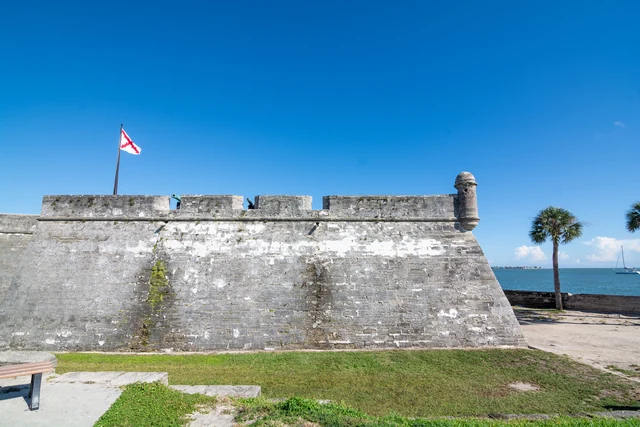
Coquina fort walls and a sentry turret stand beside a palm and blue bay water.
Castillo de San Marcos beside Matanzas Bay in St. Augustine, photographed in October 2019. · Photo: Matthew Dillon / RuggyBearLA Photography / Wikimedia Commons, CC BY 2.0 · CC BY 2.0 — image and resized versions · Matthew Dillon (embedded photograph copyright holder) · RuggyBearLA Photography (embedded creator/user comment) · Copyright (c) 1998 Hewlett-Packard Company (ICC profile notice, not photo copyright) · Full-frame proportional Lanczos resizing and WebP compression; no crop, retouching or generative change. Embedded ICC profiles converted with Pillow ImageCms to sRGB before resizing where present, output sRGB ICC embedded; original EXIF stripped, credit/license/provenance retained in XMP and manifest.

A little less driving. A little more time outside.

The best way into St. Augustine is to follow the material. Shell becomes stone; stone becomes a fort; beyond the walls, the same coast keeps moving. At Castillo de San Marcos, history has weight and texture. At Anastasia, dunes and tidal water put that long human story back against a changing shoreline.

Build a trip with both kinds of attention. Give the fort a real morning, then leave enough space for a beach walk whose turnaround is decided by wind and energy rather than a checklist. A short, well-chosen paddle can be a full adventure here. So can sitting still while the marsh begins to reveal its birds.

Choose where to linger

Choose your coast

Use St. Augustine for the itinerary below. Save St. Petersburg for a separate stay with its own shoreline plans.

01

St. Augustine

Choose St. Augustine when you want history and an Atlantic shoreline within the same stay. Keep the city portion compact: the Castillo provides an anchor, and Anastasia supplies the outdoor counterweight. Pick lodging for the part of the day you value most, whether that is an unhurried evening in town or an easier start toward the island.

The itinerary returns here every night. That matters more than fitting one extra attraction into each day: familiar surroundings leave room to adapt when the sea or the weather changes.

02

St. Petersburg

St. Petersburg belongs to a separate Gulf Coast chapter. Use it for a stay oriented toward Tampa Bay and outings to places such as Fort De Soto Park in Tierra Verde, where connected keys gather beaches, mangroves and wetlands into a very different coastal setting.

Give this coast its own lodging and travel days. Combining it with St. Augustine as a quick excursion would turn an outdoors-focused break into a transfer-heavy trip.

Ways into the landscape

Stone, sand and moving water

01

Read the Castillo, then look back toward the coast

Begin with Castillo de San Marcos, built by Spain to defend St. Augustine and Atlantic trade. The fort asks for more than a photograph: spend time with its interpretation before treating the walls as a viewpoint.

Anastasia’s historic coquina quarries add a useful second perspective. Material from quarries like these became the city’s buildings, including the Castillo. Pairing the two makes the landscape part of the history rather than a backdrop.

02

Let Salt Run set the pace

Anastasia’s Salt Run is an invitation to watch before you move. Wading birds work the shallows; beyond them are the park’s tidal marshes and wooded hammock. Choose a short paddle with a clear return plan and ask the operator about wind, tide and the route appropriate to your experience.

A rental is not a forecast. Wear a properly fitted life jacket, stay within your abilities and turn back before the return becomes a struggle. If conditions are unsuitable, watch from shore and give the beach a walking day instead.

03

Make room for Fort Matanzas

Fort Matanzas adds a small-boat crossing to the historical landscape. Treat the ferry as a conditional plan, not an appointment guaranteed by your itinerary. Boarding passes are issued at the monument’s own visitor center, first come, first served.

The crossing and the fort are different accessibility questions. NPS describes the boat and dock as wheelchair accessible, while reaching the fort involves a shell path and fifteen steps. Decide which part of the experience suits your group before joining the queue.

04

A different coast at Fort De Soto

On a separate St. Petersburg stay, give Fort De Soto a deliberately open day. The park’s islands hold more than a beach scene: mangroves and wetlands make a reason to look inland as well as out to sea. Choose one shoreline outing rather than trying to cover every corner.

Check Pinellas County’s park updates before committing to any facility or route. A general park description is not evidence that every access point is operating after coastal weather.

A suggested journey

Three days from St. Augustine

Keep the same St. Augustine lodging for all three nights. Reorder the days around ferry operations and the marine forecast; no activity depends on crossing Florida.

  1. Day 1

    Day 1: a city built from the coast

    Spend the morning at the Castillo, leaving time for the exhibits rather than rushing straight to the view. Make the afternoon a relaxed town interval with a meal and a rest. Finish with a short waterfront walk if conditions suit.

    For a step-free version, concentrate on the accessible lower level. The gun deck requires stairs, and some exterior paths are sand or crushed shell. Use the park’s captioned and audio-described material to extend the visit.

    St. Augustine
  2. Day 2

    Day 2: Anastasia at a slower scale

    Start at Anastasia with a short Salt Run paddle only if the operator and forecast support it. Otherwise, begin on land. Follow with a beach walk that leaves plenty of energy for the return; lunch and shade deserve space in the plan.

    Spend the afternoon noticing the contrast between beach and hammock, or simply end the outdoor day early. There is no reward for staying exposed once weather or fatigue starts making the decisions.

    St. Augustine
  3. Day 3

    Day 3: a crossing, with a shore-based alternative

    Head to Fort Matanzas after checking its operating notice. At the research date, NPS listed no ferry on Tuesdays or Wednesdays; move this day earlier in the trip if needed. Obtain a boarding pass on arrival and leave slack for limited capacity.

    If the ferry cannot run or passes are gone, use open visitor facilities and the nature-trail boardwalk instead. The boardwalk has two short sandy crossings, so assess them against your mobility needs. Return to St. Augustine for a final evening rather than adding another coast.

    St. Augustine

Plan for the elevation

Four ways the coast changes

Spring: longer walks, flexible plans

Spring is a good candidate for combining town walks with outdoor time before summer heat takes over. Start popular historical stops early, and keep the beach portion flexible. Pleasant air does not establish safe water conditions.

Summer: protect the morning

Summer brings heat, humidity and frequent afternoon thunderstorms. Put exposed activity early, build in a substantial cooling break and move indoors when thunder threatens. Do not use a rain shower as the test of whether lightning is close enough to matter.

Autumn: watch the wider weather

Autumn can make walking more comfortable, but hurricane season continues through November. Keep travel plans adaptable and check tropical forecasts as well as the local outlook. A storm far away can still change a coastal day.

Winter: bring the extra layer

Winter is often drier, with cold snaps that can surprise visitors expecting year-round beach weather. Pack layers for exposed waterfront time. A bright day can be better suited to a fort visit and shoreline walk than a swim.

Make the trip work

Plan the details that matter.

Match the outing to the actual surface

At Anastasia, FWC lists a beach wheelchair, boardwalk and accessible restrooms. Contact the park to confirm equipment availability and the access route you need; a boardwalk does not make all open sand navigable.

At the Castillo, lower-level access and stairs-only gun-deck access should shape the visit. Fort Matanzas has accessible visitor facilities and ferry access, but the fort itself is not step-free. Ask staff about current conditions rather than relying on an attraction-wide accessibility label.

Keep admission, boarding and licenses separate

A Fort Matanzas boarding pass is collected at that monument’s visitor center, not at the city visitor center in St. Augustine. Check the current NPS instructions for your travel day; do not assume an online reservation or a guaranteed seat.

If fishing is part of the trip, consult FWC’s current saltwater license and permit guidance for your residency, fishing method and intended species. Park entry does not settle fishing requirements. Ask the managing agency before planning a special event or an organized activity beyond ordinary visitation.

Use the water forecast, not just the sky

The NWS Jacksonville marine hub links the relevant coastal forecast zones. Read those alongside surf warnings and local operator advice before paddling or swimming. Choose a short, conservative route and a shore-based alternative before launch, rather than improvising one when conditions deteriorate.

Before you settle on a plan

A few useful questions.

Can I include St. Petersburg in this three-day plan?

Plan it as a separate Gulf Coast stay. This itinerary keeps every overnight in St. Augustine and focuses on the Atlantic side.

Does a beach day have to include swimming?

No. Walk, watch birds or spend time at a suitable viewing point. Check surf warnings and access conditions before deciding whether to enter the water.

Before you go

Check the day’s conditions.

Before departure, check the marine and surf outlook, NPS ferry notices and park access updates. This guide describes a flexible plan, not live water safety, operating status or ticket availability.

Keep the essentials simple.

  • Check agency alerts before leaving lodging. A forecast, a park opening and a usable beach entrance are separate checks.
  • Bring drinking water, sun protection and a plan for shade. Keep an indoor alternative ready for thunderstorm days.
  • Use designated access and respect closures. Leave wildlife room to feed or rest; a closer photograph is not worth displacing it.
  • For any swim, review the surf forecast and beach warnings and choose a lifeguarded area. Staying on shore is a complete beach day when conditions are poor.
Sources & editorial scope

Research checked 2026-10-17. Planning sources were checked on October 17, 2026. Weather, ferry operations and access can change; consult the linked agencies before setting out.