The Adventure Collective Journal · Regional guide

Grand Strand & Carolina Coast

Maritime woods, patient marsh watching, and two different ways to settle into the Atlantic edge.

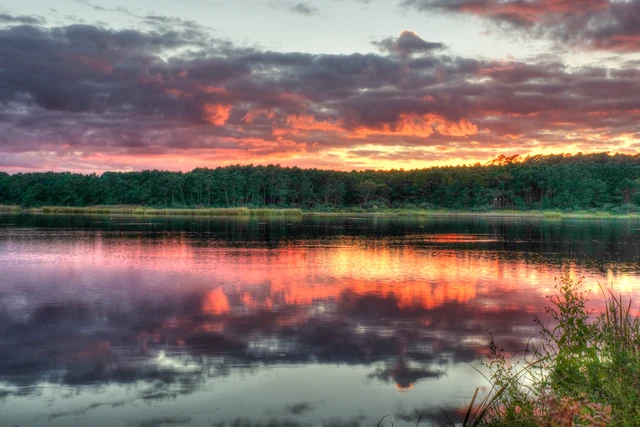
Orange and pink sunset clouds reflect in still water below a wooded shore.
Sunset reflected in wetland water at Huntington Beach State Park, photographed in September 2014. · Photo: fran.trudeau / Wikimedia Commons, CC BY-SA 2.0 · CC BY-SA 2.0 — image and resized versions · Copyright (c) 1998 Hewlett-Packard Company (ICC profile notice, not photo copyright) · Full-frame proportional Lanczos resizing and WebP compression; no crop, retouching or generative change. Embedded ICC profiles converted with Pillow ImageCms to sRGB before resizing where present, output sRGB ICC embedded; original EXIF stripped, credit/license/provenance retained in XMP and manifest.

A little less driving. A little more time outside.

The revealing thing about this coast is how quickly the horizon changes. Step away from the open beach and the ocean gives way to an overhead weave of oak leaves. At a marsh crossing, the view flattens again: water, grass, a bird holding its ground. The worthwhile distances here are sometimes measured in how long you are willing to stand still.

Myrtle Beach makes an ocean-facing starting point, with a state park that puts woodland and surf in the same outing. Wilmington offers a different rhythm farther north, built around the Cape Fear River and excursions into the pine-and-wetland country at Carolina Beach State Park. Give either place enough time to become familiar. Trying to collect both in a short weekend leaves less room for the coast itself.

Choose where to linger

Choose your stretch of coast

Start with the landscape you want outside your door: the Atlantic shore or a river city. These are two bases, not consecutive overnight stops.

01

Myrtle Beach

Choose Myrtle Beach when you want the ocean to set the pace. Make the state park your recurring anchor rather than filling every day with a different destination. Its beach has boardwalk approaches and nearby changing facilities, so a short shoreline visit can be a complete outing.

Stay somewhere that suits your actual beach access needs. A sea view does not establish a step-free route to the sand. Ask about the full journey from room to shoreline, then leave enough space in the schedule to return to a favorite spot.

02

Wilmington

Wilmington is the river-facing choice. The downtown Riverwalk follows the Cape Fear, giving a stay an easy daily ritual: step outside, follow the water, turn back when it feels right. The city is replacing its decking in a multi-year project, so check the working section before building a continuous walk around it.

Use separate Wilmington nights for Carolina Beach State Park. Its pine woods and wetland habitats deserve an unhurried morning, followed by a return to the city rather than a late transfer back to Myrtle Beach. Keep the ocean beach and the state park distinct in your planning.

Ways into the landscape

Where the shoreline opens out

01

Walk from maritime woods toward the ocean

When trails are open, start with Sculptured Oak at Myrtle Beach State Park. The park lists it at half a mile, with the 0.4-mile Yaupon Trail offering another woodland line toward the beach. Oaks, hollies, and magnolias give the approach texture before the light opens up at the shore. Check the map rather than treating the two listed lengths as a complete loop distance.

A closure matters more than the appealing line on the map: the park currently announces that all trails will close November through January for work. During that period, choose permitted beach and pier areas instead, subject to their own conditions. Do not use a beach approach to enter a closed trail.

02

Let the marsh supply the movement

At Huntington Beach State Park, begin with the causeway. Mullet Pond and the tidal salt marsh place different water worlds on either side of the crossing. Park in a designated space and use the sidewalk; a lingering stop is more rewarding than searching for the next viewpoint. Bring binoculars and let the birds choose the distance.

Build the visit around the causeway and other confirmed-open areas. The Nature Center Marsh Boardwalk is closed in the current advisory. That closure does not erase the larger marsh landscape, but it does change the walk you should expect.

03

Look down in Carolina Beach State Park

On a Wilmington stay, trade the broad river view for the small scale of the Flytrap Trail. This half-mile loop crosses a sequence of wetland and pine habitats; portions use boardwalk. The park lists it as wheelchair accessible, while also identifying a natural surface. Ask staff about current firmness and obstacles if those details determine whether the route works for you.

The plants are a reason to slow down, not step off the trail. Stay on the marked route and leave everything growing. For a longer walk, the three-mile Sugarloaf Trail offers another option, but it includes sand and is not listed as accessible.

04

Give Wilmington an evening on the river

The Riverwalk is an invitation to leave the day's mileage unfinished. Follow an open section beside the Cape Fear, pause at the interpretive signs, and let the water remain the main attraction. Nearby streets provide a natural return when decking work interrupts the waterfront route.

Choose this as the quiet end to a Wilmington day, not an extra evening drive from Myrtle Beach. Check the city's maintenance information before choosing a starting point, particularly if detours or changes in surface would affect your group.

A suggested journey

Three days, one Myrtle Beach base

Keep the same lodging for all three nights. One day goes south to Huntington Beach State Park; the other two leave room for the shore near Myrtle Beach. Reorder the days around weather and park notices.

  1. Day 1

    Day 1: arrive without chasing the horizon

    Settle into Myrtle Beach and make a modest first outing to the state park shore. Read the beach notices before crossing to the sand. Walk as far as the group comfortably wants, then reverse course; the point is to learn the place, not earn a distance.

    Keep swimming optional and conditional on local guidance. Leave time for a meal and an early return to your lodging. Saving energy today gives tomorrow's marsh visit room to breathe.

    Myrtle Beach, South Carolina
  2. Day 2

    Day 2: spend a full day with the marsh

    Go south to Huntington Beach State Park and make the causeway your first deliberate stop. Work slowly along the designated pedestrian route, looking into both freshwater and saltwater habitat. Bring a picnic so the outing can stay in one place rather than becoming a chain of errands.

    If conditions and access suit your group, add the beach or Atalaya, checking its separate admission and event closures. Skip the closed Nature Center Marsh Boardwalk. Return to the same Myrtle Beach lodging rather than adding a northern transfer.

    Myrtle Beach, South Carolina
  3. Day 3

    Day 3: choose a forest morning or a shoreline return

    If Myrtle Beach State Park trails are confirmed open, walk Sculptured Oak before turning your attention back to the ocean. During the announced maintenance closure, replace that leg with another permitted shoreline visit. Repetition is useful here: the same coast rarely feels identical twice.

    For an alternative finish, consider pier fishing after checking access and buying the required pier pass. The park says a separate South Carolina fishing license is not needed for fishing from this pier. Shore fishing follows different licensing rules. End locally and keep your final night in Myrtle Beach.

    Myrtle Beach, South Carolina

Plan for the elevation

Four ways to read the coast

Spring: leave room for birds

Make spring a looking-and-listening trip. The Myrtle Beach park identifies spring migration as a useful birding period. Pair a short, open woodland walk with a longer pause near the water, and carry a layer so stopping does not feel like a penalty. Keep sightings as possibilities rather than promises.

Summer: shorten the busiest part of the day

Take shade, drinking water, and a midday retreat seriously. Summer park visits are easier to shape around an early arrival than a tight sequence of departures and returns. Check the surf forecast before leaving, then ask the on-duty lifeguard about conditions. A bright sky is no substitute for that conversation.

Fall: keep the plan movable

Fall can be built around beach walking and migration rather than a swimming requirement. Leave one day unscheduled enough to exchange it with another if weather turns. For this draft's planning window, November begins the announced Myrtle Beach trail-work closure; confirm reopening rather than assuming the woodland route is available.

Winter: bring binoculars and a wind layer

Huntington's birding guidance makes winter a compelling season for waterfowl watching. Favor the causeway over a long exposed undertaking when the weather is sharp. Myrtle Beach's announced trail work extends through January; open shoreline areas can carry the outing instead. A Wilmington alternative needs a separate check of Carolina Beach park hours and its Christmas Day closure.

Make the trip work

Plan the details that matter.

Plan the actual surface, not the label

At Huntington, Beach Access 4 has a sidewalk and mat reaching the dune line, not a promised firm route to the water. Manual beach wheelchairs are checked out at the gift shop on a first-come basis; confirm arrangements directly. Atalaya has uneven surfaces and narrow turns, even where a stair-free route is possible.

For the Myrtle Beach state park, this review did not verify a dedicated accessibility guide. Ask staff about the exact beach or pier approach you intend to use. Carolina Beach's Flytrap Trail is an option with published accessibility information, but natural surfaces still warrant a conditions check.

Match permission to the activity

At Myrtle Beach State Park, pier fishing requires its own pass; surf fishing has separate state licensing requirements. Check the rules for your intended method and catch before casting. A park admission does not replace a fishing authorization.

At Carolina Beach State Park, ordinary day access is distinct from boat launching, marina use, camping, reserved facilities, and events. Check the relevant arrangements if you add any of those activities. This walking-focused plan does not require you to book a boat or enter the water.

Before you settle on a plan

A few useful questions.

Can I use both towns in this three-day plan?

Give each its own stay. This itinerary returns to Myrtle Beach every night; Wilmington works better as an alternative or an extension with additional nights.

Is Huntington’s marsh boardwalk part of the route?

No. The current park advisory closes the Nature Center Marsh Boardwalk. Use confirmed-open areas and check the latest notice before visiting.

Are the state park forest walks always available?

No. Myrtle Beach State Park currently posts a November–January closure of all trails for maintenance and construction. The beach-and-pier alternatives also need their own access checks.

Before you go

Check the day’s conditions.

As checked October 17, 2026, Myrtle Beach announces November–January trail closures and a partial pier restriction on the morning of October 17. Huntington closes its Nature Center Marsh Boardwalk. Wilmington has an ongoing Riverwalk decking project. Recheck all notices and surf guidance before departure; the plan does not promise uninterrupted access.

Keep the essentials simple.

  • Check admission, opening hours, parking, and closure notices before each park visit. South Carolina park entry and optional activities can carry separate charges; camping requires its own arrangements. Do not treat a day outing as an overnight booking.
  • Keep dunes, closed paths, and nesting areas out of your route. Stay on designated approaches and give wildlife space. In North Carolina's flytrap habitat, even a few steps off the trail can damage the reason you came.
  • Check the National Weather Service surf guidance and posted beach warnings; swim near an on-duty lifeguard, never alone. If unsure, stay out. Do not assume seasonal lifeguard coverage is operating during your visit.
  • Carry water, sun protection, insect repellent, and footwear suited to both natural surfaces and sand. Keep a dry layer for wind. A short coastal route can still involve heat, exposure, or soft footing.
Sources & editorial scope

Research checked 2026-10-17. Official park, city, and National Weather Service information checked October 17, 2026. Recheck access notices before traveling; posted closures override suggested routes.