The Adventure Collective Journal · Regional guide

Greater Chicago: Follow the Lake

Prairie against a skyline, migrant birds in a lakeside thicket, and a separate sandy escape to Michigan City.

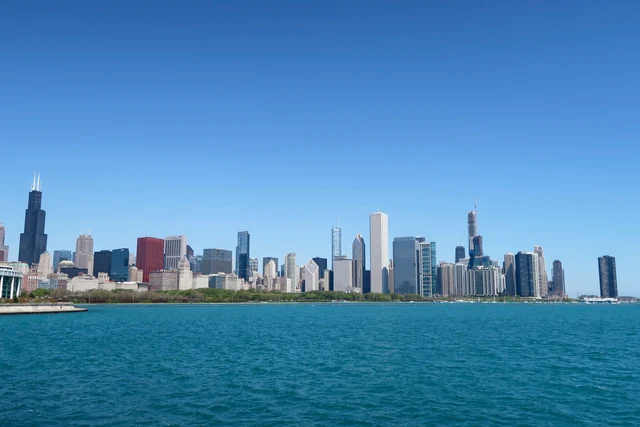
Chicago towers span the horizon above blue Lake Michigan water.
Chicago’s skyline from the Lakefront Trail at Northerly Island, photographed in May 2019. · Photo: Bex Walton / Wikimedia Commons, CC BY 2.0 · CC BY 2.0 — image and resized versions · Copyright 2000 Adobe Systems Incorporated (ICC profile notice, not photo copyright) · Full-frame proportional Lanczos resizing and WebP compression; no crop, retouching or generative change. Embedded ICC profiles converted with Pillow ImageCms to sRGB before resizing where present, output sRGB ICC embedded; original EXIF stripped, credit/license/provenance retained in XMP and manifest.

A little less driving. A little more time outside.

Lake Michigan changes the scale of Chicago. Turn away from the towers and the horizon opens; turn back and the city seems to rise straight out of the grass. The most satisfying outdoor visit leaves room for both views, with a short shoreline walk one day and a slower look into the city’s pocket habitats the next.

Begin with Chicago’s connected lakefront parks, where a good day need not involve a long distance. Montrose offers a reason to stand still; Northerly Island asks you to notice the wetland and prairie in front of the skyline. Across the southern lake, Michigan City offers a different rhythm: beach time and carefully chosen dune walks. Give that shore its own stay instead of making it the final errand of an already full city day.

Choose where to linger

Two ways to stay beside the lake

Choose a city stay for transit-linked parks or a separate Michigan City stay for sand and dunes. Each deserves an unhurried morning.

01

Chicago

For this itinerary, choose lodging with a practical connection to the lakefront and to your preferred transit routes. A central base keeps the first two days straightforward; Montrose gets its own outing rather than becoming a distant turnaround on an overambitious walk. Return to the same room each night and keep evenings open for the neighborhood around it.

Car-free travel is a reasonable city plan, but map the whole journey, including the approach from the stop to the park. CTA has accessible vehicles; that does not make every rail station accessible. Check the station list and current elevator notices before committing to a route.

02

Michigan City

Choose Michigan City for a separate stretch of the trip when the beach and dunes are the point. Washington Park provides a municipal waterfront anchor; Mount Baldy offers a very different encounter with the lake. Leave room to change plans when waves or access restrictions rule out the day you imagined.

Do not confuse a national-park pass with every waterfront permission in town. Check Washington Park parking information separately, and consult the national park before a dunes outing. Build this stay around a small number of sites rather than repeatedly crossing the metropolitan area from a Chicago hotel.

Ways into the landscape

Make room for the shoreline

01

Find your own length of lakefront

Use the Lakefront Trail as a menu, not a mileage challenge. Pick a mapped segment near your base, walk toward the lake’s open horizon, and turn back while the return still sounds pleasant. Separate pedestrian and bicycle routes help organize the busy shoreline; follow the markings rather than assuming every strip of pavement serves the same purpose.

For a first outing, keep a turnaround landmark in mind and leave time to sit. The Park District posted rolling repairs in September 2026; an uninterrupted end-to-end route is not promised. Respect work zones and choose a shorter open segment when necessary.

02

Let Montrose set the pace

At Montrose Point, the attraction is small movement: a branch shifting, a bird dropping into cover, a quiet pause that becomes the best part of the morning. Spring and fall migration bring particular interest to this lakeside sanctuary. Bring binoculars if you have them, but let curiosity rather than a species checklist decide how long to stay.

The Park District describes an accessible paved loop with parking near the entrances. Remain on designated paths and leave cover undisturbed; a better photograph is not a reason to press closer to a bird. Natural-area visits belong between dawn and dusk.

03

Prairie with a skyline behind it

Northerly Island makes a good counterpoint to the city’s harder edges. Follow the paved out-and-back path, looking from prairie and savanna toward wetland and water. The buildings remain in view, but they can become background rather than the subject of the outing.

The natural area is listed as accessible and operates dawn to dusk. Treat the route as an out-and-back even if a map seems to suggest a circuit. Check the park’s event information first: pavilion events can affect access before and after the event itself.

04

Meet the dunes on their terms

On a Michigan City stay, consider Mount Baldy’s beach trail only if the group can manage a steep return through loose sand. The short distance hides the effort: getting down to the beach commits you to climbing back out. Carry lightly and stay on the designated route.

The June 2026 reopening did not reopen the dune face or summit for independent exploration. Follow current closures without improvising a climb. For an alternative without that sand ascent, investigate Lake View’s accessible overlook and picnic shelters; verify present access with the park before making it your substitute.

A suggested journey

Three days, one Chicago base

Keep the same Chicago lodging for all three nights. Each day has one outdoor focus; shift the order for weather, events and trail work.

  1. Day 1

    Day 1: learn the edge

    Settle into your Chicago base, then choose a modest Lakefront Trail segment from the official map. Walk before deciding whether you want a longer outing; the useful discovery is how wind, crowds and the return journey feel today. Pause where you can step clear of through-traffic and give the horizon some attention.

    Keep dinner near your lodging and leave the evening flexible. If construction blocks the chosen segment, take a shorter open walk rather than threading through a work area. This is an orientation day, not a test of endurance.

    Chicago
  2. Day 2

    Day 2: prairie beside the city

    Make Northerly Island the day’s outdoor destination. Check event restrictions before leaving, then follow the designated paved out-and-back at a pace that allows time for watching the habitat around the pond. Return the same way rather than looking for an unofficial shoreline shortcut.

    Keep the afternoon deliberately unassigned. A shorter second look, a meal, or an indoor stop near your base can be enough. If access is restricted, move this day to another slot and use an open lakefront segment instead.

    Chicago
  3. Day 3

    Day 3: a quiet morning at Montrose

    Travel to Montrose for a focused birding visit. Use the sanctuary’s paved loop as the spine of the morning and allow more time for standing still than for distance. Choose a transit connection after checking station accessibility and service alerts, rather than assuming the closest rail stop offers the easiest approach.

    Return to your Chicago base for a relaxed final afternoon. Keep Michigan City for added nights or a future dunes trip; this three-day stay already has a complete arc from open waterfront to prairie to sheltered bird habitat.

    Chicago

Plan for the elevation

The lake through four seasons

Spring: watch the cover

Give a spring morning to Montrose rather than trying to cover the whole lakefront. Migration is a reason to linger, not a promise of a particular sighting. Pack a layer you can put on while standing still, and choose the day’s walk after checking the weather.

Summer: separate beach time from trail time

Make an outdoor morning and a beach afternoon two distinct decisions. Chicago swimming belongs in designated areas while lifeguards are on duty, with the day’s flags and instructions controlling access. For Michigan City, consult the municipal beach’s own water-quality and staffing information. Shade breaks and drinking water deserve space in the plan.

Fall: a slower shoreline

Fall offers another migration window at Montrose and a good reason to revisit a place rather than chase a new stop every day. For autumn 2026, plan around the lakefront maintenance notice. Chicago’s swimming season has ended, so a beach visit now is a shore outing.

Winter: keep the horizon on land

Make winter outings short enough to retreat before cold becomes the main event. Use current conditions to choose a firm, open route and save a warm indoor option for afterward. On the Indiana shore, stay off shelf ice entirely: apparently solid surfaces can conceal holes and weak spots. A photograph never warrants stepping onto it.

Make the trip work

Plan the details that matter.

Give each shore its own stay

The city itinerary is designed to avoid daily packing and repeated regional transfers. If dunes are your priority, reverse the emphasis: stay in Michigan City, begin with Washington Park, and select an appropriate national-park outing on a separate day. Add Chicago as another stay only when you have the time to enjoy it.

For limited mobility on the Indiana shore, ask park staff about the exact facility and season. Lake View offers an overlook option; beach mats and specialized equipment elsewhere have their own operating arrangements. A general accessibility label does not guarantee independent access across loose sand.

Before you settle on a plan

A few useful questions.

Can I visit without a car?

The Chicago itinerary can be planned around transit and walking, with attention to the final approach to each park. Check CTA service and elevator status. A Michigan City dunes stay needs its own site-by-site transport plan; no seamless park shuttle is assumed here.

Can I climb Mount Baldy?

Do not plan an independent summit climb. The 2026 reopening covered the access site and beach route while the summit and dune face remained closed. Check the latest NPS guidance before visiting.

Is there a lower-effort dunes option?

Consider the Lake View overlook and picnic shelters rather than Mount Baldy’s steep sand return. Confirm access for your requirements with the national park.

Before you go

Check the day’s conditions.

As checked October 17, 2026, Chicago has rolling Lakefront Trail repairs and its swimming season has ended. Mount Baldy’s access reopening does not authorize summit or dune-face access. Check current park notices, beach conditions and CTA elevator status before each outing.

Keep the essentials simple.

  • Check the Lakefront Trail maintenance page before setting a route. A paved trail can still have temporary closures and uneven repair edges; follow on-site signs.
  • Accessibility is site-specific. Northerly Island’s described route and Montrose’s paved loop are useful starting points; Mount Baldy’s beach trail is not wheelchair accessible. Confirm conditions and the approach from parking or transit for your needs.
  • For Indiana Dunes visits, check the entrance-pass requirement before arrival. Indiana Dunes State Park is a separate operation with a separate entrance fee; Washington Park has its own parking arrangements.
  • For water time, check both surf and water-quality restrictions, then obey local flags and staff. Chicago does not permit swimming outside its staffed beach season. Keep out when warnings or large waves make conditions unsafe.
  • Pack water, weather layers and a route you can shorten. Stay on designated paths and carry out what you bring; protected habitat is part of the destination, not spare walking space.
Sources & editorial scope

Research checked 2026-10-17. Official park and transit sources checked October 17, 2026. Recheck conditions before travel; suggested pacing is editorial guidance.