The Adventure Collective Journal · Regional guide

Greater Louisville: Follow the Water Out

A river-city weekend of bridge walks, creekside miles, and a shoreline where an ancient sea comes into view.

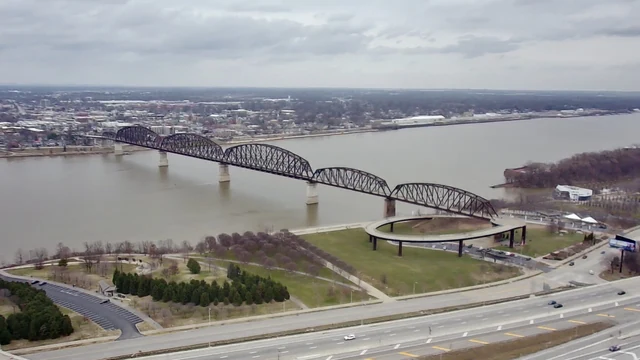
Steel bridge spans cross the Ohio River, with the curved Louisville approach and park below.
An elevated view of the Big Four Bridge linking Louisville Waterfront Park with Jeffersonville, Indiana, dated February 2024. · Photo: Huskydaddy / Wikimedia Commons, CC0 1.0 · CC0 1.0 — image and resized versions · Full-frame proportional Lanczos resizing and WebP compression; no crop, retouching or generative change. Embedded ICC profiles converted with Pillow ImageCms to sRGB before resizing where present, output sRGB ICC embedded; original EXIF stripped, credit/license/provenance retained in XMP and manifest.

A little less driving. A little more time outside.

Louisville rewards a change of scale. From the riverfront, the Ohio is a broad horizon crossed by steel; beside Floyds Fork, water becomes something you can follow around a bend. Across the state line, the shore turns the clock back again, to the fossil beds at Falls of the Ohio. Build a trip around those three encounters and the city starts to feel less like a stop between outdoor destinations than a place to settle in.

Keep one room in Louisville and let each day have a different texture: open river, wooded path, exposed limestone. There is no need to turn the weekend into an endurance circuit. Leave space for a second look at a small detail, a long lunch, and the weather's inevitable edits.

Choose where to linger

Choose a side of the river

Louisville anchors the itinerary. Jeffersonville offers a nearby alternative if crossing the bridge on foot is the daily ritual you want.

01

Louisville

Choose Louisville when you want the riverfront to bookend days spent farther afield. A lodging search near Waterfront Park makes sense for this itinerary, but compare the actual walking route before booking rather than treating a downtown address as a promise of easy access.

Keep the car or other arranged transport for the Parklands day. In the evening, return to the river with nothing more ambitious than a walk and a place to sit. That repetition gives a short trip an anchor.

02

Jeffersonville

Jeffersonville puts the Indiana end of the Big Four Bridge into the foreground. Choose it as an alternative stay if you like the idea of approaching Louisville across the Ohio, with the river itself becoming part of the arrival.

The bridge connects pedestrians and bicycles, not cars. Plan luggage and cross-river vehicle trips independently. Staying here is an alternative to the Louisville plan below, not a reason to move hotels midway through it.

Ways into the landscape

Three ways into the landscape

01

Walk into the Ohio River skyline

Begin at Waterfront Park and work toward the Big Four Bridge. The approach is part of the experience: the view widens gradually, then the steel structure frames the river in a sequence of open windows. Walk only as far as your party wants; a complete crossing is not the measure of a good outing.

The former railroad bridge now links Louisville with Jeffersonville for walkers and cyclists. Personal mobility scooters and motorized wheelchairs are allowed, while pets are prohibited except service animals. Bring a layer for exposure and keep an eye on passing bicycles.

02

Give Floyds Fork a whole day

The Parklands spreads the outing across several parks rather than one entrance and one trailhead. Start with Beckley Creek Park and a modest out-and-back on the paved Louisville Loop. Turn around while the day still feels spacious; the full network is an invitation for another trip, not a checklist for this one.

For a different afternoon texture, consider the shaded Moss Gibbs Woodland Garden at Broad Run Park, or choose a natural-surface trail suited to the group. Check the current map and alerts before committing to any connection. A paved route can still have hills, turns, and mixed traffic; surface alone does not establish suitability for every mobility device.

03

Read the shore at Falls of the Ohio

Across the river in Clarksville, start inside the interpretive center before heading toward the fossil beds. The exhibits give the rock a vocabulary; outside, slow observation matters more than distance. Let the water level decide how much of the shoreline you explore.

Indiana DNR identifies late summer into autumn as the usual best window for exposed beds. That describes water access, not a wheelchair-accessibility guarantee. Leave fossils on the beds and riverbank untouched; collecting is confined to the park's designated quarry-material piles. If outdoor footing is unsuitable, make the exhibits the main event.

A suggested journey

Three days, one Louisville base

Use Louisville for all three nights. Arrange transport separately for the eastern parks and the Indiana fossil beds; a pedestrian bridge crossing is its own outing.

  1. Day 1

    Day 1: arrive at river level

    Check into Louisville and keep the first afternoon local. Walk Waterfront Park, pause along the river, and approach the Big Four Bridge if conditions and energy allow. Make the crossing optional; this is an orientation day rather than a mileage target.

    Return to your Louisville base for the evening. If traveling with a dog, make a separate park walk and leave the bridge for another arrangement, since its rules differ from the surrounding park.

    Louisville, Kentucky
  2. Day 2

    Day 2: take the eastern parks slowly

    Travel to Beckley Creek Park after checking the Parklands map and alerts. Follow an out-and-back section of the Louisville Loop, choosing a turnaround that leaves energy for lunch. Give faster users space, announce passes when cycling, and keep your route inside signed public access.

    If the group wants more, make Broad Run's woodland garden the afternoon option. Otherwise remain in one park and enjoy the unhurried return. Skip paddling unless equipment, transport between access points, water conditions, and experience have all been resolved in advance. Return to the same Louisville lodging.

    Louisville, Kentucky
  3. Day 3

    Day 3: cross the river, change the timescale

    Travel to Falls of the Ohio in Clarksville for the interpretive center and, when conditions permit, a careful look at the fossil beds. Check opening hours before departure, especially if the day falls on a Sunday. Allow the indoor visit to stand on its own if the water or footing rules out the shore.

    Head back to Louisville without adding another distant attraction. A final riverfront stroll can close the trip where it began, with the broad present-day Ohio now carrying a little more geological context.

    Louisville, Kentucky

Plan for the elevation

Let the season set the pace

Spring: make room for a change of plan

Choose shorter outings that can be rearranged without losing the day. A river-view walk and a park picnic are enough of a framework; inspect weather and park notices before adding creekside mileage. Carry an extra layer, and turn around rather than continuing through flooded or closed sections.

Summer: spend the cool hours outside

Start early and save the longest exposed riverfront walk for a gentler part of the day. The Parklands recommends shade, frequent breaks, and checking the forecast before departure. Carry water rather than making a working fountain the hinge of the plan. A creek nearby does not remove the need for heat precautions.

Autumn: look down as well as out

This is a compelling season to pair a park walk with the fossil beds. DNR's August-to-October guidance makes an autumn shoreline visit a sensible possibility, never a guarantee. Keep the itinerary flexible enough to swap the Indiana day with the park day when conditions favor one.

Winter: shorten the walk, keep the river

A brief riverfront outing can still carry a winter day, but check the surface first. Waterfront Park warns that ice can close the Big Four Bridge, paths are not salted, and water fountains and regular restrooms close for winter. Plan a warm indoor stop and a confirmed restroom alternative before setting out.

Make the trip work

Plan the details that matter.

Keep paddling conditional

Floyds Fork is an optional specialist addition to this walking-focused trip. Check the Parklands' current paddling information, take appropriate equipment including a properly fitted life jacket, and arrange a reliable takeout plan before launching. Do not infer safe conditions from water being present.

Cliffside is the final Parklands takeout on the Broad Run Valley route. Missing it is a serious planning error, not an invitation to extend the afternoon. The riverfront walk on the Ohio is not a recommendation to launch a boat there.

Match the outing to the person

The Falls interpretive center offers an A4A exhibit app with listening support, captions, audio descriptions, and sensory information. NPS also lists wheelchair-related amenities. Contact the park about the precise facilities needed; uneven outdoor fossil terrain should be assessed separately.

At the Parklands, select a manageable paved segment rather than assuming the whole system is equally accessible. For any outing, decide on a shorter turnaround and a shelter or indoor alternative before fatigue or weather makes that decision urgent.

Before you settle on a plan

A few useful questions.

Do we need to move hotels?

No. The three-day itinerary returns to Louisville each night. Jeffersonville is a nearby alternative base, not a required second stay.

Can we take fossils home?

Do not remove fossils from the Falls of the Ohio fossil beds or riverbank. Ask park staff about the designated collecting piles instead.

Is the Big Four Bridge a good dog walk?

Pets are prohibited on the bridge; service animals are allowed. Leashed pets can use permitted parts of Waterfront Park.

Before you go

Check the day’s conditions.

Check Waterfront Park notices for bridge and winter-facility restrictions, Parklands alerts and route maps for trail access, and Falls of the Ohio for current visitor information. This guide does not certify live trail or river conditions.

Keep the essentials simple.

  • Confirm facility hours and closures directly before leaving. A park's grounds and its staffed buildings may operate on different schedules.
  • Use signed entrances and current maps. Do not assume every Louisville Loop segment connects without a closure, road crossing, or change in conditions.
  • Waterfront Park describes its walkways as ADA-standard routes with alternatives to stairs. Ask staff about your specific route, gradient, distance, and restroom needs; this does not describe every trail elsewhere in the region.
  • Budget separately for Falls of the Ohio parking and interpretive-center admission. The state park pass does not cover the center; check current official details rather than relying on a trip-wide entry assumption.
  • For optional fishing, verify Kentucky licensing and species-specific requirements before casting. The Parklands flags a fishing-license requirement for anglers over 15 and a trout-permit requirement; check applicable exceptions and current state regulations.
Sources & editorial scope

Research checked 2026-10-17. Official park and agency information checked October 17, 2026. Recheck closures, facility hours, river levels, and activity requirements before travel.