The Adventure Collective Journal · Regional guide

Nantucket & Martha's Vineyard

Sandplain walks, harbor afternoons, and enough time to notice the tide. Settle into Nantucket for three days; give the Vineyard a stay of its own.

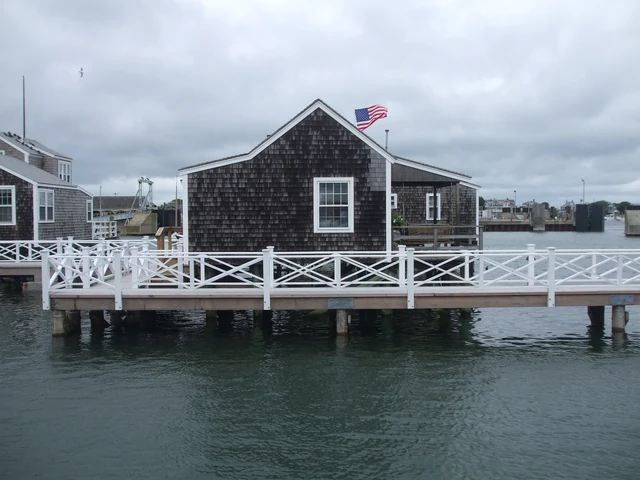
Gray wooden shack and white railings stand beside Nantucket Harbor water.
A weathered wharf shack at Old North Wharf in Nantucket Harbor, photographed in 2009. · Photo: Le grand Cricri / Wikimedia Commons, CC BY-SA 3.0 · CC BY-SA 3.0 — image and resized versions · Full-frame proportional Lanczos resizing and WebP compression; no crop, retouching or generative change. Embedded Display P3/Adobe RGB converted with Pillow ImageCms to sRGB before resizing where present, output sRGB ICC embedded; original EXIF stripped, credit/license/provenance retained in XMP and manifest.

A little less driving. A little more time outside.

An island trip begins with a useful constraint: you cannot simply drive on to the next place. Let that work in your favor. On Nantucket, make a town base and build each day around one landscape: the harbor and its history, the open country at Sanford Farm, then the east-side village of ’Sconset. The spaces between those outings are part of the holiday. A long lunch or a return to a favorite stretch of shore need not be filled with another destination.

Martha’s Vineyard deserves the same attention. Edgartown gives a separate stay a different shape, with beach time and the possibility of a carefully planned Chappaquiddick outing. Neither island needs to be the other’s excursion. For three days, choose one, unpack once, and let the weather change the order rather than the ambition of the trip.

Choose where to linger

Choose your island, then settle in.

Nantucket town anchors the itinerary below. Edgartown is an alternative island holiday with its own transport plan.

01

Nantucket

A town base for three days of different landscapes

Choose a town base if you want the first and last part of each day to be simple. The Whaling Museum gives the waterfront a historical frame, while the WAVE network can support outings beyond town when the relevant service is running. Before choosing lodging for a car-light stay, check the actual journey from its door to the stops you need.

A central address is a convenience, not a reason to spend every day in the center. Give one full day to open country and another to the east side. Check the lodging’s own entrance, room and bathroom access directly; a museum’s elevator or a bus service says nothing about the steps at a historic inn.

02

Martha's Vineyard (Edgartown)

A separate island chapter

Choose Edgartown for a separate Vineyard stay organized around shore days and time in town. South Beach and Bend in the Road are public options, but the town warns that access and parking restrictions can change and that erosion affects the South Beach approaches. Choose the beach after checking the day’s conditions, rather than treating all island shorelines as interchangeable.

Build the arrival around your actual ferry terminal, then arrange the onward connection to Edgartown. Vineyard Transit publishes its own route maps and seasonal schedules. Chappaquiddick requires another crossing and onward travel; reserve a whole outing for it if it matters to you. This base should have its own nights and return plan, rather than being attached to a Nantucket afternoon.

Ways into the landscape

Open country. Village paths. A harbor to return to.

01

Walk into Nantucket’s open country

Sanford Farm changes the scale of the trip. Sandplain grassland and heathland replace the town’s close-set streets, and a marked trail network lets a walk become the day’s main event. Start at the Madaket Road entrance with a current property map and choose a return point before setting out. The purpose is to spend time in the landscape, not to reach the most distant shoreline at any cost.

There are no restrooms at Sanford Farm. Carry water, stay on established routes and leave the plants and wildlife undisturbed. For wheelchair users, the town identifies entrance barriers and recommends arranging alternative gate access with the Conservation Foundation in advance; rough trail surfaces still require a separate suitability check.

02

Take ’Sconset at walking pace

The Bluff Walk offers a close encounter with the east shore, with an important boundary: the public footpath passes behind private homes. Keep to the signed route and give the people living beside it their privacy. The town describes a narrow, sometimes uneven dirt path and no parking set aside specifically for the walk.

Make a short out-and-back the default and obey any closure signs you find. Do not assume an old map promises a continuous route or a lighthouse finish. If footing or exposure does not suit your group, keep the day to the village and another suitable public shore access rather than trying to force the walk.

03

Give the harbor a history, then a quiet afternoon

Build a town day around the Whaling Museum, with enough time to look beyond the largest objects and consider the lives behind the maritime trade. Confirm opening hours for your date; an old seasonal listing is not a current promise. Then leave the next part of the day open for a meal and a shoreline outing.

Jetties is a useful beach to investigate when access matters: the town describes a seasonal boardwalk and accessible facilities. Ask whether the boardwalk is installed and arrange any beach wheelchair before relying on it. A beach day can mean sitting above the water, reading and watching the harbor as readily as swimming.

04

Give Chappaquiddick a day of its own

On a Vineyard stay, Cape Poge can be the outing around which you organize a day. Work out the Edgartown–Chappaquiddick crossing and onward journey before leaving town. A map showing sand, water and a lighthouse can conceal substantial effort: the Trustees describes walking routes through very soft sand.

Confirm the open route with the refuge and choose a distance you can comfortably retrace. Over-sand driving needs a permit, and that permit does not guarantee access through nesting or erosion closures. The listed beach wheelchair and accessible restrooms require practical confirmation for your visit; they do not make the entire refuge accessible. No lifeguards are listed for the swimming beach.

A suggested journey

Three days with one Nantucket base

Allow three usable days on the island, with arrival and departure arranged around confirmed sailings. Swap the outdoor days when wind or rain makes a different order sensible.

  1. Day 1

    Arrive in the rhythm of the harbor

    After an arrival with enough usable time, settle into your Nantucket town lodging and visit the Whaling Museum during confirmed opening hours. Let the rest of the day be deliberately modest: lunch, a walk that suits your footing, and Jetties if transport, conditions and access work for your group. If the ferry arrives late, use this as a full day after arrival rather than squeezing the museum into a closing-hour rush.

    Stay in the same Nantucket town lodging.
  2. Day 2

    A full morning in the sandplain

    Take your arranged transport to Sanford Farm and walk a chosen section of the marked network. Carry what you need and return before the outing becomes a forced march. Come back to town for a late lunch and a free afternoon. If rain or access makes the trails unsuitable, swap this with the museum day; there is no need to add a second remote destination to compensate.

    Stay in the same Nantucket town lodging.
  3. Day 3

    East to ’Sconset, then back to your own corner

    Visit ’Sconset using transport you have checked for the date, including a confirmed return. Walk only the open portion of the Bluff Walk that suits your group, then linger in the village rather than chasing the island’s entire perimeter. Return to town with time to pack and revisit somewhere you liked. For a same-day ferry departure, shorten this outing generously or move it earlier in the stay.

    Stay in the same Nantucket town lodging, or depart only with a generous transfer margin.

Plan for the elevation

Let the season set the pace.

Spring

Plan a spring visit around walks and town time, leaving beach facilities and seasonal transport out of the essential plan until their opening dates are confirmed. The reward is a trip with fewer moving parts: one outdoor objective, a packed layer, and an indoor option whose hours you have checked.

Summer

Choose the arrival sailing and accommodation together, particularly if taking a vehicle. Make beach access part of the plan before the hottest part of the day, and ask lifeguards about conditions wherever they are on duty. Nesting wildlife can close over-sand routes even when a permit has already been bought.

Fall

Keep the walks, but recheck everything that supported the summer version of the trip: bus services, beach equipment and museum hours. An afternoon on the sand needs no grand objective. Leave daylight for the return and avoid making the final day’s success depend on one long outing before a ferry.

Winter

Treat winter as a town-centered island break with short outdoor windows. Do not carry over the summer bus or high-speed ferry plan: verify the services that actually run on your dates. Confirm meals and lodging directly, pack for exposed shore conditions, and leave flexibility around the mainland connection.

Make the trip work

Plan the details that matter.

Book the crossing that fits the actual trip

The Steamship Authority serves Nantucket from Hyannis; its Nantucket high-speed service is seasonal. Vehicle bookings and passenger tickets are different arrangements. Traditional ferry walk-on passengers do not need reservations, while high-speed passenger reservations can be booked. Check the selected service’s schedule, boarding instructions and return before committing to the rest of the trip.

For the Vineyard, all vehicle travel on the Steamship Authority’s Woods Hole route is reservation-only. Confirm the arrival terminal and the onward Edgartown journey. This guide does not depend on a direct inter-island sailing: adding the other island requires a separately verified transfer and another stay.

Plan the complete accessible journey

Check the assigned ferry, not just the route name. Steamship Authority accessibility varies by vessel; on the Iyanough the main passenger deck is accessible but the upper deck is not. The operator asks passengers needing an elevator to arrive at least 30 minutes before departure and notify terminal staff. Follow any additional check-in instructions for your booking.

The Whaling Museum lists wheelchair-accessible exhibits and elevator access to public floors. Outdoors, ask about the actual surface, entrance and equipment. Arrange Sanford gate access before arrival if needed; confirm Jetties boardwalk installation and beach-chair arrangements. A short path can be a harder outing than a longer firm-surface route.

Let the water have the last word

Nantucket’s town lifeguard service warns that wind, weather and shifting shoals affect currents, with rip currents and heavy surf a particular concern on west- and south-facing shores. Use a guarded beach when swimming, follow the day’s advice and choose shore time when conditions are unsuitable. Never infer safety from a calm-looking photograph.

Beach-driving permission is separate from ordinary beach access. This itinerary needs no over-sand vehicle. If you add driving, consult the relevant land manager for the exact beach, permit and current restrictions; permission at one property does not open the next.

Before you settle on a plan

A few useful questions.

Can I see both islands in three days?

Choose one for this trip. The itinerary uses Nantucket throughout. Add Martha’s Vineyard as a separate stay with a confirmed transfer, accommodation and return plan.

Do I need to take a car?

A Nantucket town base can work without one if you verify transport for each outing. Check the WAVE schedule for your dates and arrange any journey the bus network does not cover. The guide does not assume a bus stops at the Sanford trailhead.

Is there an easier alternative to the Bluff Walk?

Skip the narrow dirt path if it does not suit your mobility. Consider a museum-led town day or Jetties after confirming seasonal boardwalk and beach-chair arrangements.

Before you go

Check the day’s conditions.

Recheck ferry operation and reservations, date-specific bus schedules, beach access, wildlife closures and the day’s water conditions. Seasonal equipment and published opening hours need confirmation.

Keep the essentials simple.

  • Save ferry confirmations and the correct terminal details before departure. Leave margin for parking, boarding and onward transport.
  • Check return buses before starting an outing; a seasonal route on a map is not a promise of service on your date.
  • Carry water and layers, stay on signed public routes, and respect dune and wildlife closures.
Sources & editorial scope

Research checked 2026-10-17. A researched planning guide, not a live conditions report or a firsthand account. Recheck ferry services, seasonal openings and access with the operators before travel.