The Adventure Collective Journal · Regional guide

Northern Lower Michigan: Follow the Water, Leave Room for the Woods

A Traverse City base opens onto quiet lake paths, Leelanau riding and the high sand of Sleeping Bear, with Petoskey and Charlevoix waiting for a separate stay.

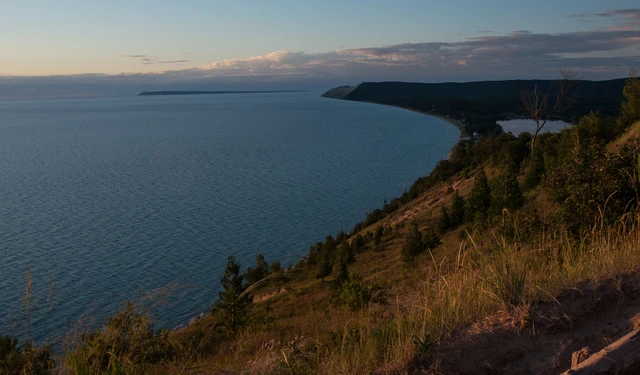
Blue lake water curves below a steep grassy bluff toward distant dunes and an island.
Lake Michigan and the shoreline from Empire Bluff at Sleeping Bear Dunes National Lakeshore, photographed in August 2015. · Photo: NPS Photo / National Park Service, public domain · Public domain (U.S. federal work) — image and resized versions · Copyright (c) 1998 Hewlett-Packard Company (ICC profile notice, not photo copyright) · Full-frame proportional Lanczos resizing and WebP compression; no crop, retouching or generative change. Embedded ICC profiles converted with Pillow ImageCms to sRGB before resizing where present, output sRGB ICC embedded; original EXIF stripped, credit/license/provenance retained in XMP and manifest.

A little less driving. A little more time outside.

Northern Lower Michigan asks you to look at water in different ways. From a bluff, Lake Michigan becomes a broad band of color beyond the trees. Beside an inland lake, the scale contracts to a boardwalk, a reed bed and the next bend. The pleasure is in changing your pace with the landscape.

Give the western shore a few unhurried days rather than collecting towns through the windshield. Start with Traverse City, put a wooded ride between two waterfront walks, and leave the biggest dune views for a day when the weather cooperates. Petoskey and Charlevoix deserve the same attention on a northern stay of their own.

Choose where to linger

Choose your stretch of shore

Settle near the outings you most want, then build in space to change plans when the lake gets restless.

01

Traverse City

Choose Traverse City for a trip that alternates town comforts with larger landscapes. Boardman Lake supplies a close-to-town outing; the Leelanau Trail offers another way to leave the streets behind. Keep this as your overnight base when Sleeping Bear is the main day trip.

A shorter first day is an asset here. Unpack, take a modest walk and decide whether tomorrow calls for bluff views or a sheltered trail.

02

Petoskey

Make Petoskey a separate Little Traverse Bay stay. Its state park pairs sandy shore with wooded dune trails: choose the half-mile Old Baldy loop for a climb or the one-mile out-and-back Portage Trail for another woodland outing. Neither should be treated as a paved waterfront stroll.

The park lists an accessible walkway to the water and a beach wheelchair through the beach-house concession. Confirm seasonal staffing and equipment before relying on either.

03

Charlevoix

Choose Charlevoix when you want a northern shore stay with room for Fisherman’s Island State Park. Its wooded dunes and rocky stretches of Lake Michigan invite a measured walk rather than a packed checklist.

Access needs a fresh check: on October 17, 2026, DNR listed the rustic campground closed for the season and day-use vehicle access closed for culvert repairs. Trails and shoreline remained accessible on foot; ask the park about a legal starting point and the resulting walking distance.

Ways into the landscape

Sand, shade and a slower shoreline

01

Follow Boardman Lake at walking speed

The four-mile Boardman Lake Loop offers a different Traverse City from the traffic-facing streets. Boardwalk, pavement and gravel take turns beneath your feet, with wooded edges and water-level pauses. Start at Hull Park or Medalie Park and choose a full circuit or a shorter return walk.

TART labels the route accessible, but mixed surfaces and work zones still matter. Check the operator’s detour notice before setting out, particularly if an unbroken loop is important to your group.

02

Let Empire Bluff reveal the lake

At Empire Bluff, the approach is part of the reward: a beech-maple woodland gives way to an elevated shoreline view. The 1.5-mile round trip includes hills and stairs. Take it as a hike, with sound footwear and enough time to stop without feeling chased by the itinerary.

The wooden boardwalk is the destination. Stay there rather than descending the bluff; the fragile edge is no shortcut to a beach day.

03

See the dunes without chasing every overlook

When open to vehicles, Pierce Stocking Scenic Drive offers a 7.4-mile loop through the lakeshore landscape. Pick a few stops and let the view hold your attention. Avoid adding a long sand hike simply because you have arrived early.

For a lower-barrier view, investigate the ramped deck at stop 3. Stops 9 and 10 have steep approaches and are not wheelchair-accessible. A parking-space symbol alone does not describe the path beyond it.

04

Ride a piece of the Leelanau corridor

The paved Leelanau Trail follows a former rail corridor between Traverse City and Suttons Bay. Fields, woods and scattered water give the ride its rhythm. Choose an out-and-back from a signed trailhead rather than committing everyone to the full 17-mile length in each direction.

Turn around while the return still sounds enjoyable. Road crossings need attention, and the published fall 2026 bridge detour means the usual through-route cannot be assumed.

05

Know which dune outing you are choosing

The Dune Climb is its own undertaking. Its first ascent looks toward Glen Lake; Lake Michigan is not waiting just over that crest. Continuing to the big lake means a separate, strenuous journey over loose sand with repeated climbing on the return.

For a three-day introduction, consider a short climb only if conditions and energy suit, or save the sand hiking for another trip. A picnic at the base is a perfectly good way to watch the landscape change in the light.

A suggested journey

Three days from Traverse City

A snow-free plan with three nights in Traverse City, one Sleeping Bear excursion and a deliberately flexible final day. Swap the outdoor days to suit conditions.

  1. Day 1

    Day 1: settle beside Boardman Lake

    Arrive in Traverse City and make the first outing deliberately local. Walk a section of the Boardman Lake Loop from Hull Park, choosing your turnaround around the group’s energy and the current detour. Save the complete circuit for those who want it.

    Return to town for an unhurried meal and the same bed you will use for the next two nights. Check tomorrow’s lakeshore conditions before choosing the departure plan.

    Traverse City
  2. Day 2

    Day 2: a Sleeping Bear day with one main hike

    Head toward Empire and start with the Philip A. Hart Visitor Center when open. Confirm access, arrange the required entrance pass and choose Empire Bluff as the day’s main hike. Pack lunch rather than planning every hour around another stop.

    If energy and conditions allow, add a few stops on Pierce Stocking Scenic Drive when it is open. For a lower-mobility version, replace the bluff hike with the visitor center and the ramped stop 3 overlook. Return to Traverse City without adding Petoskey or Charlevoix.

    Traverse City
  3. Day 3

    Day 3: a short Leelanau ride, then breathing room

    Use a signed Leelanau Trail trailhead for a manageable out-and-back ride or walk. Choose a section after checking construction notices, and carry what you need rather than relying on seasonal trailhead toilets.

    Keep the afternoon open for a second neighborhood walk or a long meal back in Traverse City. In hard rain or unsafe conditions, make it a town day. The point of this last day is to leave with energy, not with a final compulsory mileage total.

    Traverse City

Plan for the elevation

Four ways to meet the lakeshore

Spring: keep the plan loose

Use spring for short outings with easy turnarounds. Shaded trails can hold difficult footing, and the scenic drive has an annual winter-and-spring vehicle closure. Check its actual reopening rather than treating a warm day as permission to drive in.

Build the trip around the experience you can safely reach that day, even if the grand overlook has to wait.

Summer: shade first, sand with preparation

Put exposed dune time in the cooler part of your day and carry water, sun protection and footwear. Wind across Lake Michigan can make a beautiful beach a poor swimming choice; consult the beach forecast and posted warnings and stay out when uncertain.

Leave enough slack that a shore picnic can replace water time without making the day feel lost.

Fall: woods, layers and work notices

Autumn suits a woodland walk followed by a lake view, with extra layers ready for exposed stops. It is also a season to read the small notices: the Leelanau Trail’s bridge project was listed through late fall 2026, and Fisherman’s Island had active access restrictions when checked.

Treat those as trip-planning decisions, not obstacles to improvise around at a barricade.

Winter: replace the road trip with a snow day

Winter changes the assignment. Look for a suitable ski or snowshoe outing using current trail and grooming information, and keep ambitions in proportion to daylight and weather. Sleeping Bear’s winter guidance warns about unstable shoreline ice and steep snow-covered dunes; admire those forms from safe ground.

The summer itinerary does not transfer intact. Petoskey State Park’s day-use lot typically closes from early November into early spring because of drifting snow and sand.

Make the trip work

Plan the details that matter.

Plan the whole route, not just the parking

At Sleeping Bear, the visitor center offers accessible exhibits and restrooms. Beach boardwalks may stop short of the water because the shoreline changes. The park also links to partner track-chair and wheelchair-bike programs; arrange these in advance and confirm the route and operating season.

Ask about the actual surface, slope, restroom opening and distance from parking for each planned stop. Accessible facilities in one part of a park do not make every trail suitable.

Read closures as part of the map

Check TART’s route pages for construction changes before a Boardman or Leelanau outing. For Sleeping Bear, verify scenic-drive opening and trail conditions with the park. For the northern alternatives, review the DNR park pages before leaving your lodging.

The restrictions recorded here are a dated planning warning, not a prediction of what will remain closed on your travel dates.

Before you settle on a plan

A few useful questions.

Can I visit all three towns in this itinerary?

The itinerary deliberately stays in Traverse City. Choose Petoskey or Charlevoix for another stay if the northern shoreline is your priority; adding both would take time away from the walks and dunes.

Is the Dune Climb a quick way to Lake Michigan?

No. The first ascent faces Glen Lake; the continuing hike to Lake Michigan is a separate strenuous sand outing with a substantial return climb.

Can I enjoy Sleeping Bear without hiking a bluff?

Yes. When the scenic drive is open, combine selected stops with the visitor center. Review the specific access information first: the ramped stop 3 differs substantially from the steep approaches at stops 9 and 10.

Before you go

Check the day’s conditions.

Before traveling, check scenic-drive opening, trail detours, beach conditions and DNR park alerts. As checked October 17, 2026, Fisherman’s Island had campground and vehicle-access restrictions, and Leelanau Trail had a fall bridge-work detour. No same-day access or swimming conditions are guaranteed.

Keep the essentials simple.

  • Sleeping Bear uses its own entrance pass; Michigan state parks use the Recreation Passport for vehicle entry. These are separate systems. Check official requirements for your mode of arrival.
  • Do not interpret a lakeshore view as safe swimming access. Check weather, beach advisories and posted restrictions before approaching the water.
  • Bring offline directions, drinking water, footwear and layers. Cell coverage in the dunes can be unreliable.
  • Use established routes and signed parking. Do not descend protected bluffs, bypass construction closures or assume that a beach boardwalk reaches the water.
Sources & editorial scope

Research checked 2026-10-17. Official land-manager and trail-operator sources checked October 17, 2026. Recheck closures, seasonal services and access before travel.