The Adventure Collective Journal · Regional guide

Omaha & Eastern Nebraska

Follow the river into the woods, then give the prairie a day of its own.

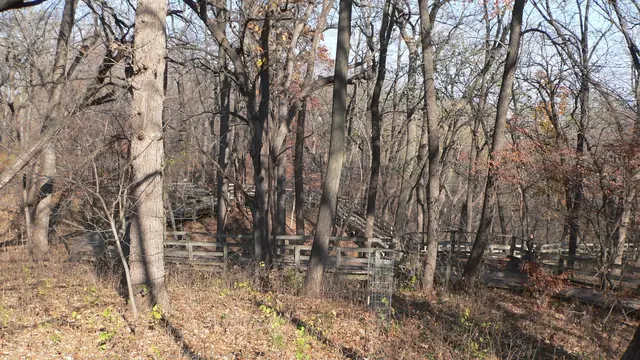
Wooden boardwalk railings wind among tall trees in autumn woodland.
Boardwalk trails at Fontenelle Forest in Bellevue, photographed in October 2012. · Photo: Ammodramus / Wikimedia Commons, CC0 1.0 · CC0 1.0 — image and resized versions · Full-frame proportional Lanczos resizing and WebP compression; no crop, retouching or generative change. Embedded ICC profiles converted with Pillow ImageCms to sRGB before resizing where present, output sRGB ICC embedded; original EXIF stripped, credit/license/provenance retained in XMP and manifest.

A little less driving. A little more time outside.

Eastern Nebraska rewards a change in scale. From Omaha, the Missouri looks broad enough to organize the whole landscape. Step into the woods and the view breaks into bark, leaf shadows, and small movements overhead. Farther west, prairie opens the frame again: grass takes the foreground and the sky gets most of the picture.

Build the trip around attention rather than mileage. A city river walk, a forest morning, and a day among the Platte River hills make a satisfying Omaha-based stay. Lincoln deserves its own chapter, with time for Pioneers Park and the tallgrass country near Denton. Trying to collect every landscape in one hurried circuit misses the pleasure of watching any one of them change.

Choose where to linger

Two cities, two ways into the landscape

Choose Omaha for the Missouri River and nearby wooded outings. Choose Lincoln for a slower prairie-centered visit. Leave room to sit somewhere without a schedule.

01

Omaha

Use Omaha as the anchor for a trip that moves between city paths and woodland trails. The RiverFront gives an arrival day an outdoor center of gravity, with the Old Market nearby and several ways to reach the parks without moving the car. Save a separate day for the forest rather than treating it as a stop between urban attractions.

Choose lodging around your actual evenings and transport needs. This guide assumes independent transport for the Bellevue and Platte River outings; a convenient downtown address does not establish a public-transit connection to either trailhead.

02

Lincoln

Make Lincoln a separate stay when prairie is the point of the journey. Pioneers Park Nature Center offers a close look at several habitats, while Spring Creek Prairie near Denton asks for a different sort of patience: stand still, look along the grass tops, and let movement reveal itself.

Give these places different days if you can. A short visit can become a long one when a bird keeps returning to the same perch or the light improves after lunch. Keeping a Lincoln base preserves that freedom without an obligation to return to Omaha.

Ways into the landscape

Where to spend the daylight

01

Let the Missouri set the scale

Begin at The RiverFront, whose three parks are Gene Leahy Mall, Heartland of America Park, and Lewis & Clark Landing. Choose an unhurried walk toward the river, with a bench stop rather than a distance target. The appeal is the transition: city blocks give way to a much wider horizon.

The operator describes signed accessible routes, gently sloping paths, and accessible restrooms across the parks. Use its access guide to select your approach. Interior pedestrian paths are not automatically cycling routes; follow the posted designations.

02

Trade the open horizon for the forest canopy

At Fontenelle Forest in Bellevue, start with the one-mile Riverview Boardwalk. It accommodates mobility aids and strollers and has resting benches. Make this the outing itself, or ask staff about a suitable dirt-trail extension before committing to more terrain.

Arrange admission and check in when the Nature Center is open. Pets, bicycles, and jogging are not permitted. The boardwalk and the dirt-trail network offer different experiences; an accessible start does not make every onward route accessible.

03

Find a smaller world in the Platte River hills

Platte River State Park near Louisville gives this trip its wooded-hills day. Pick a marked hiking route with the current park map, and make the Stone Creek waterfall an optional objective rather than a promise about water flow. Leave enough energy for a slow picnic and the walk back.

For a more even surface, investigate the concrete path around Jenny Newman Lake and its ADA-accessible fishing shelter. The park also has technical mountain-bike features; a hiking plan should follow designated routes rather than casually adopting a bike circuit.

04

Choose Neale Woods for an extra forest morning

Neale Woods is an alternative for travelers who want another trail day around Omaha. Its seven-mile network invites a modest out-and-back as readily as a longer outing. Choose the route from the reserve map, carry what you need, and leave time to stop without blocking the trail.

Admission is separate from an assumption of public-park access. Follow the reserve's closure notices and leave pets and bikes behind. Do not plan around an indoor visitor stop: the former nature-center building was removed in 2022.

05

Give the tallgrass its own Lincoln stay

Begin the Lincoln chapter at Pioneers Park Nature Center, where trails pass through prairie, woodland, wetland, and streamside habitats. Keep the visit quiet, leave natural objects where they lie, and follow the nature center's pet and bicycle restrictions.

On another day, head to Spring Creek Prairie near Denton. Most trails are mowed; designated crushed-limestone routes near the visitor center provide the accessible options. The wider trail system is not accessible throughout. Bring a picnic and water, and choose a short route if conditions make exposed walking uncomfortable.

A suggested journey

Three days from an Omaha base

Keep the same Omaha lodging for all three nights. The order is flexible: put the longest outdoor day in the best weather window and shorten any walk when conditions demand it.

  1. Day 1

    Day 1: arrive at the river

    Settle into Omaha and start small. Walk a chosen section of The RiverFront, stop beside the Missouri, and let the rest of the afternoon remain open. Use the signed accessible route when needed, and select a turnaround that suits your arrival energy.

    Over dinner, check the weather and the next day's forest access. This is an orientation day, not a test of how many sights can fit before dark.

    Omaha
  2. Day 2

    Day 2: spend the morning in the woods

    Travel to Fontenelle Forest in Bellevue for the boardwalk outing. Take breaks, listen before looking, and decide on any additional walking only after checking the map and conditions with staff. Return to Omaha rather than adding a second distant nature area.

    Keep the afternoon flexible for rest or another short city walk. If forest access is affected by weather, swap days or stay with an appropriate urban option; do not treat a closed trail as an invitation to improvise.

    Omaha
  3. Day 3

    Day 3: a full day for the Platte hills

    Take a packed lunch to Platte River State Park and handle the vehicle entry permit before starting the outing. Select one manageable hiking route, with the lake-side paved option available for a gentler plan. A picnic and a second short walk are enough; you do not need to visit every corner of the park.

    Return to the same Omaha base. Leave Lincoln and its prairie excursions for an additional stay, rather than turning the final afternoon into another transfer.

    Omaha

Plan for the elevation

A landscape that changes its emphasis

Spring: pause for movement overhead

Give Fontenelle a bird-focused morning: the state birding guide highlights migrating warblers along forest paths. Bring binoculars, stay on the route, and accept that sightings depend on timing and luck. After rain, ask about trail footing before extending a walk below the boardwalk. Leave the calendar loose enough to move an outdoor day when thunderstorms are forecast.

Summer: spend the coolest hours outside

Make the first outdoor session the main event, then leave a generous midday break. Heat and humidity can make an open prairie walk feel much harder than its length suggests. Carry water, reduce exertion in heat, and have an indoor cooling option. At Platte River State Park, visitor services and water attractions have seasonal schedules; build the day around the landscape rather than a presumed rental or operating concession.

Autumn: let the grasses hold the light

For a Lincoln stay, choose a clear afternoon at Spring Creek Prairie and leave time for a patient walk back. Dry grass, long shadows, and the outline of the land can carry the whole outing. Around Omaha, Neale Woods offers another reason to keep a day unscheduled. Check sunset and current access before setting out; a beautiful final stretch is no reason to arrive at a gate after closing.

Winter: make a shorter walk count

A winter birding outing at Fontenelle can be worthwhile without covering much ground. Bare branches make looking up a different experience, but slick or icy trails change the practical plan. Choose footwear and traction for conditions, ask about closures, and turn around early when footing deteriorates. Keep the warm-up stop close to the day rather than making distance the achievement.

Make the trip work

Plan the details that matter.

Before you settle on a plan

A few useful questions.

Can I visit Omaha and Lincoln in this three-day plan?

The suggested plan deliberately uses one Omaha base. Add a separate Lincoln stay for Pioneers Park and Spring Creek Prairie so those outings receive their own daylight.

Where should I start if uneven trails are unsuitable?

Review The RiverFront access guidance and Fontenelle’s Riverview Boardwalk information first. Confirm current surfaces and access with staff; nearby dirt trails may present different barriers.

Can my dog join all of these outings?

No. Fontenelle and Neale Woods prohibit pets, and Pioneers Park Nature Center excludes them beyond its parking lot. Spring Creek restricts dogs to its designated Prairie Corridor trail. Check each destination before leaving.

Before you go

Check the day’s conditions.

Weather, ice, wet ground, maintenance, and seasonal operating schedules may change the day. Check land-manager notices and current forecasts before departure; this guide does not certify that any route is open today.

Keep the essentials simple.

  • A Nebraska park entry permit is required for the vehicle at Platte River State Park. Follow the state permit page for the appropriate permit; commercial photography, special events, and drone use have separate approval requirements.
  • Fontenelle Forest and Neale Woods have their own admission arrangements. Check their current visitor instructions rather than assuming a state park permit covers them.
  • Accessible routes are specific routes, not a blanket description of a preserve. Verify parking, surface, gradients, restroom access, and any equipment needs with the operator before travel.
  • If thunder is audible, go to a substantial building or an enclosed hard-topped vehicle. Wait at least 30 minutes after the last thunder before returning outside. A picnic shelter is not adequate lightning shelter.
  • Stay on marked paths, carry out litter, and keep wildlife viewing passive. Respect closures even when the path beyond looks usable. Bring water and food for outdoor days instead of depending on seasonal concessions.
Sources & editorial scope

Research checked 2026-10-17. Official land-manager and weather resources were reviewed on October 17, 2026. Confirm current access, hours, conditions, and admission before departure.