The Adventure Collective Journal · Regional guide

Southeast Oklahoma: Between the Pines and the Water

Settle in Broken Bow for three days of forest paths, lake coves and the changing voice of the Mountain Fork.

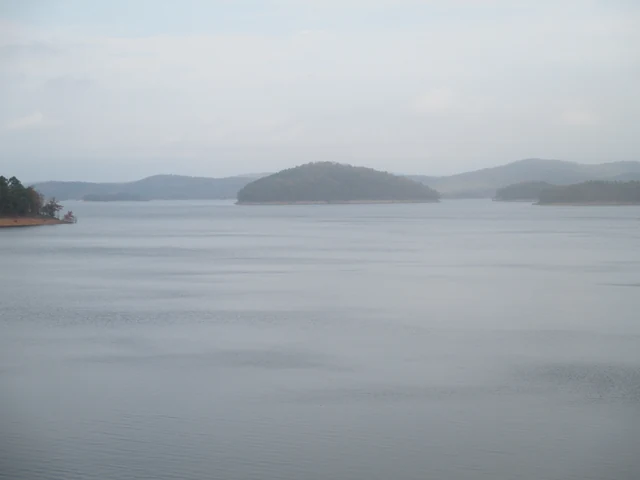
Gray-blue lake water and wooded islands beneath a pale sky.
A historical view across Broken Bow Lake toward wooded islands and hills. The source page and embedded capture year disagree. · Photo: Billy Hathorn / Wikimedia Commons, CC BY-SA 3.0 · CC BY-SA 3.0 — image and resized versions · Full-frame proportional Lanczos resizing and WebP compression; no crop, retouching or generative change. Embedded ICC profiles converted with Pillow ImageCms to sRGB before resizing where present, output sRGB ICC embedded; original EXIF stripped, credit/license/provenance retained in XMP and manifest.

A little less driving. A little more time outside.

Southeast Oklahoma asks you to adjust your sense of scale. A lake can fill the afternoon; a bend in a river can hold your attention longer than a summit. Around Broken Bow, the Ouachita foothills gather pine and hardwood forest around two very different kinds of water: the open reaches of Broken Bow Lake and the moving water below its dam.

The strongest trip here leaves room between activities. Walk before choosing a second trail. Give a picnic its own stretch of daylight. Let a weather change send you toward wood art and forest history instead of trying to rescue a complicated schedule. Three days in one place can feel generous when the point is to notice what changes.

Choose where to linger

Choose your place among the trees

Pick one address for the trip. Broken Bow anchors this itinerary; Hochatown offers a nearby alternative for travelers organizing their days around the park approaches.

01

Broken Bow

Use Broken Bow as the fixed point of the trip: unpack once, organize supplies before heading toward the park, and leave the evening free of another check-in. Treat your lodging address as a practical decision, not just a photograph of a deck. Confirm where it sits relative to the lake and river entrances before booking.

The useful rhythm is simple: one main outdoor outing, one optional stop, then home. A town stay also keeps the plan from depending on every seasonal rental or concession being open.

02

Hochatown

Hochatown is the alternative for a cabin-focused stay near the Beavers Bend approaches. TravelOK locates lodging here along Highway 259 north of Broken Bow. Choose it instead of moving between the two bases halfway through a short visit.

Ask about the actual arrival road, parking surface and entrance steps. A broad cabin description cannot tell you whether unloading gear, using a wheelchair or arriving after dark will be straightforward. This itinerary retains Broken Bow as its overnight base; Hochatown is an option for planning a different stay.

Ways into the landscape

Follow the forest, then the water

01

Walk into the David Boren trail system

Choose a walk that leaves enough attention for the trees. The official trail sheet distinguishes relatively easy Beaver Lodge walking from the steep climbs and creek crossings of Skyline; it also describes a more demanding loop from the Forest Heritage Center. Those are different outings, not interchangeable distances.

Get the current map and ask about crossings before setting out. Use a short out-and-back when footing or weather is uncertain. The reward need not be the longest route: a patch of light on the forest floor and a quiet turn beside the stream are enough reason to slow down.

02

Give Broken Bow Lake an unhurried morning

The lake reaches into wooded mountain country, with small coves offering a different perspective from the broad water. Plan a shore-based morning first; add a paddle only after checking the wind, launch access and your group’s comfort on open water.

For a rental, agree on the launch, return point and weather cancellation plan before committing. Wear a properly fitted life jacket. Turn around with plenty of energy left rather than using the far shore as a target; the return trip deserves the same margin as the departure.

03

Meet the Lower Mountain Fork on its terms

Below Broken Bow Reservoir, the designated trout water includes a stretch within Beavers Bend. Year-round stocking makes fishing a possible focus beyond the usual summer lake trip, though a stocking schedule is never a promise of a catch.

Learn the exact fishing area before choosing tackle or keeping fish. ODWC lists barbless hooks and different harvest rules by river section. Keep bank access and water access separate in your thinking: an open path does not make a river safe to enter. Clean and dry fishing equipment after use to help limit the spread of didymo.

04

Read the forest through its woodwork

At the Forest Heritage Center, forestry tools, wood art and narrated dioramas give the landscape a human history. Make time for this stop even in good weather; it changes what you notice when you return outside.

The official listing identifies accessible facilities and designated accessible parking. It is a useful lower-exertion anchor, but confirm the particular entrance, restroom and exhibit access your group needs rather than assuming every nearby path has the same standard.

A suggested journey

Three days from Broken Bow

Keep the same Broken Bow lodging for all three nights. Arrange each outing as a return trip and swap the lake day with the museum-and-river day when conditions call for it.

  1. Day 1

    Day 1: arrive and find your bearings

    Check into your Broken Bow lodging and settle the practical details first: food, water, tomorrow’s forecast and the correct park entrance. Visit the park office for a current map if its hours fit your arrival.

    Use the remaining daylight for a modest forest walk chosen with staff guidance. Skip a long trail on an arrival day. Return to the same lodging for dinner and leave tomorrow’s main outing adjustable until you have seen the forecast.

    Broken Bow, OK — same lodging throughout
  2. Day 2

    Day 2: a lake morning, a quiet afternoon

    Head toward Broken Bow Lake with a picnic and a shore-based plan. If conditions and an arranged rental suit your group, paddle a conservative route with a clear return point; otherwise spend the morning watching the water from an open public access area.

    Leave the afternoon deliberately light. Add a short walk only if everyone still wants one, then return to Broken Bow. Do not add a transfer to Hochatown simply because it appears as another base in this guide.

    Broken Bow, OK — same lodging throughout
  3. Day 3

    Day 3: river patience and forest stories

    Choose one river activity after checking the latest access and release information: a bank-side pause, or fishing with the required license and section-specific rules understood. Wading and floating are optional decisions requiring their own safety assessment.

    Spend the other half of the day at the Forest Heritage Center, confirming hours first. This is also the weather-swapping day: if the lake was unsuitable yesterday, revisit that idea only if conditions have improved. Finish with a final night in the same Broken Bow lodging.

    Broken Bow, OK — same lodging throughout

Plan for the elevation

Four ways the forest changes

Spring: keep a flexible route

Make spring a trip with alternatives. Put a forest walk on the plan, then check the forecast and crossing conditions before committing to it. If rain changes the day, trade mileage for the Forest Heritage Center and a sheltered break rather than turning wet footing into a test.

Check the park’s water-release notices before river time. A pleasant morning beside the water is not evidence that its level will stay fixed.

Summer: leave breathing room

Build the day around an early start, a substantial rest and an optional later outing. Carry drinking water and sun protection even when a destination looks shaded on a map. Lake recreation and paddling fit the season, but the forecast should choose the day’s ambition.

Book only the activity your group actually wants. A quiet shoreline picnic is a complete outing; it does not need a boat rental to make the afternoon count.

Fall: let the leaves set the pace

TravelOK highlights Beavers Bend’s hardwood color among the pines and its reflections on the lake. Treat that as a reason to linger locally, not a guarantee that a particular weekend will be at peak color.

Repeat a favorite short walk at a different hour, or use the day for a picnic and a slow look across the water. Keep the wider Highway 259 foliage drive for a separate trip if it would crowd out the stay you came for.

Winter: smaller days, deeper pauses

Use winter for a shorter outdoor window and a warmer indoor pause. The Lower Mountain Fork’s year-round trout program gives anglers a reason to look beyond the boating season; everyone else can pair a modest walk with the museum.

Check opening hours and the forecast rather than assuming summer services continue. Carry an insulating layer, leave wet equipment time to dry and turn back before your comfortable daylight margin disappears.

Make the trip work

Plan the details that matter.

Match the outing to the whole group

Start access planning with the feature that matters most: step-free entry, a particular restroom layout, a firm outdoor surface or a boat transfer. Ask the operator for specifics and a current photo if useful. Trail labels such as easy describe effort imperfectly and do not certify wheelchair access.

Keep the Forest Heritage Center as a researched lower-exertion option, then verify its facilities directly. For outdoor time, ask park staff to identify an appropriate current route rather than promising that a named trail will work for everyone.

Check conditions before choosing water

Read the park alerts before leaving lodging, and ask locally about closures and the planned activity’s access point. Lake levels, river releases and weather answer different questions; none substitutes for an assessment at the launch or riverbank.

Keep a dry-land alternative ready. Choosing a museum visit or another picnic is a useful change of plan, not a lost day.

Before you settle on a plan

A few useful questions.

Do we need to change lodging to see Hochatown?

No. Choose Broken Bow or nearby Hochatown as your base. This three-day plan keeps all nights at one Broken Bow address and concentrates on the adjacent lake-and-park corridor.

Is an easy trail necessarily accessible?

No. Check the specific surface, slope, steps and current condition with park staff. The Forest Heritage Center has an official accessible-facilities listing, but that does not describe the trails around it.

Can we fish for trout outside winter?

The Lower Mountain Fork has year-round stocking. Confirm the current license requirements, permitted tackle and section-specific limits before fishing; stocking and safe access remain condition-dependent.

Before you go

Check the day’s conditions.

Check Beavers Bend alerts and current maps before outdoor plans. Confirm river releases, launch access, weather and fishing rules directly before use; no live conditions or operational availability are guaranteed here.

Keep the essentials simple.

  • Arrange transport between lodging and trailheads; this itinerary is not a continuous walking route. Save maps before leaving and use signed public access rather than informal shoreline pull-offs.
  • Check the park’s parking-pass requirements for your vehicle. State-park accommodation reservations include one pass under the published guidelines, with registration required; additional vehicles need separate arrangements. A private cabin booking should not be assumed to include park parking.
  • A fishing license is required unless an exemption applies. Read current ODWC trout rules and the map for the exact section you plan to fish; do not substitute general statewide limits for Lower Mountain Fork rules.
  • The park posts a warning about horns signaling potentially fast-rising water below Broken Bow Dam. Heed signs and alerts, leave the water and seek higher ground when warned. Do not rely on a cached lake-level reading as clearance for swimming, wading or boating.
  • For accessibility, ask about the whole route from parking to the activity, including slopes, surface, restrooms and seating. The Forest Heritage Center’s accessible listing does not establish accessibility of woodland trails or launches.
Sources & editorial scope

Research checked 2026-10-17. Official sources checked October 17, 2026. Confirm operating hours, access, water conditions and current regulations before departure; the source review records retrieval limits.