The Adventure Collective Journal · Regional guide

Southeast Wisconsin: The City Gives Way to Water

Lake Michigan horizons, a forest inside Milwaukee, and a separate Madison stay for prairie paths and the art of looking closely.

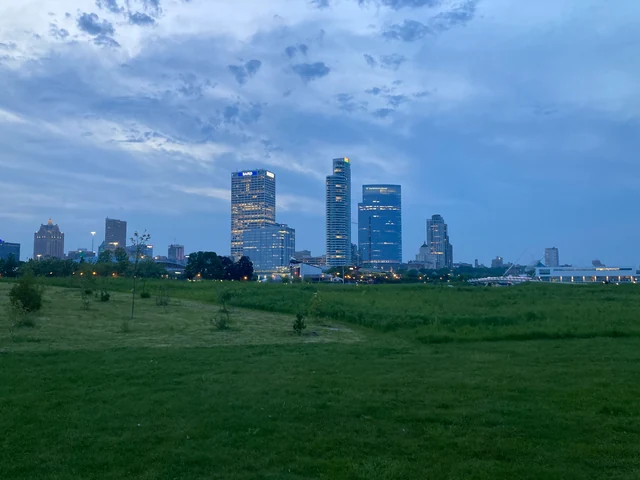
City towers rise above the park’s grassy foreground under a blue evening sky.
Milwaukee’s skyline from Lakeshore State Park, photographed in June 2025. · Photo: Michael Barera / Wikimedia Commons, CC BY-SA 4.0 · CC BY-SA 4.0 — image and resized versions · Copyright Apple Inc., 2022 (ICC profile notice, not photo copyright) · Full-frame proportional Lanczos resizing and WebP compression; no crop, retouching or generative change. Embedded ICC profiles converted with Pillow ImageCms to sRGB before resizing where present, output sRGB ICC embedded; original EXIF stripped, credit/license/provenance retained in XMP and manifest.

A little less driving. A little more time outside.

The reward in Milwaukee is often a change in scale. Buildings gather behind you; Lake Michigan opens ahead, giving the eye somewhere farther to go. A paved path can carry an ordinary city morning into something spacious. Leave room for that transition instead of filling every hour with another destination.

Inland, the landscape asks for a different kind of attention. Havenwoods brings woods and wetlands into Milwaukee itself. Madison offers its own slower chapter at the UW Arboretum, where restoration, research and recreation share the ground. These are places to explore with a map in your pocket and enough time to stop without needing a reason.

Choose where to linger

Two cities, two outdoor rhythms

Choose Milwaukee for the lakefront weekend below. Choose Madison for a separate trip built around the Arboretum, or add it after your Milwaukee stay.

01

Milwaukee

Stay here to build a weekend around Lake Michigan without turning each day into a regional road trip. Lakeshore State Park puts paved trails beside the downtown skyline; Havenwoods supplies the inland counterpoint. Pick lodging for the outings you actually want, and check its parking or transit arrangements separately.

Make the lakefront your first look at the weather. A bright view from a window says little about how the wind will feel beside the water. Bring a layer you can put on quickly and leave the long ride optional.

02

Madison

Give Madison its own nights. The UW Arboretum makes a strong anchor for an unhurried stay: a place to return to, noticing another patch of prairie or a different shape of leaf each time. Start at the Visitor Center rather than treating the grounds as a shortcut to the next stop.

The garden paths and the longer natural-area trails offer different experiences. Choose a route that fits your group, then let the visit be about observation. A notebook or binoculars can be more useful here than an ambitious mileage target.

Ways into the landscape

Follow the shoreline, then turn inland

01

Lakeshore State Park: a small walk with a large horizon

Walk the island trails with the city on one side and the lake on the other. The open setting is the attraction: take a short circuit, pause, and look again as the light shifts. DNR describes all park trails as wheelchair friendly and identifies an accessible fishing pier.

Keep this outing on land unless you have the skills and conditions for a separate paddling plan. DNR warns that strong west winds can carry small craft away from shore; launch access also involves carrying or wheeling boats in. A calm-looking lagoon is no promise about the wider lake.

02

Oak Leaf Trail: choose a piece, not the whole network

Use the county map to select a manageable out-and-back on the lakefront. The Lake Park Loop route links the Milwaukee Art Museum area with Veterans Park, McKinley Park, Bradford Beach and Lake Park. You do not need to finish the named route to make a good morning of it.

The wider Oak Leaf system mixes mostly asphalt paths with road and parkway sections. Inspect the exact segment before setting out, particularly with children or anyone seeking a traffic-free ride. Turn around while the return still sounds enjoyable.

03

Havenwoods: take the city at walking speed

At Havenwoods, the interest lies in the transitions between grassland, wetland and trees. Choose the 1.3-mile People and the Land trail for a walk with a restoration story, or use the map to build a shorter outing. The separate 0.3-mile Braille Trail includes audio and tactile interpretation.

This is a place to look patiently rather than pursue a checklist of wildlife. Keep to designated routes, and check the pet map before bringing a dog: the People and the Land nature trail does not allow pets.

04

Madison’s Arboretum: read the landscape slowly

Save this outing for the Madison part of the trip. Begin near the Visitor Center, then choose a garden visit or a longer walk through the Arboretum’s ecological communities. The point is not to cover every trail; it is to see how one patch of ground differs from the next.

Stay on trails. Pets, picnics and foraging are prohibited, and bicycles belong on paved roads rather than footpaths. For a shorter accessible option, the Native Plant Garden has an accessible path near the Visitor Center, with slopes on parts of the route.

A suggested journey

Three days with Milwaukee as home

Keep the same Milwaukee lodging for all three nights. Walks are deliberately adjustable; trade the exposed lakefront for an inland outing when conditions call for it.

  1. Day 1

    Day 1: arrive at the lake

    Settle into Milwaukee and begin with Lakeshore State Park. Keep this first outing short enough to enjoy after travel: walk or roll a comfortable section, stop for the skyline view and return before fatigue makes the wind feel bigger.

    Spend the rest of the day locally. Check tomorrow’s weather and the county trail map over dinner; decide on your turnaround point before you get carried away by a good morning.

    Milwaukee
  2. Day 2

    Day 2: follow a lakefront thread

    Walk or cycle a selected portion of the Oak Leaf lakefront route, using the Milwaukee Art Museum area as your starting reference. Head toward Veterans Park and McKinley Park, extending only if everyone wants more. Return along the same chosen segment rather than improvising a cross-city loop.

    Leave the afternoon open for rest or another short shoreline look. If wind or rain makes the waterfront unappealing, swap this day with Havenwoods, provided its current conditions suit your group.

    Milwaukee
  3. Day 3

    Day 3: trade horizon for habitat

    Head to Havenwoods for a quieter final day. Choose one mapped route, bring time for the interpretation, and make the length fit the group. A short walk with several pauses can hold more than a brisk tour of every junction.

    Return to your Milwaukee lodging for the final night. If Madison is next, start that separate stay afterward, with the Arboretum as its own day rather than a hurried addition to this one.

    Milwaukee

Plan for the elevation

A different reason to go in every season

Spring: let the ground set the route

Build flexible days around short walks and time to look. If an unpaved route is soft or muddy, choose pavement instead of widening the trail by walking around it. At Madison’s Arboretum, keep the same care for small emerging plants that you would give a conspicuous summer flower. Bring layers for a lakefront finish.

Summer: leave space between outings

Put the exposed lakefront earlier in your day if the forecast is hot, carry water and allow a long pause between walking and cycling. The open horizon rewards lingering. At Havenwoods, a picnic can be part of the day, but fires and grills are prohibited and rubbish must leave with you.

Autumn: shorten the list, lengthen the pauses

Use a mild day for an Oak Leaf out-and-back and leave enough daylight for the return. Fallen leaves can hide a rough edge or a wet patch, so adjust your pace. At the Arboretum, return to a familiar route and notice the change rather than chasing an exact peak-color date.

Winter: make access the first question

Lakeshore permits winter walking and snowshoeing, but only its east trail is plowed. DNR also identifies plowing on the south-end parking approach; check conditions rather than assuming bare pavement. Havenwoods allows skiing on ungroomed trails and asks snowshoers to avoid established ski tracks. Choose a modest outing, and leave lake ice outside this itinerary.

Make the trip work

Plan the details that matter.

Match the rule to the activity

The walks in this itinerary need no state trail pass. Separate activities bring separate rules: Lakeshore fishing requires a license for visitors aged 16 and older, and fishing from its pedestrian bridge is prohibited. Recheck regulations before adding fishing or extending a ride onto another state trail.

Before you settle on a plan

A few useful questions.

Should I visit Madison during the Milwaukee three-day plan?

Give Madison a separate stay. The Milwaukee plan deliberately keeps all three nights in one place, leaving the Arboretum for a day when it can have your full attention.

Can I bring a dog on every outing?

No. The UW Arboretum prohibits pets. Havenwoods allows leashed pets only on specified routes, so consult its pet map before choosing a walk.

Before you go

Check the day’s conditions.

Check DNR property notices, the Milwaukee County trail map and Arboretum visitor guidance before travel. Weather, snow, maintenance and detours can change the practical route; this guide is not a live conditions report.

Keep the essentials simple.

  • Lakeshore State Park and Havenwoods do not require a vehicle admission sticker. That does not establish free parking in nearby city lots or permission to park anywhere; read the signs at the actual space you use.
  • For a route extended onto other Wisconsin state trails, check the individual trail-pass rule. Walking and hiking do not require a state trail pass; cycling and some other activities require one on designated trails for people aged 16 and older.
  • Use the county’s current map and posted detours for Oak Leaf outings. The published page identifies a long-term Root River Line closure near Watertown Plank and North Mayfair roads, outside this lakefront plan; do not assume a complete countywide loop is open.
  • Accessibility descriptions are starting points. Ask the property about current surfaces, slopes, toilets and the precise parking-to-trail connection your group needs, especially after snow or rain.
Sources & editorial scope

Research checked 2026-10-17. Official land-manager guidance checked October 17, 2026. Recheck notices, route conditions and building access before leaving.