The Adventure Collective Journal · Regional guide

Southern Arizona

Saguaro mornings, a canyon at the edge of town, and three days with Tucson as home. Save Bisbee for a stay of its own.

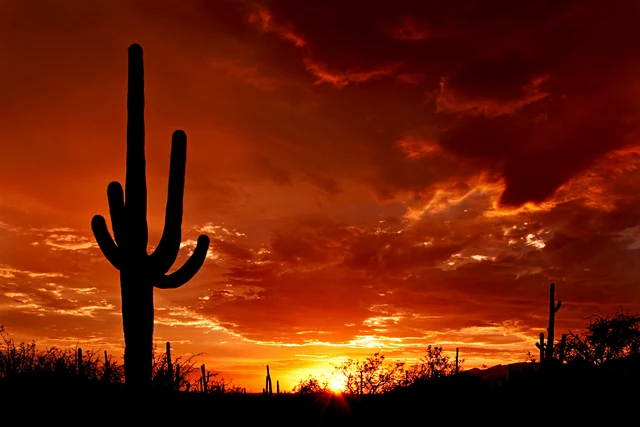
A tall saguaro at left stands against brilliant orange sunset clouds.
A saguaro silhouette at sunset in Saguaro National Park east of Tucson, photographed in July 2010. · Photo: Saguaro Sunset.jpg — Saguaro Pictures; 3:2 aspect-ratio edit by David Levy, CC BY 3.0; copyright notice @SAGUAROPICTURES.COM · CC BY 3.0 — image and resized versions · @SAGUAROPICTURES.COM · EXIF orientation normalized, resized with Lanczos and encoded as lossy WebP; aspect ratio and full frame retained. No crop, generative edit or content removal.

A little less driving. A little more time outside.

A saguaro changes the proportions of a walk. What looked like a sparse hillside from the road becomes a place of branching shapes, small shadows and details worth stopping for. Around Tucson, the desert rewards that change of scale. You can spend a morning learning to look at one patch of ground and return to the city with a fuller day than a string of scenic stops would have supplied.

The most useful itinerary here has breathing room. Give the western and eastern districts of Saguaro National Park different mornings. Let Sabino Canyon offer another perspective when conditions allow. Keep lunch, a cool room and time to change your mind in the plan. These are modest outings by distance, but distance alone does not measure a desert day.

Bisbee asks for a different kind of attention. Its mining history and hillside streets belong to a separate southeastern Arizona stay, with time to understand the town before climbing through it. Put that journey on the calendar deliberately. Tucson does not need a distant final-day excursion to make its three days feel complete.

Choose where to linger

Choose where the day begins

Tucson anchors the desert itinerary. Bisbee offers a smaller-scale, history-led stay farther southeast.

01

Tucson

For the three-day desert trip

Choose Tucson for days that alternate desert walking with a genuine return to town. Saguaro National Park sits in two districts on opposite sides of the city. Give each its own morning rather than making repeated cross-town moves. Before selecting accommodation, locate the places you intend to visit and decide how you will reach them; a Tucson address does not put every trailhead nearby.

Staying put also makes the trip easier to edit. If a weather warning erases a hike, there is no hotel transfer forcing you onward. Keep a flexible afternoon for a meal, reading or simply recovering from the morning. The desert is the reason for coming, but it need not occupy every hour outside.

02

Bisbee

A separate southeastern Arizona stay

Choose Bisbee for another stay, built around the mining town rather than around Tucson’s parks. Begin with the Bisbee Mining & Historical Museum, then give the surrounding streets time of their own. Looking at a retaining wall or a staircase becomes more interesting when the town’s copper-mining story is already in view.

The hills matter when choosing a room. Ask about the route from parking to the entrance, the number of steps and the return from dinner. A short distance on a map can conceal a climb. Use visitor information to select a small public walking circuit and respect the homes along it. Leave the move from Tucson as its own travel window, rather than attaching it to the end of a canyon day.

Ways into the landscape

Four ways to slow down

01

Meet the saguaros on the Desert Discovery Trail

Start small in Saguaro’s western district. The Desert Discovery Trail brings the cactus landscape close enough to examine without making a summit the objective. Pause at the interpretive signs, look from the path and let the shapes of the plants set the pace. It is a good first outing precisely because there is no distant destination to chase.

NPS describes a paved, wide route with shaded ramadas, but the detailed survey records grades up to 6.7 percent. Decide whether that suits the group’s mobility needs, and ask about present surface conditions. Partial shade is a place to pause, not protection for a long hot afternoon. Carry water from the start.

02

Read the eastern cactus forest

In the Rincon Mountain District, use the Desert Ecology Trail as the close-up part of a Cactus Forest Drive outing. The quarter-mile paved loop has benches and plant interpretation; its small scale leaves room to look rather than march. The detailed NPS survey records a maximum grade of 4.4 percent. Check the current surface if that distinction matters to your visit.

The paved drive provides a wider view between stops. Park only in designated spaces, take the short trail while temperatures suit walking, and avoid turning every pullout into a compulsory stop. A good outing can end while there is still something left to see.

03

Let Sabino Canyon be a ride, with an optional walk

Book the Sabino Canyon Crawler if an interpreted ride fits the trip. The canyon offers a change from a cactus-trail morning without requiring a long hike. Choose whether to stay aboard before setting out; the operator warns that a later return seat may be unavailable after you get off. A ticket is not a rescue plan for a walk that becomes too hot.

Service can use an alternate route or be interrupted by weather. Read the operator’s alert before leaving town, and be content with the route that is safely operating. Keep any walk short, carry all the water you need and stay out of flooded crossings. Seven Falls is a separate hiking decision, not an automatic addition to this day.

04

Walk Bisbee after learning its story

Give the museum a proper visit before choosing a town walk. Its interpretation connects copper mining with a larger industrial history; that context makes the surrounding buildings more than a backdrop. Confirm opening arrangements for your date, then leave time for lunch and a modest route through public streets.

Bisbee’s stairs are part of how a hillside town works. They are also real climbs through residential neighborhoods. Choose a turnaround before fatigue sets in, stay on public routes and do not assume an attractive stairway grants access to someone’s porch. A street-level visit can be satisfying without attempting a stair circuit; ask locally about the particular surfaces and entrances you need.

A suggested journey

Three days, one Tucson base

Allow three full days, with arrival and onward travel outside this plan. This is a short-walk itinerary for suitable conditions; extreme heat or storm warnings can replace outdoor days entirely.

  1. Day 1

    Begin on the west side

    Make Desert Discovery the morning’s walk, choosing an early start when heat demands it. Visit Red Hills Visitor Center when it is open for interpretation and current advice; do not delay the walk into hotter hours merely to wait for the doors. Bring water before arriving. Keep the rest of the outing deliberately loose, with no summit added to prove the day was substantial.

    Return to Tucson for lunch and a slow afternoon. Look back at the morning’s photographs or compare the plants you noticed. If you want another outing, decide on it after resting and checking the weather. The first day should establish a pace the whole group wants to repeat.

    Stay in Tucson, Arizona.
  2. Day 2

    See Sabino on the route conditions allow

    Use a confirmed Crawler departure as the day’s appointment. Read the latest operational notice, allow the operator’s requested parking and boarding margin, and bring water, sun protection and the items you need for the full outing. Stay with the round-trip ride if a later pickup would be essential to your return.

    An altered service is a reason to accept a different view or reschedule. It is not a reason to walk beyond a closure. If weather makes the canyon unsuitable, spend the day in town and preserve the third morning’s plan if conditions improve. Leave enough uncommitted time that changing one day does not unravel the whole trip.

    Stay in Tucson, Arizona.
  3. Day 3

    Go east, then leave the afternoon open

    Spend the final morning in Saguaro’s Rincon Mountain District, pairing Desert Ecology with selected Cactus Forest Drive stops. After two days of looking, the small differences may be the pleasure: a different grouping of cactus, another mountain backdrop, a plant whose name now means something. Choose a short visit over extending the loop on foot in rising heat.

    Return to Tucson with time to eat and pack. A Bisbee stay belongs after a planned transfer, with its own room and agenda. Keep Sedona, Flagstaff and Page for another journey. Ending with an unhurried afternoon is part of the itinerary, not an empty space to fill.

    Stay in Tucson, Arizona; arrange onward travel separately.

Plan for the elevation

Plan for the season you will actually meet

Spring

Give the first warm day the same attention as midsummer. Heat can arrive before the calendar suggests it should. Plan an early short walk, keep a cool afternoon available and choose the day’s effort from the forecast. Do not build the trip around a promised flower display.

Summer

This itinerary may need to become an indoor-led visit. Saguaro advises finishing hikes by 10 a.m. when the daily high is 95–110°F and avoiding hiking above 110°F. Those limits are not a guarantee of safety below them. Monsoon weather adds lightning, sudden flooding and strong winds; choose substantial shelter rather than waiting out a storm in a wash or under a ramada.

Autumn

Keep heat and storm checks in the plan even as the season turns. A cooler morning does not settle the afternoon forecast. Use the shorter days to simplify the route rather than hurry it, and check any shuttle departure and return before making a reservation.

Winter

Expect a different rhythm from summer, with layers and room for wet weather. Higher terrain can hold snow even when the Tucson desert seems inviting. These days stay in the lower visitor areas; moving into mountain country requires a new weather and access plan. Confirm seasonal visitor-center hours before relying on an indoor stop.

Make the trip work

Plan the details that matter.

Make water part of the route

Saguaro identifies drinking-water refill locations at both visitor centers. Fill before the walk rather than assuming a picnic stop has a tap. NPS advises about one quart per hiking hour on hot, dry summer days, with food or electrolyte replacement, and a turnaround before half the supply is used. Carry a reserve and shorten or cancel the outing when the conditions exceed the group’s abilities. Extra water does not make extreme-heat hiking safe.

Separate admission from a reserved seat

Saguaro’s entrance pass covers both park districts; the park is cashless. Backcountry camping requires a separate permit, although none is part of this itinerary. Sabino’s recreation-area amenity fee and Crawler fare are separate. Check current pass acceptance and booking terms for the exact activity instead of assuming one receipt covers every stop.

Match access to the whole outing

Saguaro’s visitor centers provide accessible facilities and captioned orientation programs. Use the district trail surveys to assess grades, not just the word paved. For Sabino, discuss your mobility device and boarding needs with the operator before booking; its FAQ describes wheelchair spaces and a boarding ramp. In Bisbee, confirm the entrance, toilets and parking-to-door route directly with each venue. A town with historic stairs needs a more specific plan than a downtown address.

Let warnings change the destination

Check the forecast for the place you will actually visit. Avoid canyon and wash outings when storms threaten, including upstream rainfall; never drive through floodwater. Use substantial shelter for lightning. A shuttle operating on a modified route does not establish that nearby hiking routes are safe. Keep an indoor day available without treating it as a failure of the trip.

Before you settle on a plan

A few useful questions.

Should I visit both Saguaro districts in one day?

This plan gives each district its own morning, with Tucson as the base. That leaves more room for interpretation and avoids making a short-walk day into a series of cross-town transfers.

Can I count on a shuttle seat after walking downhill?

No. The Crawler operator warns that a later seat can be unavailable after you get off. Plan a walk only if you can complete the return safely without assuming a pickup.

Is Bisbee part of the three-day driving loop?

No. Plan it as a separate southeastern Arizona stay, with time for its museum, hillside streets and the transfer from Tucson.

Before you go

Check the day’s conditions.

Recheck Saguaro notices, weather and Sabino operations before each outing. On October 17, 2026, the Crawler website displayed an October 16 alternate-route alert for high winds and inclement weather; this is a dated observation, not a prediction for your visit.

Keep the essentials simple.

  • Carry water at the start of every outing, including short paved trails and shuttle rides. Do not depend on a creek, picnic area or trailhead for drinking water.
  • Use the current official map and posted road signs. Saguaro identifies Golden Gate Road between Sendero Esperanza trailhead and Picture Rocks Road as permanently closed to vehicles.
  • Check entry requirements, operating hours, weather and alerts again before leaving. No lodging, shuttle seat or commercial availability is promised here.
Sources & editorial scope

Research checked 2026-10-17. Official park, weather, municipal and operator information checked October 17, 2026. This is a researched guide; recheck alerts and operating details before travel.