The Adventure Collective Journal · Regional guide

St. Louis & the Gateway Region

A river city weekend, with limestone bluffs beyond the streets and room for another journey into prairie, sandstone or the Missouri valley.

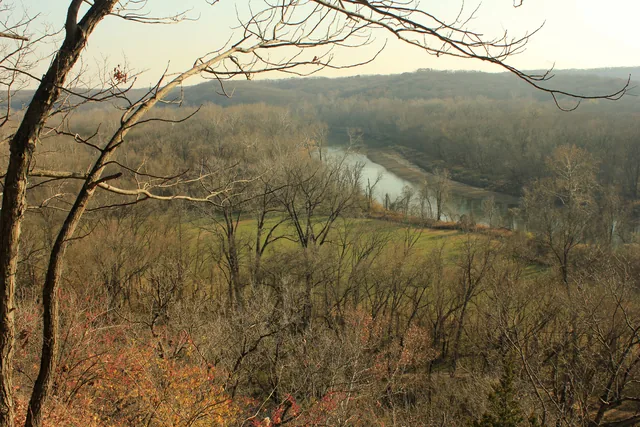
A river curves through woodland and a meadow below bare foreground branches.
The Meramec valley from Castlewood State Park, photographed in November 2012. · Photo: Archbob / Wikimedia Commons, CC0 1.0 · CC0 1.0 — image and resized versions · Copyright (c) 1998 Hewlett-Packard Company (ICC profile notice, not photo copyright) · Full-frame proportional Lanczos resizing and WebP compression; no crop, retouching or generative change. Embedded ICC profiles converted with Pillow ImageCms to sRGB before resizing where present, output sRGB ICC embedded; original EXIF stripped, credit/license/provenance retained in XMP and manifest.

A little less driving. A little more time outside.

Start with the river. Under the Gateway Arch, the city opens into a sweep of sky, lawn and moving water; farther west, the Meramec folds below wooded bluffs. St. Louis makes an unusually satisfying outdoor base because the scale keeps changing. A morning can belong to a city park, another to a rocky trail, without turning every evening into a relocation.

Give this landscape time to separate into its own places. Springfield offers a prairie-and-history stay, Carbondale points toward southern Illinois sandstone, and Hermann lends itself to a slower rail-trail escape. They are compelling reasons to return, rather than boxes to collect during one hurried weekend.

Choose where to linger

Choose your kind of river-country stay

Use St. Louis for the weekend below. Choose one of the other towns when its landscape is the reason for the trip.

02

Springfield

Choose a separate Springfield stay for a gentler pairing of walking and history. Lincoln Memorial Garden puts prairie, woodland and wetland trails beside Lake Springfield; Lincoln Home National Historic Site offers a very different kind of walk through its historic neighborhood. Get a tour ticket if you want to enter the home, rather than building the day around an assumed opening.

03

Carbondale

Give southern Illinois its own nights. From Carbondale, build a stay around Giant City State Park and its sandstone passages, then leave enough unclaimed time to repeat a short walk. The visitor center is a useful first stop for conditions and route selection. Confirm seasonal lodging or camping arrangements separately; a park description is not a reservation.

04

Hermann

Choose Hermann for a trip organized around the Missouri valley and the Katy Trail. Use McKittrick as a practical starting point, arranging your own transfer to the trailhead rather than assuming the ride from your lodging is traffic-free. An out-and-back keeps the day independent of shuttle timing and leaves the return distance in your hands.

Ways into the landscape

Follow the paths beyond the skyline

01

Read the river from the Arch grounds

Begin outdoors, letting the great curve overhead frame the river rather than rushing straight to the tram. Then enter the museum for context and a change of pace. The tram is an optional addition requiring its own ticket planning; the museum does not require a ticket.

For step-free exploration, plan around the paved grounds and museum. The tram journey to the top is not wheelchair accessible and requires stairs. Enter the visitor center from the west, facing Fourth Street, and leave extra time for security.

02

Climb into the Meramec valley view

Castlewood supplies the weekend's change in texture: limestone, woodland and the river spread beneath the bluffs. Study the River Scene route before setting out; its bluff section is for hiking, and the lower portion enters floodplain terrain. The contrast is the attraction, but it also makes conditions matter.

Stay back from exposed edges and abandon the loop if flooding or a closure interrupts it. Swimming and wading in the Meramec are prohibited within the park. For a visit without the bluff climb, consider the paved connections and picnic facilities in the West Day-Use Area; these do not make the natural-surface trails accessible.

03

Let Forest Park set the pace

Choose a manageable stretch of the Dual Recreational Path, then extend only if everyone wants more. Its hard surface is intended for wheels, including wheelchairs, while the softer route suits walking and jogging. Both are shared spaces. Yield to pedestrians and take road crossings seriously.

There is no need to turn the park into an endurance test. A pause away from the path, a second look at the trees and a deliberately short return can be the whole morning's accomplishment.

04

Save another landscape for another stay

In Springfield, Lincoln Memorial Garden's grass and wood-chip paths suit an unhurried walk, while the Ostermeier Prairie Center has a half-mile accessible trail. In the Carbondale area, Giant City's Post Oak Trail is the wheelchair-accessible option; do not assume the other hiking trails offer the same access.

From Hermann, a McKittrick out-and-back on the Katy offers a different rhythm again. The crushed-limestone surface deserves its own equipment and conditions check, especially after rain. Choose one of these outings as the center of a separate trip.

A suggested journey

Three days with St. Louis as home

Keep one room for all three nights. Arrange transportation for the Castlewood outing and swap days when weather makes the trails a poor choice.

  1. Day 1

    Day one: the river and the city

    Settle into St. Louis, then devote the afternoon to the Arch grounds and museum. Keep the outdoor walk flexible enough to follow your energy and the weather. If you have booked the tram, place it inside this block rather than squeezing it between other destinations.

    Finish the day in the city. Leave the car or transfer planning for tomorrow settled before dinner, so the morning begins with a trail choice rather than a logistics problem.

    St. Louis, Missouri
  2. Day 2

    Day two: one purposeful outing to Castlewood

    Check Castlewood's alerts and the forecast before leaving St. Louis. At the park, use the map to decide whether River Scene suits the group and the day's conditions. Make the hike the main event, with a packed lunch and enough slack to turn around without feeling that the day has failed.

    For a lower-exertion visit, use the West Day-Use Area instead of the bluff trail. If the park is closed or conditions are poor, move the Forest Park day forward or spend the day indoors. Return to the same St. Louis lodging tonight.

    St. Louis, Missouri
  3. Day 3

    Day three: a city-park morning with room to linger

    Spend the morning in Forest Park on a short out-and-back or a mapped path circuit that suits the group. Stay alert at crossings and step clear of moving traffic when stopping. Keep the afternoon open for a second city stop or a relaxed departure the following morning.

    End with the same St. Louis base. Hermann, Springfield and Carbondale remain future stays, each with enough of its own character to deserve an unpacked bag.

    St. Louis, Missouri

Plan for the elevation

Four ways to meet the region

Spring: begin with the bloom, keep a backup

The Arch gardens bring their first blooms in March, with magnolia and redbud following into April. Make space for that slower city walk. Before a Castlewood outing, check the park's advisories; use the museum day when conditions make the river trails unsuitable.

Summer: spend your energy early

Heat and humidity can make St. Louis outdoor hours demanding. Put your longest walk early in the day, carry water and reserve the hottest stretch for a break indoors. If the tram matters to you, arrange tickets ahead; summer is a busy season.

Fall: build the day around daylight

Choose a trail length that leaves time to stop, rather than using every remaining hour. For a Hermann stay, the Katy closes at sunset. Check conditions before riding and pack water even when a trailhead appears to offer services; modern facilities begin their winter shutdown in November.

Winter: keep the outdoor plan flexible

Let a short walk and an indoor visit share the day. Carry your own water: the Arch's fountains are winterized seasonally, and the Katy's modern restrooms and drinking-water facilities are normally winterized November through March. Recheck surface conditions before committing to a bluff walk or ride.

Make the trip work

Plan the details that matter.

Choose the surface before choosing the distance

At the Arch, use paved grounds and the museum for an accessible visit; the tram has substantial stair requirements. Castlewood's West Day-Use Area offers a more useful accessible alternative than assuming a bluff trail can be adapted.

For separate stays, McKittrick has level gravel parking, a concrete accessible parking space and an accessible vault toilet. Ask about the current trail surface before deciding it suits your mobility equipment. At Giant City, begin with the specific Post Oak access description.

Tickets, group permission and overnight plans

Keep admissions and permissions separate. The Arch tram needs ticket planning, while entry to its museum does not require a ticket. A Giant City group of 20 or more needs advance written activity permission; managers may impose additional requirements.

Katy Trail special events require a permit. Contact park staff about extended trailhead parking, and arrange any camping outside the trail itself through the relevant operator. These requirements are reasons to plan ahead, not reasons to assume that an ordinary outing needs the same paperwork.

Before you settle on a plan

A few useful questions.

Can I visit all four towns in three days?

For this guide, choose one base. The three-day trip stays in St. Louis; Springfield, Carbondale and Hermann are alternative stays with their own outdoor focus.

Is the tram essential to the Arch visit?

No. The grounds and museum make a worthwhile visit on their own. The tram requires separate ticket planning and is not wheelchair accessible.

Before you go

Check the day’s conditions.

Use official park alerts before departure, then check signs on arrival. Floodplain access, trail surfaces, weather and seasonal facilities can change; the research date is not a promise that a route is open.

Keep the essentials simple.

  • Book the St. Louis stay as one base; arrange a car or other confirmed transport for Castlewood. This itinerary does not depend on an unverified transit-to-trail connection.
  • Check land-manager alerts on the day of an outing. A dry city sidewalk does not establish that a river-bottom trail is open.
  • Pack water, sun protection and footwear appropriate to the surface. Keep a shorter route in reserve, and never cross floodwater or a closure barrier.
  • Match access needs to a named route or facility. An accessible parking space or restroom does not establish that an entire park trail system is accessible.
Sources & editorial scope

Research checked 2026-10-17. Planning details were checked against park managers and official operators on October 17, 2026. Recheck closures, access arrangements and reservations before departure.