The Adventure Collective Journal · Regional guide

Tampa Bay: Follow the Water into the Green

A Tampa-based escape through riverfront paths, coastal woods and the tidal creeks at the head of the bay.

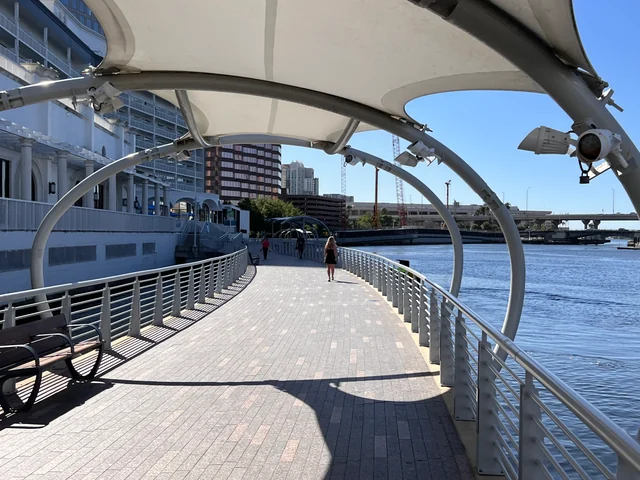
Curving riverside walkway beneath fabric shade canopies, with the river on the right.
Shade canopies along the Tampa Riverwalk, photographed in April 2024. · Photo: Ken Lund / Wikimedia Commons, CC BY-SA 2.0 · CC BY-SA 2.0 — image and resized versions · Copyright Apple Inc., 2022 (ICC profile notice, not photo copyright) · Full-frame proportional Lanczos resizing and WebP compression; no crop, retouching or generative change. Embedded ICC profiles converted with Pillow ImageCms to sRGB before resizing where present, output sRGB ICC embedded; original EXIF stripped, credit/license/provenance retained in XMP and manifest.

A little less driving. A little more time outside.

Tampa Bay rewards a change in scale. From a downtown riverfront, water looks like the broad space between buildings. At the head of the bay, the shoreline breaks into smaller questions: a creek bend, a tangle of mangrove roots, the dark margin where land becomes marsh. Give each landscape its own morning and the city begins to feel like a doorway.

This is a trip for looking closely rather than covering a coastline. Keep one room in Tampa, travel light each day, and let weather decide whether the paddle comes out. A walk under trees can be the whole adventure. There is no prize for reaching open water when the wind says otherwise.

Choose where to linger

Two ways to settle beside the bay

Choose Tampa for the suggested itinerary. Consider Oldsmar instead if quiet preserve outings matter more to you than downtown evenings.

01

Tampa

Tampa makes the easiest anchor for a trip that alternates city water and conservation land. Choose lodging with the parts of town you want to walk in mind, then plan separate transport to the parks. A room near the river can make an ordinary evening feel like another small outing.

The city’s Riverwalk connects waterfront parks and cultural stops. Use that flexibility well: take a short walk, stop when something catches your attention, and keep an indoor option for an unsettled afternoon. You do not need to turn every waterfront visit into an end-to-end march.

02

Oldsmar

Oldsmar suits a quieter version of the same trip, focused on the north end of the bay. Mobbly Bayou Preserve brings coastal and upland habitats together, with trails and a canoe launch listed by Pinellas County. It is a useful starting point for travelers who would rather spend their attention at a preserve than plan a downtown evening.

Use Oldsmar as an alternative home base or a day outing from Tampa. The city lists restrooms and a kayak launch at the wilderness preserve, but those amenities do not establish step-free access or guarantee suitable water conditions. Check the facilities you actually need before setting out.

Ways into the landscape

Where the shoreline changes character

01

Read the creek at Upper Tampa Bay

Upper Tampa Bay Conservation Park is the place to trade the skyline for a living shoreline. Mangrove forest, salt marsh and other habitats meet within the park. Begin on land, allowing your eyes to adjust to the smaller movements that are easy to miss when you are intent on reaching a destination.

A launch connects with the creek and bay. Discuss a modest out-and-back with park staff rather than treating the bay as an automatic objective. Rentals can stop when tides, water levels or weather become hazardous. If the answer is no, stay for the trails: a canceled launch need not cancel the day.

02

Take a slow circuit through Mobbly Bayou

Mobbly Bayou Preserve offers another angle on the northern shoreline. Make this a patient walking visit, using the mapped public trails and stopping to watch the boundary between coastal growth and open space. The outing works best with binoculars, a modest agenda and enough time to stand still.

The Oldsmar facility is listed as dawn-to-dusk. Treat the kayak launch as an option requiring its own preparation, not an invitation to improvise a crossing. This itinerary uses Mobbly as a land outing, leaving the more involved paddle decision to the Upper Tampa Bay day.

03

Walk the river at the city’s pace

The Riverwalk gives the trip a different texture: people, public art and places to sit beside working city water. Choose one waterfront park as a starting point and another as a possible turn-around. Curtis Hixon Waterfront Park and Water Works Park are among the city’s listed connections.

Leave room for a museum or a long lunch rather than measuring success in miles. For a traveler who cannot or does not want to paddle, a deliberate riverfront walk belongs at the center of the visit, not at the bottom of the alternatives list.

04

Keep Lettuce Lake conditional

Lettuce Lake offers a freshwater counterpoint, but plan around the repair notice. As checked October 17, 2026, parts of the boardwalk and the observation tower are closed; the launch is closed to private boats and rentals are suspended. Do not arrive expecting a paddle or a complete boardwalk circuit.

The county lists a paved exercise trail and visitor facilities. Ask which routes are open before choosing this outing. If repairs make the visit unsuitable, use the Upper Tampa Bay Trail instead, choosing a short out-and-back from Channel Park rather than assuming all trail segments join into one uninterrupted ride.

A suggested journey

Three days, one Tampa home base

Allow three full days and keep the order flexible. Put the water outing on the best weather-and-tide window, with a land-based substitute ready.

  1. Day 1

    Day 1: find your bearings on the river

    Settle into Tampa and start with a modest Riverwalk outing. Pick a park, follow the water until you feel oriented, and turn back before the walk becomes a logistical exercise. Pause for public art or a museum if that suits the weather and your energy.

    Use the afternoon to check the next two days’ forecasts and park notices. Confirm whether rentals and the launch at Upper Tampa Bay are operating, and move that outing to whichever day has the better window. Keep dinner and the evening close to your Tampa lodging.

    Tampa
  2. Day 2

    Day 2: a creek morning, with a land plan ready

    Head to Upper Tampa Bay Conservation Park with a short paddle in mind, subject to the launch assessment. Ask staff about the tide, current water level and an appropriate turnaround. Wear a life jacket, carry drinking water and keep enough margin to return well before worsening weather or the required boat return.

    If paddling is unsuitable, explore open park trails instead. If you still want more land time and conditions are comfortable, choose a short Upper Tampa Bay Trail outing from Channel Park, whose county listing includes restrooms and water. Return to the same Tampa room; resist adding a distant sunset destination.

    Tampa
  3. Day 3

    Day 3: the northern bay on foot

    Make Oldsmar’s Mobbly Bayou Preserve the morning destination. Walk only the open signed routes, take breaks, and give watching the shoreline more time than photographing it. This is a land-based finish, not a second launch to squeeze in.

    Return to Tampa for an unhurried final afternoon. If freshwater woods matter more to you, substitute Lettuce Lake for Mobbly after checking which land routes remain open; its launch and tower closures make an improvised water outing inappropriate. Choose one preserve rather than rushing between both.

    Tampa

Plan for the elevation

Four seasons of water and weather

Spring: leave room for change

Spring is a good season to plan around mornings without pretending that the whole day has been settled. The regional thunderstorm pattern strengthens toward late May, so let a land outing absorb an uncertain forecast. Around fresh or brackish water, keep pets away from the edge and give alligators room; warmer weather brings increased activity.

Summer: make the morning count

Warm, humid weather and frequent thunderstorms define the rainy season. Keep the outdoor objective compact and return with energy to spare. A clear start is not a promise about the afternoon; when thunder is audible, go indoors rather than waiting beneath trees or in an open picnic shelter.

Fall: check what the water left behind

Early fall can retain the summer pattern, with tropical weather adding uncertainty. Recheck park notices after heavy rain and accept a changed route. Later in the season, plan a longer land outing only when the day’s conditions support it; the calendar alone cannot reopen a boardwalk or make a launch usable.

Winter: keep the paddle optional

Winter invites a slower day built around walking, looking and lingering. Still carry a layer and judge the water on the day itself. Use the park’s launch advice and current forecast to decide whether to paddle; a calm-looking photograph is no substitute for an assessment at the shoreline.

Make the trip work

Plan the details that matter.

Make a tide plan for the launch you use

Use NOAA’s station selector for predictions relevant to the outing date, and ask park staff which reference best suits the creek. Check the displayed time zone and pair the tide information with local weather and the launch assessment. A bay-wide tide time does not tell you whether a particular shallow passage is usable.

Keep the route conservative and return by the same known access. If the wind, water level or your ability makes the return uncertain, choose the land plan. Do not make wildlife sightings, open-water mileage or a particular creek bend obligations.

Match access to your particular needs

Paved does not automatically mean suitable for every mobility device or visitor. The Upper Tampa Bay Trail provides a possible firm-surface option, while Lettuce Lake’s ongoing repairs change what can be reached. Ask about accessible parking, restroom access, path condition, slopes and any detours before choosing a route.

Launch listings do not verify an accessible transfer system. Ask specifically about the transfer, assistance and equipment required for your party. If those needs cannot be met, build a full land-based day rather than treating a paddle as essential.

Separate ordinary entry from special arrangements

Check the park pages for current entry requirements and rental arrangements. The reviewed pages do not identify a separate hiking permit for these ordinary day walks; that is not a blanket exemption for organized activities. Contact the managing agency for group events, reserved shelters or other special uses.

If fishing is part of your plans, check the applicable Florida licensing and regulations before carrying tackle. Stay on marked public trails and leave plants and animals undisturbed. This itinerary assumes conventional lodging, not unreserved camping in the conservation parks.

Before you settle on a plan

A few useful questions.

Do I need to change hotels to see the upper bay?

No. The suggested three days use one Tampa stay. Oldsmar is an alternative base or a day outing for Mobbly Bayou.

Can I paddle at Lettuce Lake?

The official notice checked October 17, 2026 closes the launch to private vessels and suspends rentals during reconstruction. Recheck the park page before planning any future launch.

Is the trip worthwhile without a kayak?

Yes. Build it around the Riverwalk, preserve walks and an appropriate section of the paved Upper Tampa Bay Trail. Verify current surfaces and access arrangements for your needs.

Before you go

Check the day’s conditions.

Check park notices before every outing, especially Lettuce Lake’s reconstruction closures. Confirm the Upper Tampa Bay launch decision locally and review weather and tide information for your actual date.

Keep the essentials simple.

  • Use a car or arrange dependable park transport for the preserve days. Check the return journey and park closing time before leaving downtown; do not rely on a remote pickup appearing when you need it.
  • Carry water, sun protection, insect protection, a downloaded map and footwear suited to the actual surface. Set a turnaround that leaves room for rests and a slower return.
  • Watch wildlife from a distance. Never feed alligators, and keep pets away from fresh and brackish water. If a manatee approaches, back away without surrounding it or blocking its route; never offer food or water.
  • Keep the itinerary on land if the launch decision is uncertain. An outing described here is a planning idea, not an assessment of current safety or an assurance that equipment is available.
Sources & editorial scope

Research checked 2026-10-17. Official park, municipal, wildlife and weather guidance checked October 17, 2026. Recheck closures and launch conditions before each outing.