The Adventure Collective Journal · Regional guide

Virginia Coast & the Outer Banks

Follow the sheltered side of the coast: maritime woods, quiet marsh overlooks and dunes that make room for the sky.

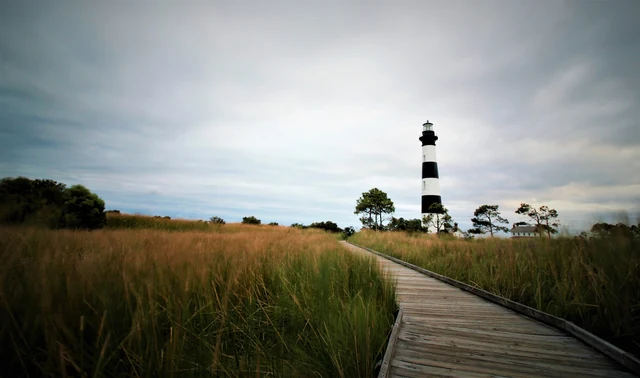
A curving wooden boardwalk crosses golden marsh grass toward a striped lighthouse under gray clouds.
Bodie Island Lighthouse beyond its marsh boardwalk near Nags Head, photographed in October 2020. · Photo: Mridulsen1992 (mridul sen) / Wikimedia Commons, CC BY-SA 4.0; embedded notice: for wikimedia · CC BY-SA 4.0 — image and resized versions · EXIF Copyright and XMP dc:rights: for wikimedia · Full-frame proportional Lanczos resizing and WebP compression; no crop, retouching or generative change. Embedded Display P3/Adobe RGB converted with Pillow ImageCms to sRGB before resizing where present, output sRGB ICC embedded; original EXIF stripped, credit/license/provenance retained in XMP and manifest.

A little less driving. A little more time outside.

The Atlantic supplies the horizon, but the most revealing walks here often turn away from it. Behind the beach are ponds, wooded ridges and estuaries; a lighthouse rises beyond the marsh, and a forest path offers a different measure of the shoreline. Give those smaller landscapes time. A short walk with room to stop can be more satisfying than a day spent chasing the next stretch of ocean.

This is a coast to visit in chapters. Nags Head makes a strong home for a three-day Outer Banks stay. Virginia Beach offers its own combination of Chesapeake Bay woods and wildlife refuge, while Williamsburg belongs to a river-country trip. Choose the chapter that fits your days, rather than asking a weekend to contain them all.

Choose where to linger

Choose your stretch of coast

Start with the landscape you want outside your door. Each base supports a different rhythm; none needs to become a hurried stop between the others.

01

Virginia Beach

Choose Virginia Beach for a stay that can move between resort conveniences and the sheltered Chesapeake side. First Landing State Park puts maritime forest and bald-cypress habitat within the city; Back Bay offers a more open, wildlife-focused outing to the south. Give each its own half-day or longer rather than crossing the city repeatedly.

Pick lodging around your priority outing, then plan the others as separate excursions. Back Bay is a refuge with specific restrictions, so a beach holiday and a wildlife walk need different expectations.

02

Outer Banks (Nags Head)

Nags Head is the base for dunes, maritime woods and the Bodie Island end of the national seashore. It works best when the day has one principal walk and an optional second stop. Keep the open sand for kinder temperatures; let the wooded trails take a turn when the beach feels too exposed.

Stay in town for this itinerary. Jockey’s Ridge has no camping facilities, and its soundside entrance is separate from the main dune access. Save the correct entrance address rather than relying on a broad park-name search.

03

Williamsburg

Williamsburg turns the trip toward tidal rivers and wooded trails. York River State Park is the outdoor anchor: start around the visitor center and Taskinas Creek overlook, then choose a trail suited to your group. The creek country deserves a day with no obligation to reach an ocean beach afterward.

Use Williamsburg as a separate stay. Before adding a scenic Colonial Parkway outing, consult the National Park Service detour information; construction schedules are not a promise that the entire road has reopened.

Ways into the landscape

Walk into the quieter landscape

01

Read the dunes at Jockey’s Ridge

At Jockey’s Ridge, the walk is the point. Follow the contours, pause before committing to another sandy rise, and leave time simply to watch the light shift. This is exposed ground, so bring water and protect feet from hot sand. A sunset plan still needs to respect the gate schedule.

Hang-gliding lessons are a separate, operator-arranged activity; the park lists registration as required for hang gliding. A walk on the dunes is a complete outing without adding a flight.

02

Trade open sand for Nags Head Woods

Nags Head Woods changes the scale: wooded ridges, ponds and marsh replace the long ocean view. Choose a route from the preserve map and stay on it; roots and uneven ground make ordinary hiking shoes more useful than beach footwear.

For a more predictable surface, the designated ADA trail combines concrete and boardwalk with observation areas. Accessible restrooms depend on office opening. Dogs are allowed only on designated pet-friendly trails, so check the chosen route before bringing one.

03

Let the marsh frame Bodie Island Lighthouse

The boardwalk beside Bodie Island Lighthouse leads across the marsh to a viewing platform, with the tower rising behind the landscape. The National Park Service describes the 0.4-mile out-and-back as wheelchair accessible. It is a useful centerpiece for a gentler outing, subject to current conditions.

Treat climbing as an optional extra: it is seasonal, requires online tickets and has safety restrictions. As checked October 17, 2026, the visitor center is closed through mid-summer 2027 following fire damage; the outdoor areas remain open. Check the latest notice rather than planning an indoor visit.

04

Find the forest behind Virginia Beach

First Landing offers an alternative to the oceanfront: a park of maritime forest, lagoons and cypress swamp beside Chesapeake Bay. Pick a walking route from the park map rather than expecting every path to work for a bicycle; bikes are allowed only on Cape Henry and Live Oak trails.

Ask the park about a route that fits your mobility needs. It lists accessible facilities, beach access mats and specialized wheelchairs, but equipment arrangements and the transition onto sand need confirmation.

05

Make Back Bay a wildlife day

At Back Bay, bring binoculars and let a short route fill the morning. The Raptor Trail and bay overlooks offer ways to slow down without committing to the distant end of the refuge. Stay within signed public areas and leave birds room to feed.

This is not a swimming beach: swimming, surfing and sunbathing are prohibited, and pets are excluded except service dogs. Both dike trails close November 1–March 31 for wintering waterfowl; the published warm-season pattern opens one of the two. Organized groups of ten or more should contact the refuge about a special-use permit.

A suggested journey

Three days from Nags Head

Keep the same lodging throughout. These days cluster around the central Outer Banks and the northern end of Cape Hatteras National Seashore, leaving weather and energy room to shape the plan.

  1. Day 1

    Day 1: arrive, settle, then the dunes

    Check into Nags Head and leave the rest of the day deliberately light. Visit Jockey’s Ridge when temperatures and wind suit the group, choosing a short out-and-back on sand rather than a distance target. Return before the park closes.

    If exposed sand is uncomfortable, save the dunes for another day. Dinner and an unhurried first evening are enough; there is no need to spend arrival day proving how much coastline you can cover.

    Nags Head, North Carolina
  2. Day 2

    Day 2: woods and the first-flight landscape

    Start at Nags Head Woods with the preserve map. Choose one trail, using the surfaced ADA route when it is the better fit, and leave time to pause at the ponds. Arrange restroom stops around the office schedule.

    After a break, head to Wright Brothers National Memorial in Kill Devil Hills. The level concrete approach to the First Flight Boulder gives a way into the site without taking on the steep hill. The summit paths are paved but substantially steeper; decide with the ranger’s advice rather than treating pavement as a guarantee of easy access. Return to the same Nags Head lodging.

    Nags Head, North Carolina
  3. Day 3

    Day 3: lighthouse grounds and a loose afternoon

    Go south to Bodie Island for the marsh boardwalk and lighthouse grounds. Take the short walk slowly; a ground-level visit does not depend on a climb ticket. Check the station notice before leaving, particularly the visitor-center closure.

    Return to Nags Head for a flexible afternoon. Revisit a favorite walk if conditions are good, or stop early and enjoy the time you left unallocated. Keep Hatteras Island, Ocracoke and the Virginia bases for another chapter rather than turning the final day into a transfer marathon.

    Nags Head, North Carolina

Plan for the elevation

Let the season set the pace

Spring: choose your exposure

Build a spring visit around walks, with room to exchange an exposed dune outing for a shorter forest route. Bring layers and check the forecast before committing to open shore. At Back Bay, the published dike-trail season begins April 1; confirm which route is open.

Summer: protect the middle of the day

Do the sandy walking early or later within park hours, and make shade and rest part of the plan. Jockey’s Ridge warns that sand can be much hotter than the air. Swimming belongs at an appropriate beach with current conditions checked; verify lifeguard coverage rather than assuming it extends everywhere.

Fall: keep the plan movable

Coastal storms can rearrange a careful plan. Keep a spare indoor option and be willing to shorten the outdoor day when alerts warrant it. For an autumn Williamsburg stay, check the Parkway’s actual closure information rather than interpreting a projected completion season as an opening notice.

Winter: watch the sheltered water

Back Bay’s winter waterfowl make the overlooks worth considering, but the dike closures change the available route. Dress for wind and plan a short outing before extending it. On the Outer Banks, check park closing times and building hours; a winter lighthouse visit should be designed around the grounds, not an assumed climb.

Make the trip work

Plan the details that matter.

Make water activities conditional

Read the daily beach and weather information before swimming or paddling. Rip currents and changing weather can make a calm-looking plan unsuitable; follow lifeguards, posted warnings and closures. A marsh walk or a shorter land-based day is a worthwhile replacement when water conditions are poor.

Before you settle on a plan

A few useful questions.

Can I cover all three bases in this three-day plan?

Choose one. This itinerary keeps every overnight in Nags Head; Virginia Beach and Williamsburg are separate-stay options, best added with more days and a deliberate relocation.

Does a Bodie Island visit require climbing the tower?

No. The lighthouse grounds and marsh boardwalk form a visit of their own. Check current closure notices and treat the seasonal climb as a separately planned option.

Before you go

Check the day’s conditions.

Before travel, recheck Bodie Island’s visitor-center closure, park hours, coastal weather, Back Bay’s seasonal access and Colonial Parkway detours. Published reopening targets do not establish that work is finished.

Keep the essentials simple.

  • Book one Nags Head base for the three-day itinerary and plan road transfers to the individual outings. This is not a claim of a walkable or transit-linked route between all stops.
  • Use park and preserve maps, carry drinking water and insect protection, and follow signed closures. A visitor-center mailing address is not always the correct arrival point.
  • Check opening hours, access requirements and any parking or admission charges directly. No accommodation availability, activity booking, transport schedule or fee amount is established here.
Sources & editorial scope

Research checked 2026-10-17. Planning details were checked against official land-manager sources on October 17, 2026. Access, closures and operating schedules can change; follow the linked current notices before setting out.