The Adventure Collective Journal · Regional guide

Wichita & the Kansas Plains

Follow the water through prairie country: three unhurried days among Wichita’s creekside habitats and riverfront, with Stillwater saved for another stay.

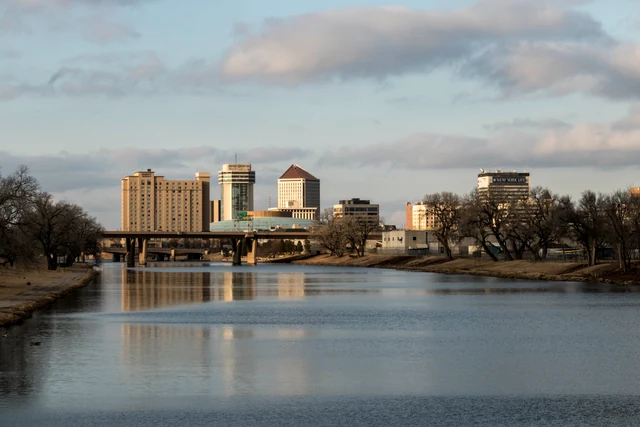
Wichita buildings and bridges reflected in the Arkansas River beneath a clouded sky.
Downtown Wichita and the Arkansas River from the Lincoln Street Bridge, photographed in February 2018. · Photo: StarksWinter / CMR Snapshots / Wikimedia Commons, CC BY-SA 4.0 · CC BY-SA 4.0 — image and resized versions · CMR Snapshots (embedded EXIF/XMP/IPTC author and copyright holder) · Copyright (c) Eastman Kodak Company, 1999, all rights reserved. (ICC profile notice, not photo copyright) · Full-frame proportional Lanczos resizing and WebP compression; no crop, retouching or generative change. Embedded ICC profiles converted with Pillow ImageCms to sRGB before resizing where present, output sRGB ICC embedded; original EXIF stripped, credit/license/provenance retained in XMP and manifest.

A little less driving. A little more time outside.

The plains ask for a different kind of attention. Let your eyes settle below the horizon and the landscape breaks into smaller worlds: a blade of grass holding the light, the dark seam of a creek, a pond whose surface changes with every gust. Wichita makes an inviting place to learn that slower scale. Its outdoor days can begin with coffee in town and unfold through prairie, wetland and woodland without becoming a mileage contest.

Build this trip around walking and watching. Chisholm Creek offers a compact introduction to Great Plains habitats; Pawnee Prairie supplies room to wander; the meeting of the Arkansas rivers brings the landscape back into the city’s cultural life. Leave gaps in the schedule. A short outing with time to stop often gives this country more room to speak than a long checklist.

Choose where to linger

Two bases, two separate stays

Choose Wichita for the itinerary below. Choose Stillwater for an Oklahoma trip centered on its lakes; combining both calls for additional days and a deliberate transfer.

01

Wichita

Wichita rewards staying put. Choose lodging for the kind of evening you want, then let each morning belong to one landscape rather than trying to cross the whole region. This itinerary favors short walks, time with binoculars and a return to town before fatigue turns the weather into a problem.

The urban setting does not remove practical planning. Current works affect the nature-center building and the Keeper riverfront. Treat those notices as part of choosing your route, particularly if a dependable restroom or step-free approach determines whether an outing works.
02

Stillwater

Save Stillwater for its own Oklahoma stay. Boomer Lake offers an easy-to-shorten outing close to town, while Lake McMurtry is a separate choice for a day built around the lake. Make the decision around your preferred activity, then check the operator’s current access, day-pass and boating requirements.

This is an alternative base, not a bonus stop squeezed between Wichita walks. Give it a fresh arrival day and its own weather plan. The payoff is room to linger beside the water rather than finishing one city while already thinking about the next.

Ways into the landscape

Let the landscape set the pace

01

A small atlas of prairie habitats

At Chisholm Creek Park, paved paths pass through prairie, ponds, wetland and woodland. Walk a short section slowly, stop where two habitats meet, and let the movement at the margins guide your attention. A pair of binoculars is more useful here than a distance target.

The park’s walking trails exclude pets and bicycles; the surrounding bike path is a different route. Leave flowers, seeds and wildlife undisturbed. Do not plan an indoor exhibit visit: the nature-center building is temporarily closed for repairs, although the park remains open.

02

Find your own length at Pawnee Prairie

Pawnee Prairie is a good place to choose a route by mood rather than ambition. Begin at a posted map, pick a manageable out-and-back, and leave time for the transition from open ground into trees. The return can become a second walk when the light falls from another direction.

Trail use matters: concrete walking paths, crushed-concrete cycling routes and equestrian areas are distinct. Everyone yields to horses. Dogs must be leashed, and the park closes at dusk. Carry what you need instead of assuming fountains or restrooms will solve the day; restrooms close in winter.

03

Stand where the rivers meet

At the Keeper of the Plains, water and public art share the view. Blackbear Bosin’s sculpture rises at the meeting of the Big and Little Arkansas rivers. Pause for the interpretive setting as well as the silhouette; this is a place of continuing Native significance.

Check the city’s construction notice before choosing an approach. Work around the parking area and river paths is expected through November 2026, with partial closures and temporary access. The fire display is weather-dependent, so let the visit stand on its own without promising flames.

04

A separate Stillwater day beside Boomer Lake

For a Stillwater stay, start with a section of Boomer Lake’s paved loop and turn around whenever you have had enough. The city lists benches, restrooms and wheelchair-accessible facilities. Paved does not describe every slope or temporary obstacle; ask about the exact parking-to-path route if those details matter.

Swimming is prohibited. Fishing has separate licensing requirements, and seasonal restroom closures affect the wider city park system. If you would rather spend the day at Lake McMurtry, consult its official operator before setting out instead of carrying Boomer Lake assumptions to another site.

A suggested journey

Three days with Wichita as home

Keep the same lodging throughout. These are independent outings, not a continuous trail connection; arrange transportation between them and swap days when weather or works require it.

  1. Day 1

    Day 1: arrive and find the river

    Settle into Wichita and keep the first outing deliberately small. After checking current access, visit the Keeper confluence in daylight, leaving enough time to read and look rather than using it only as a photo stop. If works complicate the approach, postpone this stop and keep the evening easy.

    Have dinner in town and stay in Wichita. There is no need to add another destination after travel; tomorrow’s slower start will benefit from a settled first night.

    Wichita, Kansas
  2. Day 2

    Day 2: spend a morning with the wetlands

    Make Chisholm Creek Park the day’s main outing. Bring binoculars if you have them, choose a short paved route from the current park map, and pause at habitat boundaries. Finish while you still have energy for an unhurried lunch back in town.

    Keep the afternoon open for rest or an indoor activity whose opening you have checked separately. The Great Plains Nature Center building is not a reliable indoor fallback during its closure. Stay in Wichita again, with no transfer hanging over the afternoon.

    Wichita, Kansas
  3. Day 3

    Day 3: let the prairie be the whole plan

    Use Pawnee Prairie for the final morning. Start with a route you can comfortably reverse and consult the kiosks before entering shared-use areas. Choose the concrete walking option if a firm surface better suits your party; verify its current condition before committing.

    After lunch, leave room for the river visit if you deferred it on arrival and access now works. Otherwise let the trip end with one complete outdoor morning. Keep your final overnight in Wichita, or depart after the outing without adding Stillwater to this day.

    Wichita, Kansas

Plan for the elevation

Four ways to read the plains

Spring: keep the sky in the plan

Use spring as an invitation to watch the edges of ponds and the changing prairie, not as a promise of a particular sighting. Keep the day flexible when storms are possible. A substantial building or enclosed hard-topped vehicle is the fallback; a tree or picnic shelter is not lightning protection.

Summer: make room for the middle of the day

Give your outdoor time to the cooler part of the day and keep a genuine indoor break available. Bring water, sun protection and a shorter route than you think you need. Heat can make a modest walk consequential; choose the day’s effort from the forecast, not from a fixed itinerary.

Autumn: return to the same patch of grass

Autumn suits a second look. Revisit one habitat rather than constantly moving on, and notice what has changed in color, texture and light. For an October 2026 visit, check facilities especially carefully: the nature-center closure continues, and its outdoor restrooms are described as operating only through mid-October.

Winter: a shorter walk still counts

Let bare branches and open views be enough. Set a conservative turnaround and postpone if ice makes footing uncertain. Plan toilets before leaving town: Pawnee Prairie’s restrooms close in winter, and the Chisholm outdoor facilities have a seasonal schedule. In Stillwater, the city identifies Boomer Lake’s boat-ramp restroom among year-round options; confirm it is operating.

Make the trip work

Plan the details that matter.

Match the route to the person

Chisholm’s paved trails are a useful starting point for route planning, but neither paving nor a park-wide accessibility label guarantees a particular journey. Confirm grades, cross-slopes, surfaces, parking, restroom availability and construction detours with the operator. Pawnee Prairie’s concrete walking route is distinct from its crushed-concrete bike paths.

For an outing that depends on reliable access, choose a short segment with a known turnaround. Leave enough flexibility to change the venue after a condition check.

Keep a walk separate from extra activities

The walking itinerary does not include fishing, boating, camping or a reserved event. Those additions need their own checks. Chisholm restricts fishing to designated water and sets tackle and release rules; confirm current Kansas license eligibility before fishing. Boomer Lake points anglers to Oklahoma licensing. Lake McMurtry provides day-pass and boating-permit information on its own site.

Do not camp at Pawnee Prairie. Group events there require a permit, and reserving a shelter is a separate arrangement from using a public trail.

Read the dated notices before the evergreen pages

The nature center’s general FAQ still displays normal building hours, but the dedicated construction notice says the building is closed. Follow the closure notice and ask for the latest access details; its projected reopening is not a guarantee. Wichita also lists park path work, so refresh both venue and project pages before travel.

Before you settle on a plan

A few useful questions.

Can Wichita and Stillwater fit into these three days?

This plan keeps every overnight in Wichita. Choose Stillwater for a separate stay or add dedicated travel days; combining the two would undermine the slow, single-base itinerary.

Can I bring a dog on the Wichita walks?

Chisholm Creek’s nature trails prohibit pets. Pawnee Prairie allows leashed dogs. Check each site rather than applying one park’s rules to another.

Will the nature center be open if the trails are open?

Not necessarily. As checked October 17, 2026, the building is temporarily closed for repairs while Chisholm Creek Park remains open. Review the dedicated construction page before relying on indoor facilities.

Before you go

Check the day’s conditions.

Recheck Great Plains Nature Center construction and seasonal toilets, Keeper riverfront access, Wichita park projects, and the forecast before departure. No live trail clearance, fire-display operation or facility availability is guaranteed by this guide.

Keep the essentials simple.

  • Treat each park as a separate destination and check transport arrangements before leaving your lodging. No through-trail connection is implied by this itinerary.
  • Pack water, sun protection, a weather layer and the means to shorten the outing. Preserve enough energy for the return; flat-looking country still exposes visitors to wind and heat.
  • Carry out litter, leave plants where they grow, and observe wildlife without approaching or feeding it. Follow the rules for the specific trail rather than assuming all Wichita parks permit the same activities.
Sources & editorial scope

Research checked 2026-10-17. Official park, municipal and weather sources checked October 17, 2026. Construction, seasonal facilities and weather need a fresh check before departure.