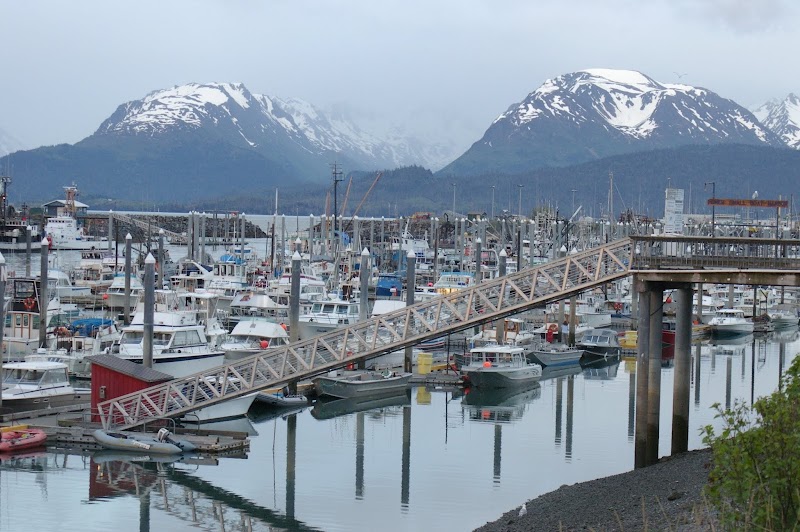
Homer arrives as a place you recognize before you’ve ever been: a long spit of land pointing like a finger into Kachemak Bay, a line of boats and bunting, a few neat rows of galleries and gear shops, and the constant, low roar of water on gravel. But stay beyond the selfie points and the town unfurls into an ecosystem of activities. Fishing here is not just a pastime; it’s a livelihood threaded into the town’s rhythm. At dawn the harbor becomes a choreography of skippers and deckhands heading out for halibut and salmon, and anglers returning with stories and bright fish that smell of sea and cold. Boat tours—ranging from short wildlife watches to full-day chartered runs—are the practical way to access whales, sea otters, puffins and dramatic cliff faces that would otherwise be sheer, wet sentences on a map.
Kachemak Bay State Park, accessible only by water taxi or private boat, rewrites the word “remote” for most visitors: tidal mudflats that reveal kilometers of shellfish and stranded logs at low tide, alpine ridgelines behind a sudden treeline, and hiking routes that graduate quickly from easy beach walks to rugged coastal ascents. For travelers who favor mechanical momentum, ATV/UTV rides and boat rentals are a way to push farther and faster across beach and spit; for those preferring a slower pace, walking tours and eco tours offer layered context—natural history, indigenous heritage, and the practicalities of living with shifting tide and weather. Airplane and air activities—flightseeing and small-plane drops—add a vertical perspective that renders the bay’s geometry in a single look: fjords, glaciers at distance, and the patchwork of spruce and muskeg.
Practical planning matters here. Tide tables dictate options as decisively as the weather; a planned beach walk can become an exercise in patience without correct timing, and a wildlife-viewing window can close in an hour. Outfitters for fishing, boat rental, and guided hikes are experienced with local currents and tides and are often the best source of last-minute intel. Winter and shoulder seasons reshape the offer: heliski and ski trips can be spectacular when snowpack is right, while many boat-based services scale back after fall. But every season offers a trade—empty trails and quiet harbor mornings in shoulder months, peak wildlife and long daylight in summer. Whether you chase a trophy halibut, a sweeping photo of humpback breaches, or a quiet dawn on the spit, Homer gives you both the raw ingredients and the local expertise to assemble a trip that feels distinctly Alaskan and immediately approachable.
Access is deceptively easy: most adventures—boat tours, fishing charters, water activities, and walking tours—launch from Homer’s compact harbor. Outfitters consolidate permits, gear, and local knowledge so you can spend daylight hours on water or trails instead of logistics.
Homer pairs high-adrenaline moments with low-key culture. Galleries, seafood shacks, and outdoor outfitters cluster near the spit; combine a morning fishing charter with an afternoon tasting and a sunset walk to make the most of short Alaska evenings.
Homer’s advantage is variety without surrendering the day to long transfers.