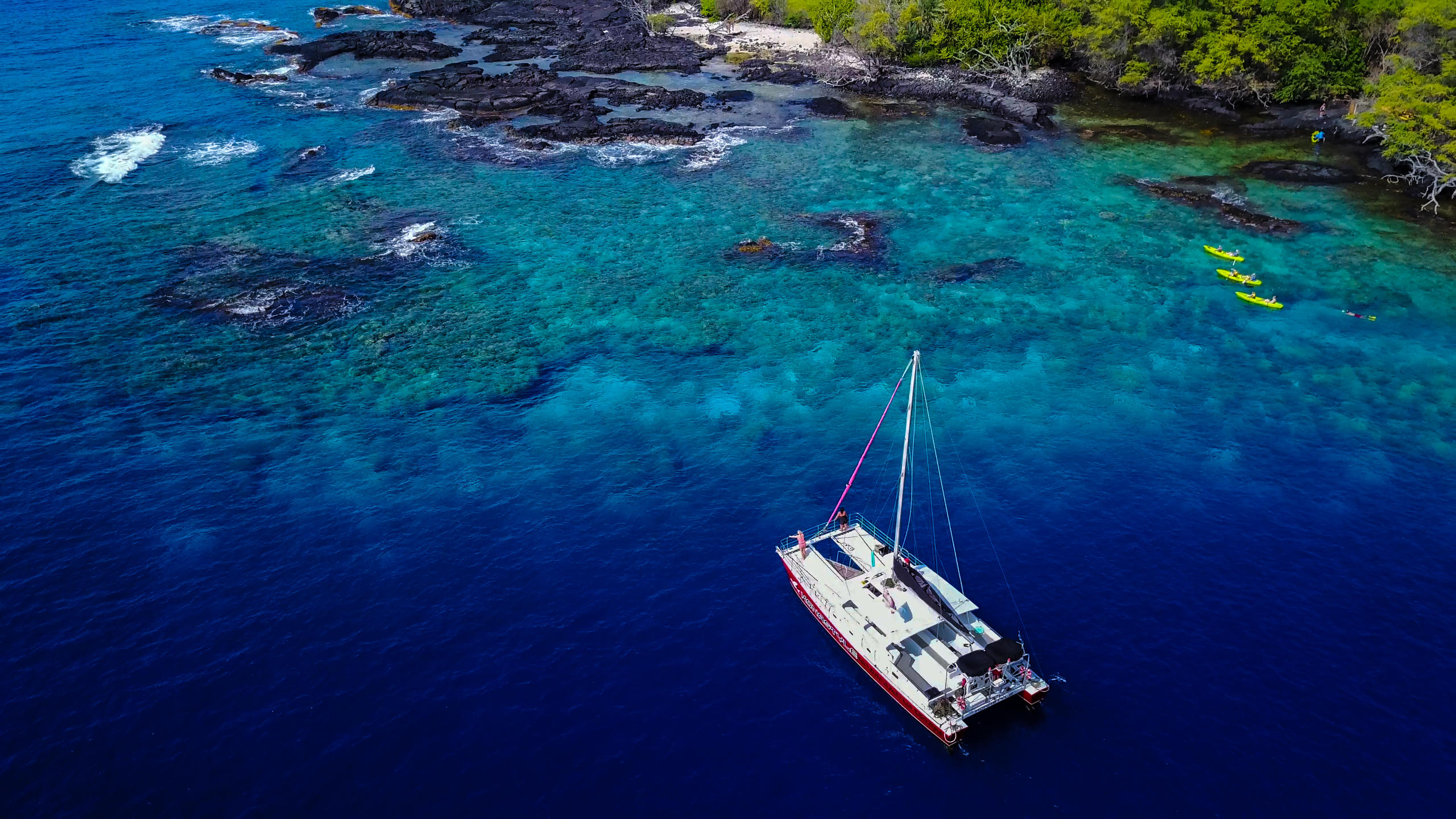
Why Kealakekua Is a Standout Dolphin Destination
Kealakekua is a place where the Pacific writes in wide, fluent strokes—long swells, sharp lava shelves, and a bay whose depth drops quickly into blue that seems to have no bottom. That dramatic geometry creates two of the exact conditions dolphins prefer: protected nearshore pockets for resting and adjacent deep channels for fast, efficient travel. The result is a concentration of encounters that ranges from quiet shore-side observation to the high-velocity thrill of pods leaping and bow-riding in open water. The spinner dolphins, most often associated with the Kona coast, use bays like Kealakekua to rest during daylight hours after foraging offshore at night; bottlenose and other species move through in more open-water patterns, sometimes riding currents on either side of the bay.
Beyond the biology is a layered cultural and historical context that gives dolphin watching here a deeper texture. Kealakekua Bay is also the place of the Captain Cook Monument—an axial landmark for navigation and a reminder that these waters have been full of meaning long before tourism. Traditional Hawaiian perspectives emphasize connection and respect for the sea and its inhabitants. That ethos is now reinforced by modern protections: regulations and best practices limit close approaches to marine mammals, and certified guides combine wildlife knowledge with safety and stewardship. These combined forces—geography, animal behavior, local stewardship, and guided expertise—shape an experience that is at once cinematic and conscientious.
For travelers this means variety without guesswork. Morning sails often find dolphins in travel mode—fast-moving, acrobatic, and spectacular. Midday, bays like Kealakekua host quieter resting groups that are more approachable for ethical observation (from a distance) or regulated snorkeling with guidance. In spring and fall the water clarity peaks and the trade winds mellow, making excursions smoother and underwater visibility exceptional. Winter months bring more trade-wind variability and larger swells that can push activity offshore or make small-boat outings choppy; they also overlap with humpback whale season, allowing for layered marine-wildlife itineraries.
Practically speaking, the best encounters come when respect and preparation meet curiosity. Choose operators who prioritize distance and minimal disturbance, bring reef-safe sunscreen and a good mask, and time your trip for calm sea windows. With those elements in place, Kealakekua offers an almost cinematic range of dolphin experiences: the hush of a snorkeling group hovering above a slumbering pod, the roar of a fast-moving sailboat with dolphins spilling over the bow, and the idle luxury of watching a mother nudging her calf in shallow water beneath a basalt cliff. Together they form a coastal portrait that rewards both the casual traveler and the committed naturalist.
Wildlife behavior shapes the itinerary: spinner dolphins forage at night and often use bays like Kealakekua to rest during daylight, while bottlenose dolphins are more likely to be seen traveling and surfacing near boats. Timing—early morning for traveling pods, midday for resting groups—is critical.
Local culture and conservation are inseparable from the visit. Kealakekua Bay is a marine state monument and a culturally significant place, so operators and visitors must follow rules intended to protect habitat and wildlife. Ethical encounters emphasize distance, no-chase policies, and limiting time near animals.