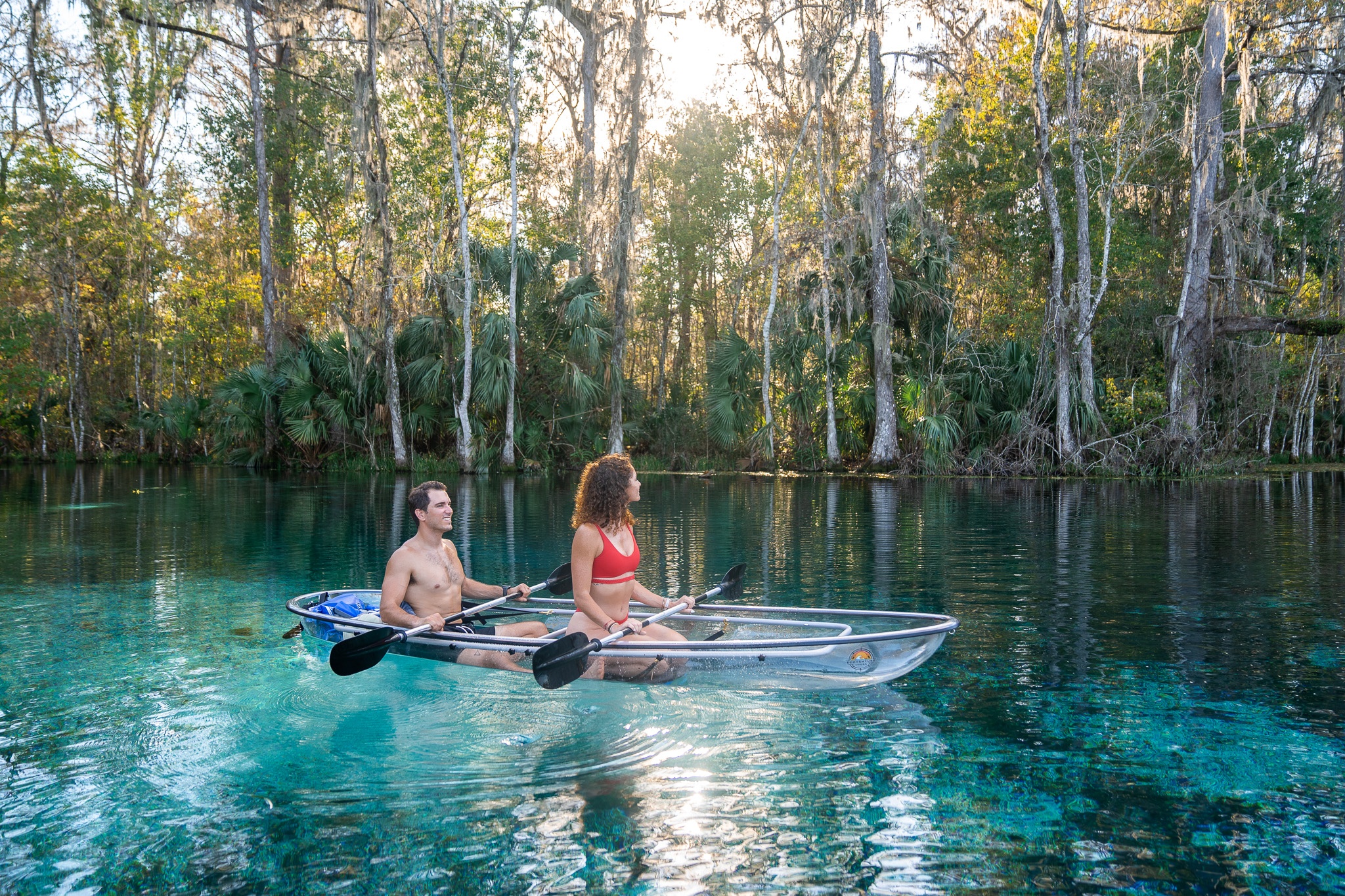
Why Ocala Is a Standout Water-Activity Destination
A short drive north of Florida's more crowded Gulf beaches, Ocala offers a different kind of aqua escape: water that feels intimate rather than open, places where springs punch up from limestone and rivers move with a patient, tree-lined pace. Silver Springs — one of the most storied springs systems in the Southeast — set the template: crystal clarity, vibrant aquatic plants, and a history of glass‑bottom boats that let visitors peer into a submerged world shaped by ancient karst. Paddle launches and springs are often ringed by live oaks and palmettos, and the nearby Ocala National Forest expands aquatic options into braided rivers, sinkhole lakes, and long paddling loops.
The experience here is tactile and sensory. In summer, mornings on the Rainbow River feel cool and silvery as shafts of light travel through 72°F spring water; in winter, clear water reveals submerged logs and the slow, deliberate shapes of manatees when the weather turns cold downstream. Because many of the springs are fed by aquifers, water clarity stays exceptional even when surface temperatures vary, making Ocala a year-round destination for snorkeling, mask-and-fins exploration, and above-water observation.
Ocala's water activities are diverse and accessible. Beginners can join a guided glass-bottom boat or take a short, flatwater paddle; intermediates find satisfying multi-hour paddles with narrow channels and subtle currents; advanced kayakers and canoeists can link remote river segments for overnight trips through a mosaic of swamps and pine ridges. Complementary activities — spring-side hiking, bike routes along quiet backroads, and wildlife watching at dawn — make it easy to build a multi-day itinerary that balances active time on the water with restorative shore-side moments.
Practical considerations shape the best experiences: some springs have state-park entry fees and seasonal visitor limits, rental shops operate most days but close on major holidays, and wildlife — from manatees and turtles to alligators and wading birds — demands respectful distance and observant behavior. For travelers seeking the most evocative water memories, timing matters: shoulder seasons deliver comfortable air temperatures with fewer crowds, while winter months concentrate wildlife viewing opportunities. Whether you come for a gentle paddle beneath cathedral oaks or a clear-water snorkel over ancient limestone, Ocala's water landscapes reward curiosity and thoughtful planning.
Silver Springs remains a cultural anchor: its glass‑bottom boats and historic park facilities offer a low-effort introduction to the region's underwater life and long-running conservation stories.
The Rainbow River is a paddling favorite for its steady flow, shallow beds, and springheads that keep temperatures cool; it’s also a popular spot for tubing and family floats in summer.
Outlying water corridors in Ocala National Forest provide longer, more remote trips where route-finding, camping permits (where required), and leave-no-trace discipline come into play.