Before the Sun: Chasing Dawn on Table Rock, North Carolina

Before the Sun: Chasing Dawn on Table Rock, North Carolina

A compact, granite-crowned summit where sunrise reads like a prayer — the perfect short-but-serious mountain mission.

Continue Reading

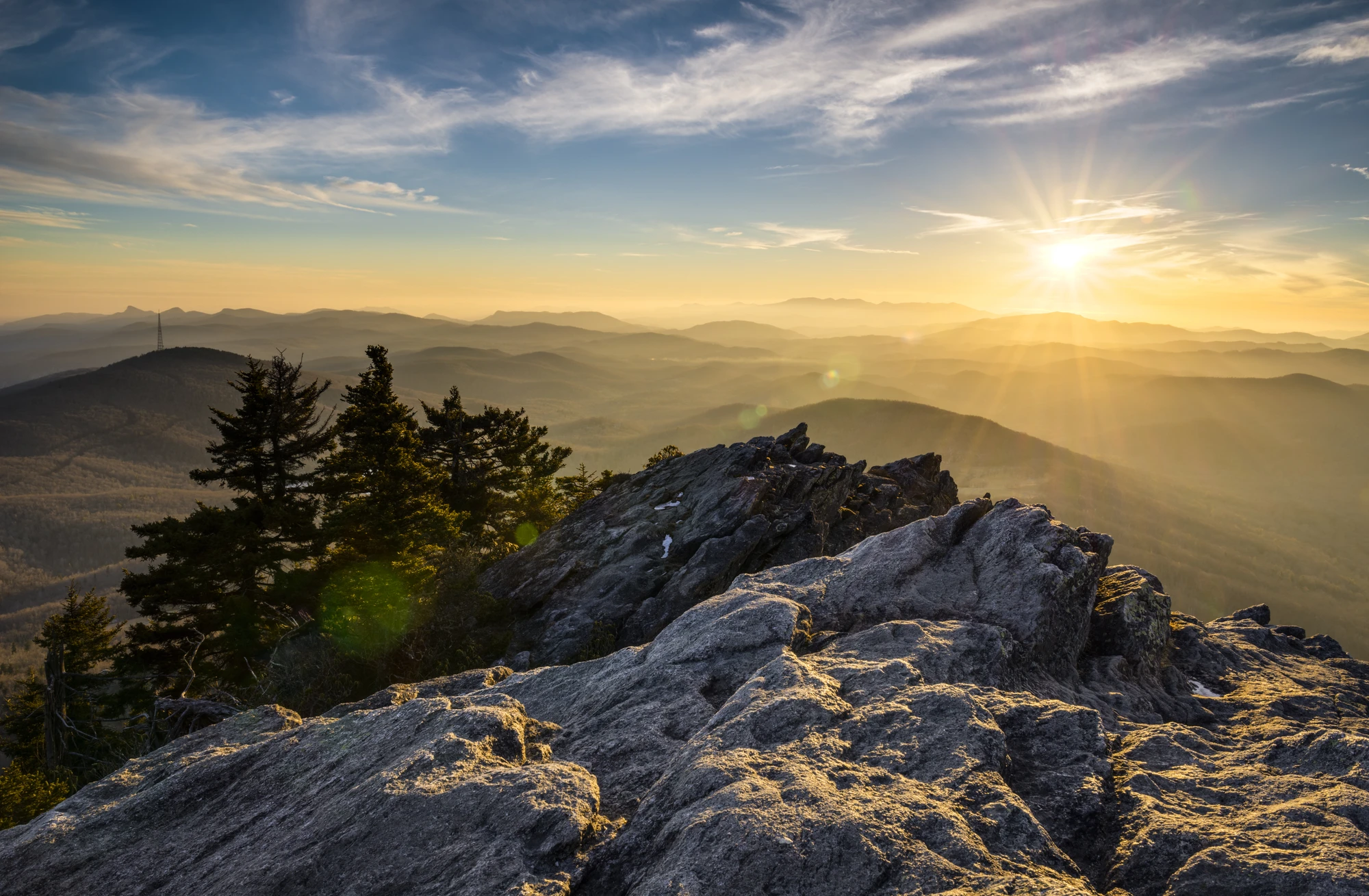
Before the sun clears the Blue Ridge ridgeline, Table Rock has a different language — a low, wind-pressed hush that seems to hold its breath for the first light. You arrive by headlamp through a cold, conifer-scented dark, boots crunching on a steep, root-laced track. Granite underfoot starts to appear like islands in the forest; the trees pull back and the horizon opens into a ragged silhouette. Then the sky happens: thin bands of rose and amber bleed into cloud, and Table Rock’s slabby summit takes on shape. At that moment the place is simple and exact — wind, rock, and a view that asks for quiet attention.

Table Rock sits on the edge of the Linville Gorge Wilderness, an arm of the Blue Ridge that reads like an old scar in the landscape: steep walls, bare rock faces and a river that runs fast and sure below. Geologically, the mountain is part of the ancient core of the southern Appalachians — hard, exposed metamorphic and igneous rocks pushed up and then patiently shaved by eons of erosion. The result is the blunt, table-like crown that gives this peak its name and a vantage that looks both close and impossibly distant: every ridgeline seems to fold into another.

Human history here is layered. Indigenous Cherokee and earlier peoples moved these slopes long before European arrival, and 19th- and 20th-century logging reshaped much of the surrounding forest. In the 20th century, conservation efforts protected sections of Linville Gorge, creating what locals often call the "Grand Canyon of the East." That designation is not hyperbole: the gorge is one of the deepest in the eastern United States and supports a rugged ecological mix — spruce and fir remnants at higher exposures, pockets of hardwoods, and cliff habitats for birds and rare plants.

Travelers come to Table Rock for three things: the exposure, the light, and the compactness of the experience. The classic out-and-back to the summit is short enough to do as a pre-dawn mission but steep and rocky enough to feel complete. The terrain alternates between tight forest tread, carved stone steps, and final slabs that require careful scrambling and a comfort with exposure. Late-season hikers will find the mountain dressed in fall color; spring brings a chorus of bird song and ephemeral wildflowers; and winter makes the final granite slabs serious business when icy.

Practical side: the most commonly used trailheads are accessed from the Linville Gorge area and nearby country roads. Expect an approach that is steep and sometimes loose; the trail is well established but not paved. Distances reported by local sources for a summit run vary based on the chosen trailhead; plan for roughly a moderate day-hike of under three miles round-trip on many of the common routes, with several hundred to roughly a thousand feet of elevation gain depending on start point. Because the approach is short, timing and light matter: if you go for sunrise, give yourself extra time to navigate in the dark and to reach a secure, non-exposed spot for your camera.

Safety and etiquette should be front of mind. The cliffs attract both experienced scramblers and novices; use a helmet for loose rock if you plan to explore off-trail or around ledges. Give nesting birds their space — peregrine falcons and other raptors use these cliffs, and temporary closures can apply in spring. Pack layers; mountain weather changes fast. Water is scarce on the ridge itself, so carry what you need and filter from reliable sources below if you’re continuing into the gorge. Finally, parking can be limited and roadside; arrive early or consider a shuttle from nearby towns to avoid congesting small roads.

Local culture runs small and steady: roadside barbecue and diner coffee in towns like Linville and Morganton, a genuine outdoor community that treats the woods as both backyard and classroom. Town bulletin boards and the staff at local outdoor shops are useful for last-minute beta — they can tell you which overlooks have the cleanest sunrise lines and which trails have recent rockfall.

For photographers the payoff is straightforward: aim to be on a stable slab or low-exposure ledge for the first ten to twenty minutes of light; bracket exposures for the sky; carry a small tripod and a wide-angle lens to capture the sweep of ridge and gorge. For runners and fast hikers, Table Rock delivers a short, intense effort; for families and slower-paced visitors it’s a chance to practice route-finding and to enjoy a big view without a full-day commitment.

Leave No Trace is not just an ethic here — it’s required by stewardship. Fragile alpine plants and thin soils on the summits and ledges take decades to recover. Pack out your trash, stay on established trails and use existing boot paths, and be mindful of others seeking the same quiet dawn.

Why go? Table Rock’s charm is its economy of experience: a compact, rewarding climb, the drama of sunrise, and the feeling of standing on a slab of rock that puts you eye-level with the shoulder of the mountains. It’s an accessible but honest adventure: short enough for a morning mission, complex enough to teach you something about moving on steep ground. If you like your hikes with a dose of exposure, precise light, and a tactile sense of place, this is a sunrise worth getting up for.
Duration1–4 hours depending on route and pace
Plan your visit

Trail Wisdom

Time your ascent for light, not distance

Plan to arrive at your chosen viewpoint 20–30 minutes before sunrise; slow, careful moves on wet granite are safer in low light than hurrying at the last minute.

Expect exposed scrambling

Bring shoes with sticky rubber and be comfortable with hands-on moves; a small helmet helps if you plan to explore the cliffs.

Respect nesting raptors

Observe posted seasonal closures and give cliff nesting areas plenty of distance during spring breeding season.

Carry water and headlamp

There’s little to no water on the ridge and pre-dawn approaches require a reliable headlamp and spare batteries.

Local Knowledge

Hidden Gems

  • East Fork Overlook (less visited, broad views into the gorge)
  • Short detour to Linville Falls downstream for contrasting waterfalls and viewpoints

Wildlife

peregrine falcon, black bear

Conservation Note

The Linville Gorge Wilderness is managed to protect its rugged character; practice Leave No Trace, respect seasonal closures for nesting birds, and avoid creating new trails.

Table Rock forms part of the Linville Gorge, one of the deepest gorges in the eastern U.S.; the area has long been valued for both its rugged topography and unique ecosystems.

Seasonal Guide

spring

Best for:wildflowers, birdwatching, cooler hiking conditions
Challenges:muddy trail sections, possible nesting closures

Spring brings thawing soils and early blooms — trails can be soft and sections may be seasonally closed for raptor nesting.

summer

Best for:longer daylight, backcountry camping, wildlife observation at dawn/dusk
Challenges:hot valley temps, thunderstorms and sudden storms

Summer offers long days but also higher thunderstorm risk; start early and pack sun protection and extra water.

fall

Best for:leaf color, crisp sunrise conditions, clear vistas
Challenges:crowds on peak weekends, shorter daylight

Fall is peak for color and crystal-clear air — arrive early on weekends to beat the crowds and enjoy prime morning light.

winter

Best for:dramatic skies, quiet, serene hikes, ice and winter rock textures
Challenges:ice on exposed slabs, cold temperatures and shorter daylight

Winter makes the granite slabs delicate and potentially dangerous when icy; traction devices and winter layering are essential.

Photographer's Notes

Bring a small tripod for pre-dawn and sunrise shots, use a wide-angle lens to capture ridge sweep and foreground rock, bracket exposures to handle bright skies over dark gorge, and carry a telephoto to isolate raptors or distant peaks.

What to Bring

Sturdy hiking shoes with sticky rubber

Essential

Grip is critical on the granite slabs and during wet or icy conditions.

Headlamp with spare batteries

Essential

Necessary for pre-dawn or post-sunset travel on steep, rocky approaches.

○

Lightweight helmet

Provides protection from loose rock if you plan to move near cliff edges or do short scrambles.

Layered insulation and wind shell

Essential

Summit exposure and pre-dawn wind can be much colder than valley conditions.

Common Questions

Do I need a permit to hike Table Rock?

No day-use permits are typically required for hiking the common trails, but check current USFS or local land manager notices for temporary restrictions or special closures.

How long is the hike to the top?

Routes vary by trailhead; many common approaches are short and steep, generally under three miles round-trip; check trailhead signage or local maps for exact distances from your chosen start.

Is the summit safe for kids?

Families can visit, but the final slabs are exposed — supervise children closely and keep them away from cliff edges.

When is the best time to photograph sunrise?

Arrive at your chosen vantage 20–30 minutes before first light to set up and catch the full color progression; use a tripod and bracket exposures for the bright sky and dark foreground.

Are there opportunities for camping nearby?

Yes — backcountry camping is possible in parts of Linville Gorge Wilderness with adherence to USDA Forest Service regulations; established camp sites and dispersed options exist but plan and follow Leave No Trace.

What wildlife might I encounter?

Expect common eastern forest species like white-tailed deer and small mammals; black bears inhabit the region, and peregrine falcons may be seen or heard near cliffs.

What to Pack

Headlamp (pre-dawn approach), 1–2L water (no summit sources), sticky-soled shoes (grip on granite), layered windproof jacket (cold and wind at exposure)

Did You Know

Linville Gorge is often called the "Grand Canyon of the East" and is one of the deepest gorges in the eastern United States — a designation that reflects its dramatic relief and ecological significance.

Quick Travel Tips

Arrive before dawn to secure parking; check USFS alerts for trail or nesting closures; bring traction if visiting in winter; fill water in town before you head up.

Local Flavor

Nearby towns like Linville and Morganton offer no-frills diners, local craft beer and mountain hospitality; after a dawn climb, stop for coffee and biscuits at a roadside café and trade route beta with locals.

Logistics Snapshot

Trailhead access often uses narrow mountain roads; parking fills early at sunrise. No staffed visitor center on the ridge — check the USDA Forest Service Linville Gorge page for alerts. Cell service is spotty.

Sustainability Note

Protect fragile summit vegetation by staying on established trails and ledges, pack out all waste, and observe seasonal raptor nesting closures to avoid disturbing breeding birds.

Topics