You leave Montego Bay with the kind of early-morning light that flattens the hills and makes the sea look like oil. The van eases onto the South Coast highway, windows down, the air already warm with salt and the faint smoke of roadside cookpots. As the city slips behind you, the landscape relaxes into green—a patchwork of sugarfields, limestone outcrops, and folded hills—and the GPS quietly recalculates your sense of time. For eight hours you’re on a short, sweet collision course: a gentle scramble through rainforest to cool, stepped pools at YS Falls, followed by a boat ride out to Floyd’s Pelican Bar, a weathered shack perched on a sandbar where the Atlantic and a fisherman’s dream meet over cold Red Stripes.
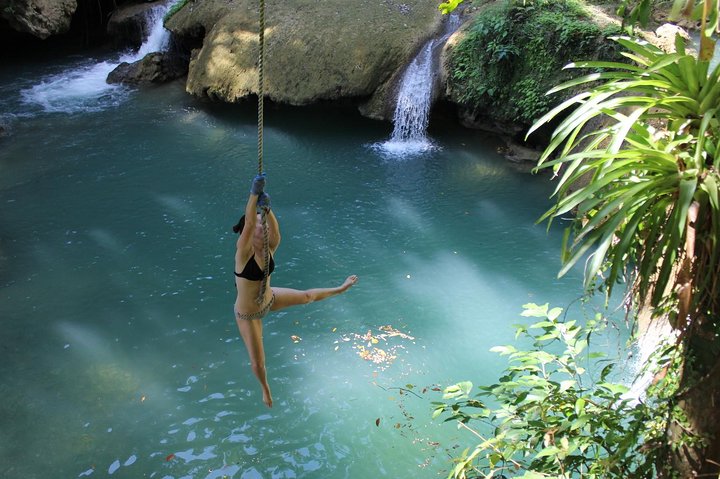
YS Falls is less a single curtain of water and more a vertical neighborhood: a series of cascades and plunge pools threaded by wooden walkways and rope swings. The sound is elemental—water asserting itself, steady and tireless—and the air around the falls is cooler, scented with wet rock and green things. The trails are shaded and compact; you climb short flights, cross a couple of bridges, and find ledges where the current forms perfect little bathing rooms. It’s possible to move from calm pool to modest waterfall to lively chute in moments, and the water invites you without pretense. Guides stationed on-site keep things organized: they’ll point out deeper pools, suggest safe jump spots, and tell the short story of the land you’re standing on.
The YS property has a deeper history than its postcard-perfect angles let on. The falls sit on what was once plantation land—sugar and agriculture shaped the south coast for centuries—and the estate’s infrastructure today threads colonial-era legacy into local stewardship and tourism. The geology here is coastal limestone, so water has carved channels that produce those stepped drops and natural basins. That mix of natural formation and human history makes the falls a place that feels both ancient and immediate.
After the freshwater hush, you head to the coast. Small boats wait in a protected cove; your skipper, a local fisherman, sizes the swell and makes decisions with a calm authority. The trip to Pelican Bar is short—maybe 10–20 minutes depending on conditions—but it’s the kind of crossing where the horizon grows and the shoreline shrinks until all that remains is sea and sky and a tiny building. Floyd’s Pelican Bar is literally built on a shallow sandbar: a cluster of planks, a thatched roof, and a bar that dispenses cold beers, fresh fish when available, and a particular kind of island sociability. It’s a place where Pelicans—hence the name—are frequent, and the soundscape is gulls, surf, and laughter.
There’s humility to the bar’s architecture and an unselfconsciousness to the whole scene; you’re sitting on benches in a place that exists because a few local fishermen wanted a place to rest and welcome visitors. It’s also a reminder of how communities along Jamaica’s south coast make a living off a mix of fishing, tourism, and small-scale agriculture. The boat ride back feels like an exhale—the wind cool, the sea doing the work of erasing the day’s heat.
Why go? The two stops together make for a balanced day: freshwater immersion and a coastal, social endpoint that’s improbably photogenic. For travelers based in Montego Bay who want more than a beach day, this excursion gives a feel for the island’s variety in a single loop—rainforest canopy, carved limestone, sandbars, and how local life folds around those features.
Practicalities matter. The full outing runs about eight hours from pickup to drop-off. Expect roughly 90–120 minutes of driving each way depending on traffic and stops; the tour price reflects guided transportation, fees, and the boat hop to Pelican Bar. Bring cash—small bills—for tips, small purchases, and local vendors at both sites. Footwear that handles wet rock and sandy toes will save your skin; a waterproof pack, sun protection, and a quick-dry change of clothes will keep you comfortable. If you’re prone to seasickness, plan for that short open-water boat ride to the bar.
There’s also a rhythm to timing. Early departures mean quieter pools at YS and gentler seas for the boat. Late arrivals risk chasing a hotter, more crowded scene. Guides know the best order and will route you to avoid the busiest windows when they can.
Culturally, the trip is a microcosm: Jamaican hospitality is direct—offering, not performative. You’ll likely meet vendors and skippers who have a long memory of the coast; a few minutes of conversation about catch, climate, or the old plantation roads yields local perspective that no guidebook can match. At Pelican Bar, the menu is simple—fresh fish when it’s been caught that day, cold beer, and the kind of salt-stung conversations that last until the boat whistle calls you home.
If you love to photograph, this is a generous route: moving water, shady foliage, and a bleached-wood bar framed by blue sea make for complementary shots. For swimmers and casual adventurers, the falls are invigorating but forgiving. For the curious, the story of south-coast Jamaica—its plantation past, its artisanal fishing practices, and its slow embrace of tourism—lives in each stop.
In short: this is a day that asks for sensible shoes, a sense of ease, and a readiness to trade beach leisure for a fuller read of Jamaica’s coastline. You come away with wet hair, a sun-salted shirt, and the memory of sitting on a wooden bench in the middle of the ocean while a pelican stares you down—small, bright moments that add up to a clean, memorable slice of the island.
Length & Format Note: This guided experience is an eight-hour day trip from Montego Bay, combining a scenic inland waterfall and a unique coastal bar on a sandbar. It's best for travelers seeking a mix of nature, culture, and relaxed coastal character in one accessible outing.