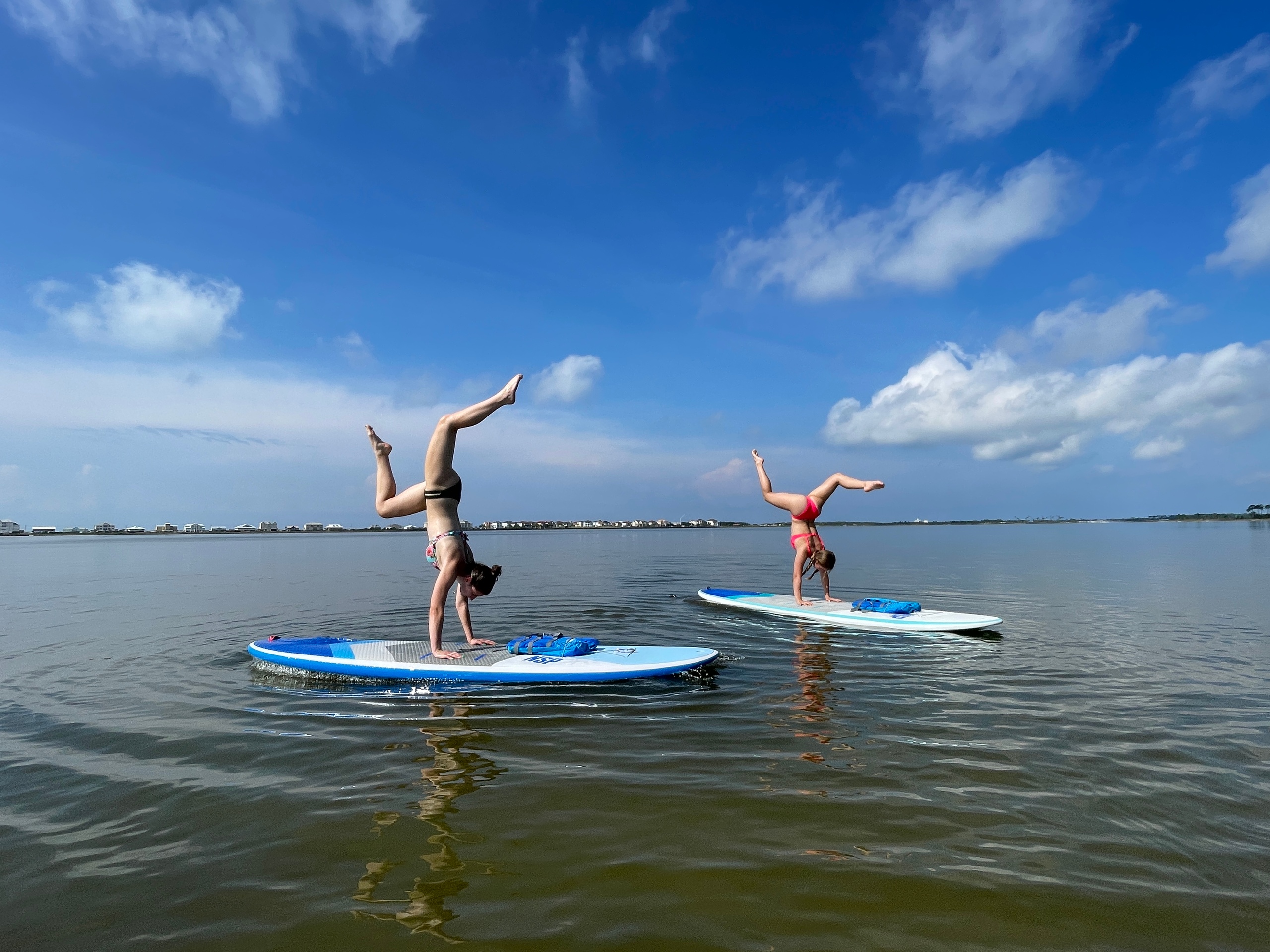
Board, Breathe, Be: Paddle-Board Yoga on Little Lagoon

Board, Breathe, Be: Paddle-Board Yoga on Little Lagoon

No paddle boarding OR yoga experience required! Beginner friendly!

Continue Reading

The morning arrives in a soft wash of honey light as the lagoon peels away from the highway and melts into marshgrass. You carry your board over the damp sand—neither surfboard nor studio mat, but something in between—and step onto a mirror of water that wants both to hold you and test you. A certified instructor calls out gentle cues as palms meet the board and the world narrows to breath, balance, and the hush of gulls. For an hour, it’s just you, the board, and the lagoon; for a lifetime, it becomes a memory of an unexpected stillness on the Alabama coast.

This is stand-up paddle-board yoga at Little Lagoon in Gulf Shores: a beginner-friendly dip into floating fitness that pairs the physical work of yoga with the calming wobble of shallow, brackish water. It’s a practice built for first-timers—no prior yoga or SUP experience required—and designed to do one thing well: slow you down in place that often insists on speed. Instructors from Pure Aloha Adventures (bookable through the Adventure Collective platform) anchor the session in simple poses and clear cues, turning a strip of Bon Secour National Wildlife Refuge into a floating studio. Book early; classes fill on calm days.

Geologically, Little Lagoon is a shallow estuarine lagoon separated from the Gulf by a barrier island. That barrier creates the placid, protected surface that makes SUP yoga possible even with the occasional breeze. Ecologically, the lagoon is a nursery for juvenile fish and a magnet for shorebirds—oystercatchers and terns cut lines in the sky while you find your center. The Bon Secour National Wildlife Refuge, established to protect coastal habitats and migratory species, frames the experience with conservation-minded stewardship; instructors emphasize minimal disturbance and respectful proximity to wildlife.

Culturally, Gulf Shores is both laid-back beach town and working coastal community. The area’s seafood and hospitality thread through the post-practice ritual: a shrimp po’boy at Lulu’s, a cold beer at The Hangout, or a sunset visit to Flora-Bama for live music are all within easy reach. But the real draw of this class is the immediate exchange between body and element. With each breath you learn how the lagoon speaks: it steadies you when the wind dies, tests you with a gust, and eventually, if you let it, teaches you to move with the water rather than against it.

Practicalities are simple. The total commitment is short—plan 60 minutes of instruction and a short paddle-and-play window—and the physical demands are modest. Expect to wear lightweight, quick-drying clothes and reef-safe sunscreen; instructors supply boards, paddles, and PFDs. Reserve your spot at least a week ahead to avoid windier dates; the operator asks that bookings be completed by 7 p.m. the night before to ensure suitable conditions. If you’re new to balance work, arrive early to meet your instructor and try a few basic paddle strokes off to the side before your session begins.

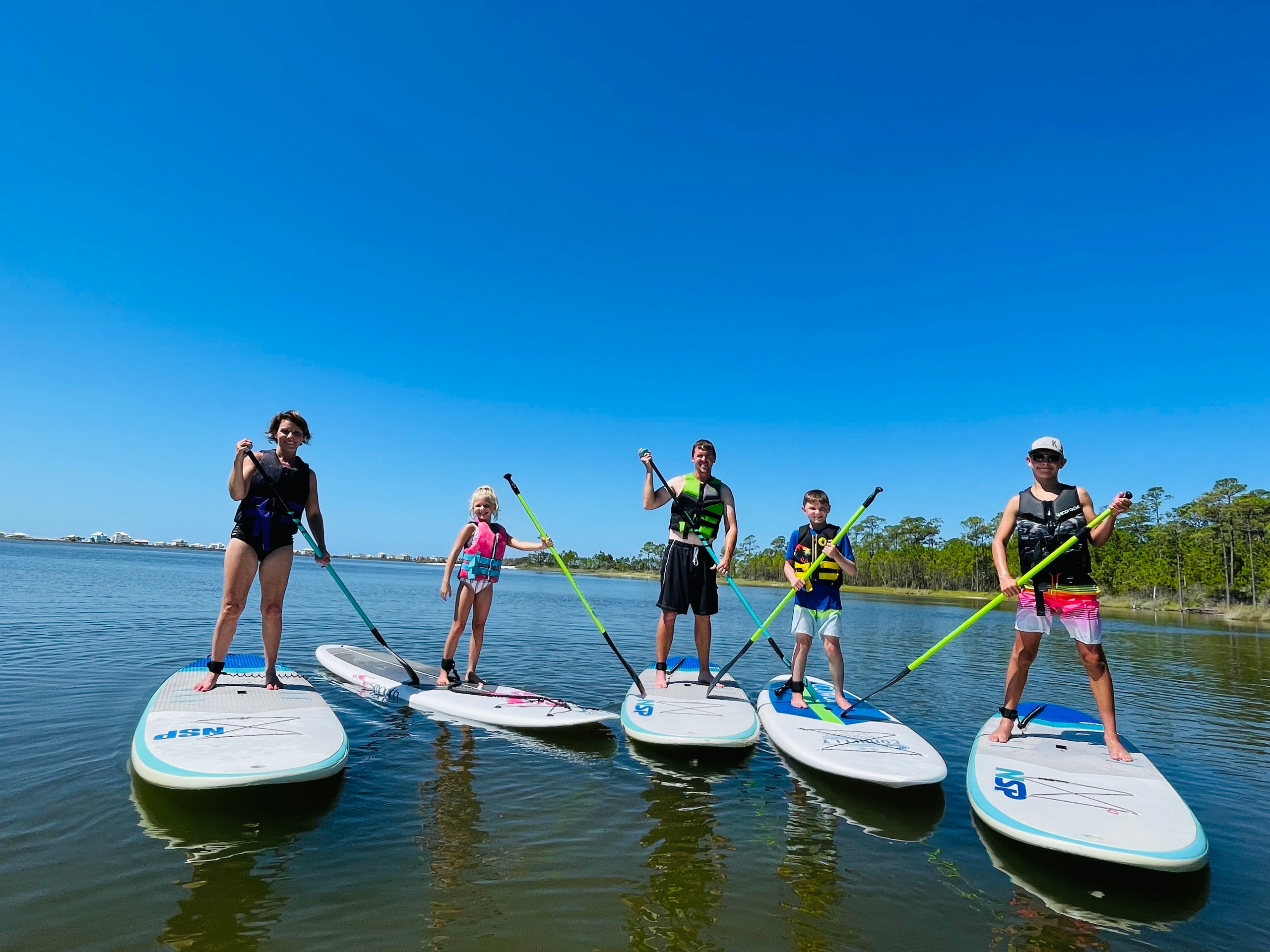
Why do travelers want this? It’s an approachable way to taste two outdoor trends—SUP and yoga—without committing to either long-term. For families, it’s a playful introduction to the water; for travelers with an eye for photos, it’s an opportunity to place a human silhouette against marsh, sky, and birds. For anyone who’s tired of walk-in-the-park sightseeing, the lagoon offers a small but potent change of pace: movement that demands attention but rewards with calm.

Booking one of these sessions makes sense as part of a larger Gulf Shores agenda. Pair an early-morning class with a beach walk at Gulf State Park and a mid-morning seafood brunch; schedule a twilight session if you’re chasing sunset colors and reflective water. Whatever the timing, treat the experience as a short, restorative chapter of your coastal trip rather than a strenuous workout. The goal is balance—literally and metaphorically.

Ready to try it? Reserve through the official booking page for SUP yoga in Gulf Shores to check schedules and weather windows: paddle board yoga in Gulf Shores. The quiet efficiency of an hour on the lagoon is the kind of travel that rewires the day: slower heartbeat, clearer head, and a small, stubborn grin when you realize you just finished savasana on a floating mat.
Duration1–1.5 hours
Plan your visit

Trail Wisdom

Arrive Hydrated

Bring a water bottle and hydrate before class—movement on the water still depletes fluids, and shade is limited at the launch.

Wear Quick-Dry Layers

Light athletic wear that dries fast makes transitions easy if you dip or sweat during practice.

Use Reef-Safe Sunscreen

Protect your skin and the lagoon’s ecosystem by choosing reef-safe SPF applied before arrival.

Book for Calm Weather

Reserve at least a week out and confirm by 7pm the day before to secure a low-wind slot.

Local Knowledge

Hidden Gems

  • Paddle a short distance to quieter marsh creeks for better birdwatching
  • Walk the Jeff Friend Trail near the launch for intimate coastal views

Wildlife

Great blue heron, Brown pelican

Conservation Note

Operators emphasize no-wake approaches near shorelines and encourage reef-safe sunscreen and carrying out all trash to protect seagrass and juvenile fish habitat.

Bon Secour National Wildlife Refuge was created to preserve coastal habitats and migratory bird corridors, shaping the undeveloped stretches around Little Lagoon.

Seasonal Guide

spring

Best for:Mild temperatures, Migratory bird watching, Calm water paddling
Challenges:Occasional cold snaps, Spring storms

Spring brings comfortable air temperatures and active birdlife; water is typically calm but watch for early-season rain.

summer

Best for:Warm water, Evening classes, Family-friendly outings
Challenges:Heat and humidity, Afternoon thunderstorms

Summer offers warm water ideal for dipping; schedule morning or evening classes to avoid heat and storm windows.

fall

Best for:Stable weather, Fewer crowds, Clearer skies
Challenges:Hurricane season tail risks early fall

Fall balances warm days with cooler mornings and fewer tourists—an ideal season for peaceful SUP yoga sessions.

winter

Best for:Off-season solitude, Cool-weather training
Challenges:Chilly mornings, Shorter daylight hours

Winter classes run on milder days; bring extra layers and check instructor schedules since offerings may be limited.

Photographer's Notes

Shoot low and wide during golden hour to capture the reflective lagoon and silhouetted poses; use a fast shutter (1/500s) to freeze motion, and bring a floating camera strap or waterproof case to protect gear.

What to Bring

Quick-dry athletic top and shorts

Essential

Keeps you comfortable on and off the board and dries quickly after a splash.

○

Lightweight PFD (provided available but optional to bring)

Good for extra confidence if you prefer added flotation while learning balance.

Reef-safe sunscreen

Essential

Protects skin and the local marine environment from harmful chemicals.

Waterproof phone case or small dry bag

Essential

Keep valuables safe and capture photos without risking your device.

Common Questions

Do I need to know how to paddle board or do yoga before class?

No—classes are designed for beginners; instructors teach basic paddle skills and simple yoga poses suited to the board.

What happens if the weather is too windy or rainy?

Instructors monitor conditions and may reschedule or cancel classes; book early and check confirmation emails for weather updates.

Are boards and paddles provided?

Yes—boards, paddles, and typically life vests are provided by the operator; confirm gear availability when booking.

Can kids or non-swimmers participate?

Kids may join if the operator allows and a guardian signs waivers; non-swimmers should wear a PFD and let the instructor know beforehand.

How should I dress for a class?

Wear quick-drying athletic wear, a hat for before/after class, and bring a towel; avoid heavy cotton that stays wet.

How far in advance should I book?

Reserve at least a week ahead for best availability and no later than 7pm the evening before to confirm a suitable wind day.

What to Pack

Water bottle (hydration), reef-safe sunscreen (skin and environment), quick-dry layers (comfort), waterproof phone case (photos and safety)

Did You Know

Little Lagoon is a shallow, brackish estuary behind a barrier island that serves as a nursery for fish and supports seagrass beds critical to the coastal ecosystem.

Quick Travel Tips

Drive time from Pensacola International Airport ~45–60 minutes; arrive 20 minutes early to check in; expect patchy cell service near the refuge; book at least a week ahead for calm-day availability

Local Flavor

After practice, head to Lulu’s or The Hangout for fresh Gulf shrimp and cold drinks; for a local music scene, check the Flora-Bama on the Alabama-Florida line—iconic live music and sunsets.

Logistics Snapshot

Closest airport: Pensacola International Airport (PNS); Launch address: 13900 AL-180, Gulf Shores, AL; Driving distance from Gulf Shores center: ~10–15 minutes; Cell service: intermittent on refuge; Permits/Reservations: advanced booking required and classes confirm by 7pm the day prior.

Sustainability Note

This activity takes place in sensitive estuarine habitat—use reef-safe sunscreen, avoid stepping on seagrass when launching, and pack out all trash to reduce impact.

Topics