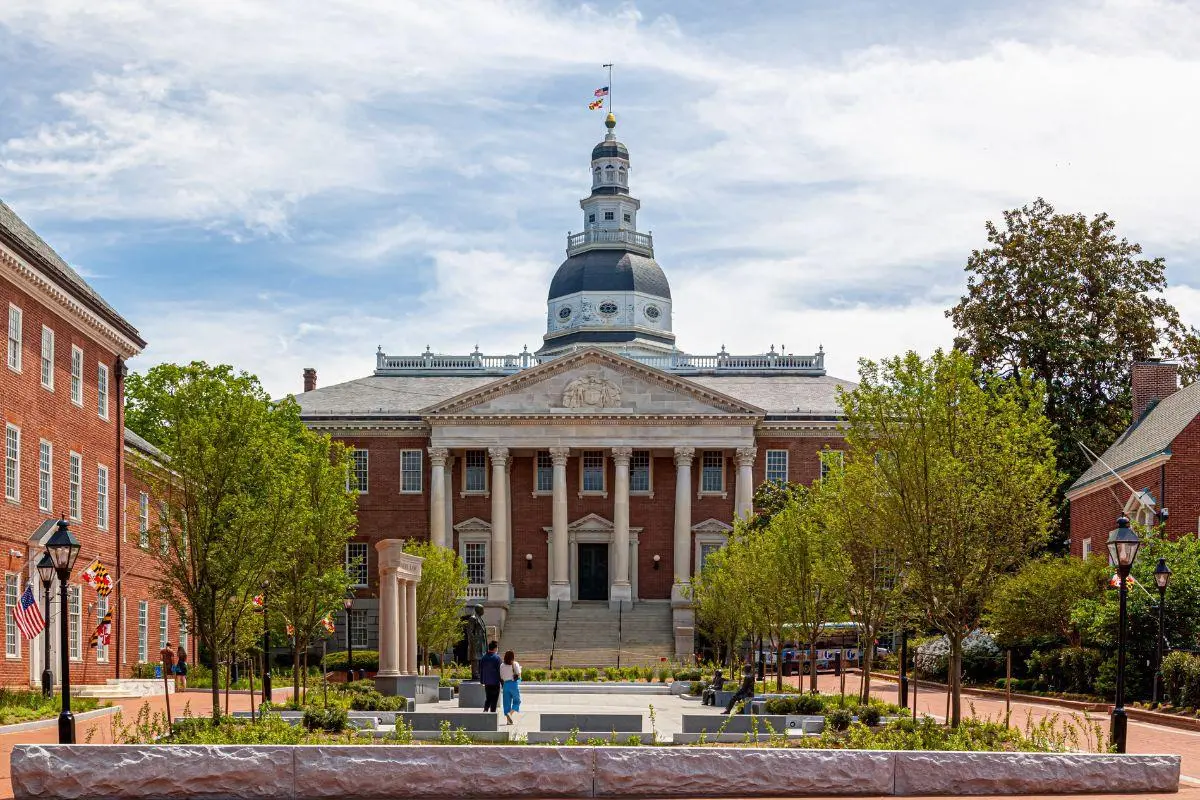
The bricks remember. They remember boot heels and carriage wheels, a young republic stepping into its own, and the quiet stitching of everyday life along the Chesapeake. On West Street, under the wide gaze of the Maryland State House dome, you step into that memory and let Annapolis lead. The tour begins at 26 West Street—the city’s visitor-friendly front porch—and the afternoon air tastes faintly of salt as breezes from the harbor nudge the oaks. Your guide launches gently, and the city opens like a well-thumbed book: short chapters, precise details, and all the drama you didn’t know lived inside the mortar.
This is the Historic Walking Tour and Lunch/Dinner, a tidy, content-rich stroll through one of America’s best-preserved colonial districts, paired with a hearty meal at Galway Bay Restaurant. It runs every Wednesday and Sunday at 2 p.m., year-round, and it never tries to be more than it is: less than a mile of walking over three hours, with an hour reserved for food and conversation. The rhythm is unhurried. Cobbles click, church bells count time, and down at City Dock the water keeps the town honest, pushing forward even when people linger.
You’ll loop by the Annapolis icons—St. Anne’s Parish, the Hammond-Harwood House, the Paca House, the State House—while the guide layers in stories that cut past postcard sheen. The State House in particular feels alive; it was here in 1783 that George Washington resigned his military commission, placing civilian authority over the army, and here that the Continental Congress ratified the Treaty of Paris in 1784. The dome seems to know exactly what it witnessed, wood-joined without nails and still ruling the skyline with quiet authority. On the steps, the wind lifts and drops like a careful metronome, as if to remind you that time, too, is a craft.
Annapolis is a city that wears its contradictions well. The rivalry between the U.S. Naval Academy and St. John’s College—discipline and Great Books, uniforms and worn leather spines—threads through the narrative, more good-natured than heated, yet foundational to the city’s character. One speaks in precision and brass; the other in Socratic questions and long walks under elms. You’ll hear about pranks, traditions, and how a small town can house two very different visions of education and still feel like a single, walkable neighborhood.
By mid-tour the path detours to Galway Bay, a downtown staple with worn wood, warm light, and a menu that meets you halfway between pub fare and coastal comfort. Here, the Historic Walking Tour and Lunch/Dinner relaxes into its middle act: Shepherd’s Pie or Shepherd’s Pie Mac & Cheese if you’re craving the savory, Haddock & Chips if you’re leaning maritime, Jerk Chicken Salad, Avocado Turkey Club, or a proper Pub Burger if you want straight-ahead satisfaction. Coffee, tea, or soda is included; order beyond the menu or add a pint and you’ll pick up the tab for the extras. The room hums. Stories cross tables. Shoes take a breather. The city waits just outside, nostrils flaring with tidal air.
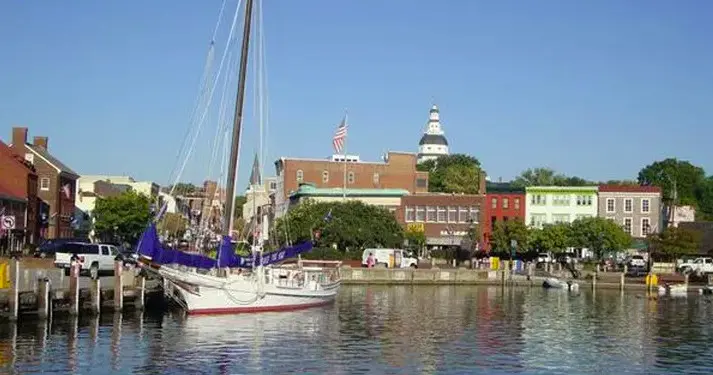
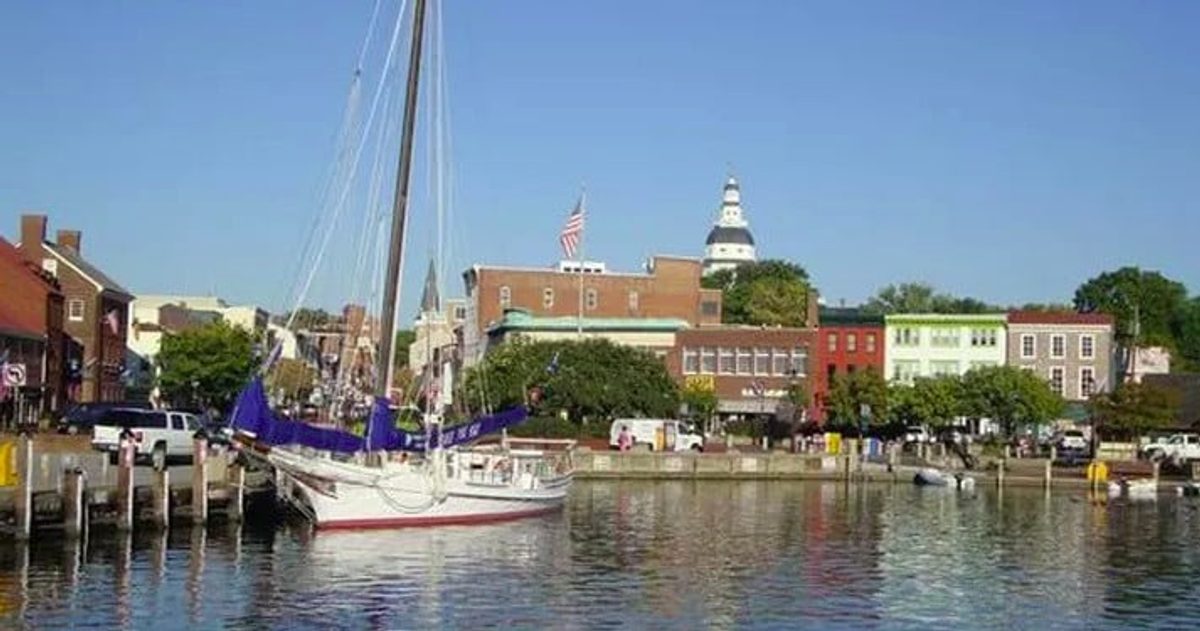
After lunch, the route threads back into the Historic District, past Georgian facades whose symmetry feels almost musical. Hammond-Harwood, a late colonial masterpiece, shows off its Anglo-Palladian lines like a proud elder. The Paca House hides a formal garden that steps down in terraces, green rooms that seem to invite you to eavesdrop on 18th-century afternoons. At City Dock, masts scribble the sky and the Chesapeake’s pulse sets the tempo. The water nudges the pilings and dares you to imagine the port filled with sails and gossip, tobacco inspections and treaty whispers. Annapolis answers in brick and brass; the city knows how to keep a secret while telling you everything.
Practically speaking, this experience is designed to be accessible and low-stress. The pace is easy, the terrain mostly flat with occasional uneven brick, and the total distance is under a mile. It’s ideal for families, first-time visitors, and anyone who likes their history in digestible, walk-and-talk segments. Group sizes top out around ten, which keeps questions flowing and the corners of the city from feeling crowded. Pricing is straightforward—$50 for adults, $45 for students ages 10–17, $30 for children under 10—and the meeting point is the Annapolis Visitor Center at 26 West Street.
If you want a clear, well-framed snapshot of the city, this is the lens. It’s not a museum sprint or a lecture; it’s a neighborhood walk with strong narrative bones and a lunch break that adds place flavor, not just calories. The tour runs year-round, and each season tunes the experience slightly. Spring warms the brick until it almost exhales; summer hums with festival energy; fall sharpens the light and cools the breezes; winter tightens the streets into a cozy loop of lamplight and stories.
Plan ahead and book in advance through the official listing—this curated Annapolis historic walking tour with lunch or dinner sells out on busy weekends. Arrive ten minutes early to settle in, wear comfortable shoes with grip for the brick sidewalks, and bring a small water bottle for the warm months. If you have dietary preferences, review the fixed menu options before you go; Galway Bay is accommodating, and you can always order additional items at your own cost. Photography lovers will find angles everywhere, especially around the State House and City Dock; a polarizing filter makes the bay colors pop and softens glare off white facades.
In a compact, thoughtfully paced afternoon, you’ll collect the city’s keystones: a polished sense of its colonial rise, the human-scale rivalry that animates its campuses, and the harbor that refuses to stop moving. Annapolis is no museum piece. It’s a living town with paint under its fingernails and tidewater in its voice, happy to show you around—and happier still if you stick around for another hour by the water after the tour ends. Ready to walk into the story? Start here and book the Historic Walking Tour and Lunch/Dinner to see Annapolis at street level, with a full plate and a clear sense of why this small city mattered then—and still does now.