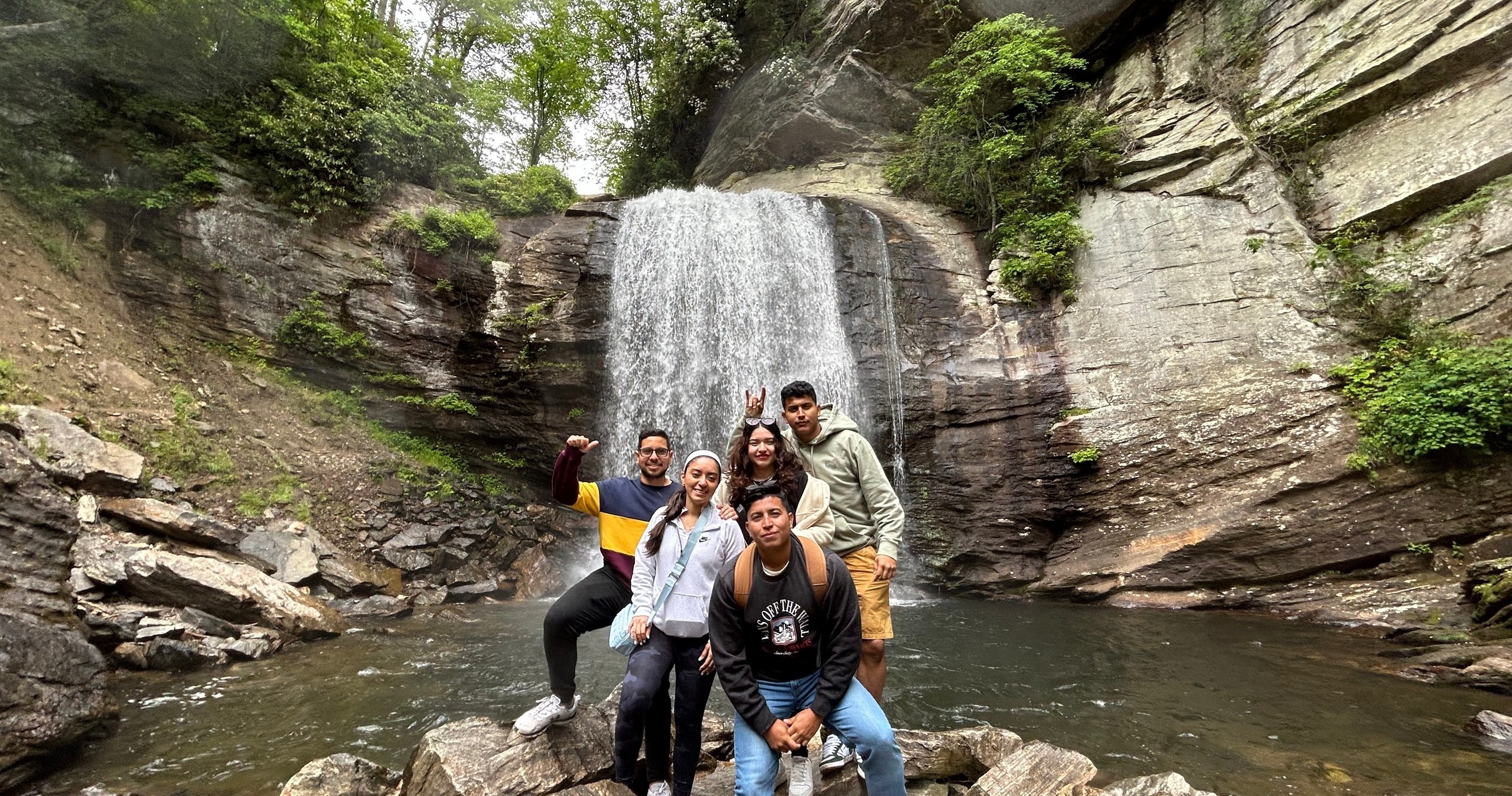
The jeep noses off the pavement and onto gravel, and the forest greets you like an old friend—fragrant, rain-polished, impossibly green. The road narrows and the Blue Ridge folds around you in quiet waves. A creek keeps pace, riffles racing the tires as if daring the group to keep up. Your guide kills the engine at the first pullout, and the forest exhales. In the hush, you can hear it: water doing what it does best, carving patience into rock. The first trail is soft and needled, a quick stroll toward a curtain of white tucked into rhododendron. Spray lifts and catches the light, and just like that, you’re awake to the day—the kind of awake that only cold water and mountain air can deliver.
This is the Waterfall Hike & Jeep Excursion, a compact sampler of Pisgah National Forest’s greatest hits—4 to 5 waterfalls in 3 to 4 hours, stitched together by backroad rambling and easy-to-moderate walks. It’s a smart format for travelers who want the feel of a full day without the logistics. Local guides steer and narrate, letting you focus on the sound of the cascades and the sway of hemlocks. Mountain weather shows its moods, and the tour leans into it. Rain doesn’t cancel the magic; it turns the moss into a neon invitation and sets the creeks to singing.
Pisgah is waterfall country—Transylvania County is nicknamed the Land of Waterfalls, with more than 250 drops scattered through granite folds and forested hollows. Those granite domes—plutons cooled from ancient magma—shape the terrain, and water exploits every seam. Trails here are built on stories: old logging roads from the early 1900s, Civilian Conservation Corps paths that carried tools and hope into the woods during the 1930s. Today, the roads grant access to the headliners—think broad roadside stunners and hidden veils you can walk behind—but also to quieter corners where salamanders rule the undercut banks and laurels knit tunnels over the trail.
On this circuit, expect contrast. One stop might be a big, photogenic cascade with an easy, family-friendly path. The next could be a hushed, fern-laced draw with a footbridge and slickroot stairs to negotiate. Total hiking is 2 to 3 miles across the tour, spread across segments that keep the pace fresh. Elevation changes come in short, punchy doses, and the jeep takes the edge off distance by hopping you between falls on scenic gravel and backroads. When you do hike, the forest gets a say—roots reach like knuckles, and rock shelves can be muddy or polished by spray. Closed-toe shoes aren’t a suggestion here; they’re your passport.
Local knowledge is the tour’s secret sauce. Guides time the route to dodge peak crowds, pick vantage points where mist won’t fog your lens, and know when to pivot if a storm shears across the ridgeline. They’ll point out the burls in a black birch, explain why overcast days are gold for waterfall photography, and drop a tip on where elk sometimes graze at dusk. When Pisgah flips the switch from drizzle to sun, they’ll have ponchos ready and a plan to chase rain-fed volume or hide in a laurel tunnel until thunder moves on.
The cadence mirrors the land—drive, walk, listen, repeat. Water becomes a character that changes costume at every stop. It threads a staircase of ledges, leaps clean off a lip, fans across a wide rock face, then slips quietly into a pool that swallows sound. You feel it in the temperature dip near the spray, watch it etch stripes across a slab, hear it build when the creek funnels between boulders. The forest encourages you to lean in: a kingfisher strafes downstream, bracket fungus stacks like shelves on a fallen oak, and somewhere up the slope, a pileated woodpecker drums a hollow log.
What elevates the experience is how approachable it is. You don’t need to be an ultra hiker to see a handful of waterfalls in a single outing; you just need curiosity and good soles. The jeep handles the connective tissue. Snacks and water are included, which frees you to wander a few steps off the main view to frame a shot or simply breathe for a minute without worrying about the clock. If you’d rather stay dry while others poke down a short spur, you can hang back at the vehicle—mobility needs are respected here.
Planning is straightforward. You’ll meet at Asheville Jeep Tours headquarters in Pisgah Forest, just outside Brevard. The loop runs year-round, but each season writes its own script. Spring brings swollen creeks and wildflowers. Summer drapes shade over the trail and invites a rock-hop at the edge of a pool. Fall throws the big color switch—maples and oaks turning the slopes into a tapestry. Winter’s clear air and leaf-off views reveal the bones of the watershed, and the waterfalls run crisp and cold. Rain is frequent in these mountains; the crew comes prepared, and so should you.
For those who want to dig deeper into the route, guides, and booking details, tap into the local knowledge hub at Waterfall Hike & Jeep Excursion. It’s the place to align expectations, secure a spot, and understand the nuances of a public group tour versus a private charter.
The appeal is obvious: a compact immersion in a classic Southern Appalachian landscape, paced so the day feels full but not rushed. You’ll come away with shoes damp around the edges and a camera roll heavy with motion—shutter-smoothed silk and freeze-frame spray. Mostly, you’ll leave with the sound of it all stitched into your head. Water urging the day forward. Gravel whispering under tires. Forest asking you to come back and listen again.


