Dawn slides between the rhododendrons as the forest wakes, bead by bead, with dew. A thin breeze slips along the granite, testing your balance before you’ve even tied in. The wall ahead—clean, silver, surprisingly warm for this hour—tilts into the sky, convincing yet honest about what it demands. You coil the rope, hear the river mutter somewhere in the trees, and step toward a day that rises pitch by pitch.
Multi-pitch in Pisgah is a conversation with stone. The granite dome—born of ancient fire, cooled into feldspar and quartz—has a way of telling the truth. Smears ask you to trust your feet. Sloping edges reward patience over power. In Western North Carolina, especially around Brevard and the Pisgah National Forest, the climbs are classic for a reason: Views open like a curtain between sequences, and the forest keeps you company all the way to the anchor. A half-day outing is a tight, focused window into that world—just enough time to feel heights in your ribs, settle into the rhythm of belays, and let the Blue Ridge spread out in front of you.
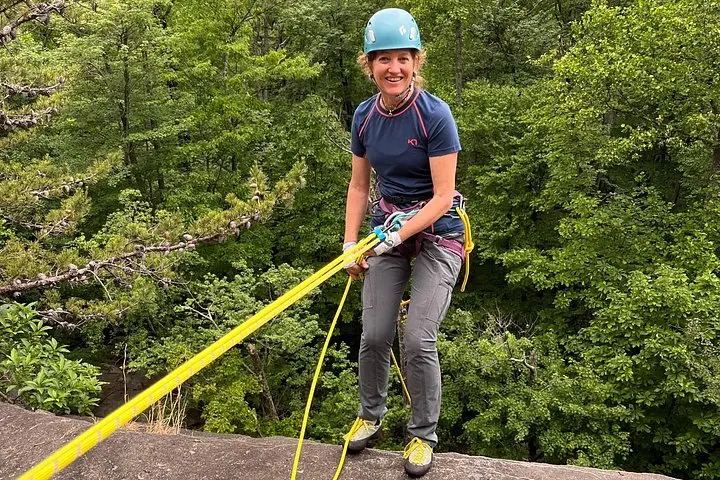
Expect an approach through tunnels of laurel and cove hardwoods, 10–30 minutes depending on the crag. Granite plates out above the trees, a pale dome with runnels and glinting crystals that catch the sun. On route, you’ll stack two to three pitches—often 80 to 120 feet each—linked by tidy stances where you’ll sip water, swap gear, and talk through the next moves. The rope hums over stone; the belay device warms in your hand. Ravens circle like they’re checking your knots. The cliff doesn’t shout; it nudges, urging you to move with intention.
Though some experience helps, you don’t need to be a seasoned wall climber to thrive here. Guides in Pisgah have honed the half-day format to fit capable beginners and intermediate climbers hungry for vertical time without the all-day commitment. You’ll learn the choreography of multi-pitch: building and cleaning anchor stations, efficient transitions, and either rappelling or walking off, depending on the line. The satisfaction comes from the flow—belay on, climb, clip, breathe, finish a pitch, reset the system. The terrain trades steep pulls for balance and friction, more thoughtful than gymnastic, and the exposure grows with each anchor until the forest is a green sea rolling below you.
These domes are relics of a supercontinent torn apart. The granite here intruded deep underground, then slowly revealed itself as softer rock weathered away. When rain slicks the surface or a winter glaze forms, the stone lives up to its name: Looking Glass—one of the region’s signature formations—flashes and reflects like a mirror. The Cherokee knew these valleys long before climbers tied their first figure eights; old wagon roads and, later, Civilian Conservation Corps routes cut through the trees to the high country. Today, peregrine falcons—once nearly gone from the Southeast—nest on these faces again. In spring and early summer, sections of cliff may close to give them space, a seasonal reminder that we’re visitors with ropes in a home that also belongs to wings.
Half-day multi-pitch is generous with rewards and honest about logistics. Plan on four hours, start to finish. Bring 1–2 liters of water per person; the humidity here doesn’t ask permission before it drains you. Wear approach shoes or sturdy hiking shoes—trails can be rooty, slick, and steep in short bursts. Helmets are non-negotiable; the forest sheds pebbles, and the cliff occasionally nudges them down. Expect to be in a harness for extended periods, which makes a comfortable fit essential.
Weather in the Blue Ridge loves drama, especially in summer. Afternoon thunderstorms roll in fast, and the granite is quick to voice its dislike for rain. Early starts help, and guides watch radar like hawks. In fall, cool, dry air brings peak friction and leaf color that steals the show—gold and crimson cascades spilling across the ridgelines. Winter offers crisp, bluebird days on south-facing routes, while spring softens the forest with wildflowers and the first warm stone.
When the final anchor is cleaned and the ropes are coiled, the cliff gives a last word—a breeze and a view—and you walk back into the tunnel of green feeling taller than the topo suggested. Multi-pitch here compresses adventure into a half-day that lingers: the weight of exposure in your chest, the rhythm of the system running smoothly, the subtle confidence that comes from moving well in vertical space. The forest nods, the granite keeps its counsel, and the river below keeps pushing forward, as if nudging you toward whatever’s next.
Practicalities: The closest base is Brevard (about 35–45 minutes from Asheville), with easy access to Pisgah National Forest. Guides typically provide ropes, helmets, and technical gear; you’ll bring closed-toe shoes, snacks, water, and weather-appropriate layers. Check for seasonal peregrine closures if you’re a self-led party; otherwise, your guide will handle the details. Cell service fades quickly in the gorgey folds of Pisgah, so download maps in advance and plan to meet at a known landmark. If you’re new to multi-pitch, consider brushing up on standard calls and belay transitions—efficiency keeps the day crisp and safe.
All that’s left is to step up, tie in, and let the cliff set the tempo. The granite will test and teach, steady and fair. Above the rhododendrons, with the Blue Ridge unrolling to the horizon, you’ll feel the day open—a clean line drawn into the sky.