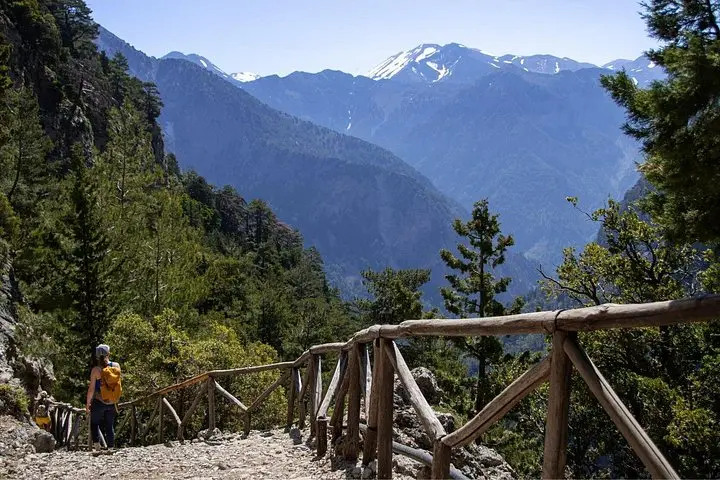
You step off the bus where the road thins and the White Mountains hold their breath. A low wind moves through the pines above the Omalos Plateau; the gorge mouth yawns at 1,100 meters and the world below looks suddenly small. For the next several hours the trail will read like a geological ledger—rock after rock recording time—and you are invited to translate the ledger into motion: one foot after another, downhill toward the sea.
The Samaria Gorge is a study in contrasts: broad highland plateaus giving way to a knife-edged canyon, quiet stone villages broken by the gull calls around Agia Roumeli, and a final swim of light and wind as the sea greets you. The route written into most itineraries is unambiguous—start at Omalos, walk 16 kilometers through Europe's longest gorge, and finish in the seaside village of Agia Roumeli with a late-afternoon boat to Chora Sfakion. The commercial tour from Chania packages all of that into a full-day trip, which is why travelers still flock here: it's scenic, exposed, and finite in a way that feels satisfying.
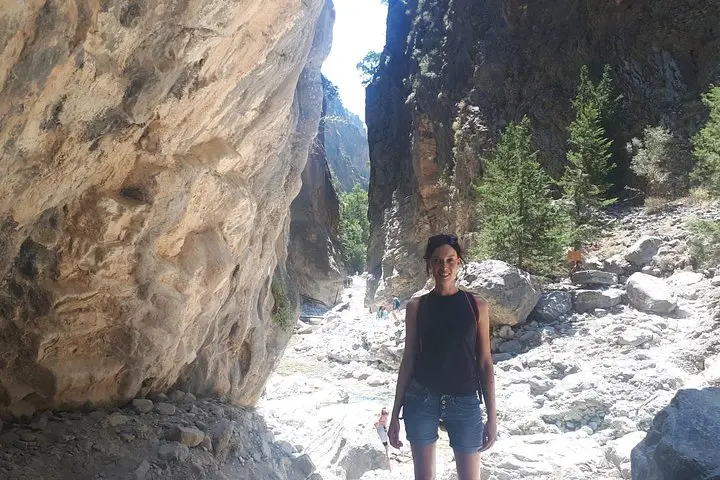
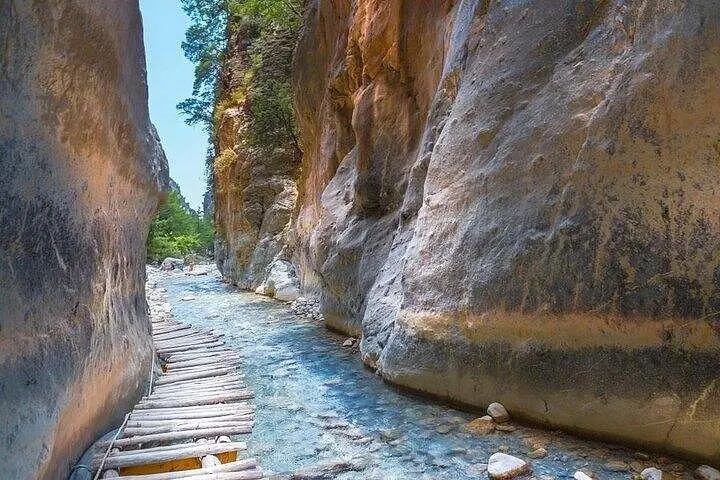
Geology is the gorge's charter. Over millennia, the river that carved Samaria cut through layers of limestone and schist, exposing sheer walls that in places narrow to a seven-meter squeeze at the famous 'Iron Gates' (Sideroportes). The canyon swings from airy terraces filled with juniper and Cretan fir to shaded, narrow clefts where sunlight pools in small emerald patches. The evidence of time is visible underfoot: polished stones smoothed by centuries of water and boot soles.
Culturally, Samaria has been a corridor and a refuge. During World War II, locals used the gorge to evade occupying forces; today, the scattered stone ruins and isolated chapels along the ridge are quiet relics. Keep an eye out for kri-kri, the Cretan wild goat—a sure sign you’re in a protected ecosystem with its own small claims to fame.
If you want a deeper primer before you go, check a local guide's full-day overview: Samaria Gorge hike from Chania full-day guide. That local perspective helps timing, transport logistics, and what to expect on the trail in any given month.
Why hike Samaria? For many it's the simple arithmetic of effort versus reward: a long, sustained descent through scenery that changes every hour, ending with sea-salty air and an easy boat ride back. For others it is a cultural connection—the chance to walk the same route shepherds and villagers used for generations. And because it’s organized as a day trip from Chania, it's convenient without feeling like a guided conveyor belt; there’s still time to breathe, to pause at the narrow gorge throat, to watch light spill across the valley.
Reality check before inspiration: this is a long, physically demanding walk. The path can be rocky and steep in sections, and summer heat makes water management essential. The tour's full duration commonly includes bus transfers and the ferry, so expect a long day—roughly five to eight hours on the trail, and up to 12–13 hours door-to-door depending on schedules. The best time to go is spring or early autumn when temperatures are moderate and wildflowers bloom.
Practical notes that matter on the ground:
- Start early: buses from Chania run in the morning and the gorge closes by late afternoon for safety. Early starts mean cooler rock and gentler light for photos.
- Hydration: bring more water than you think you need. There are limited refill points; plan for at least 2–3 liters in summer.
- Footwear and ankles: sturdy hiking shoes with good grip and ankle support protect you on the descending gravel.
- Finish logistics: the boat from Agia Roumeli to Chora Sfakion is reliable in good weather, but schedules can shift; keep a buffer in your plans.
The trail is as much about pacing as it is about vision. Move steadily; short, frequent rests protect knees and conserve energy. Stop at shaded alcoves to drink and scan for kri-kri on the cliffs. When you arrive in Agia Roumeli the contrast is delicious: the canyon's stone gives way to sand, the air smells of the sea, and local tavernas offer the inevitable reward—fresh fish, cold beer, and loukoumades if you’ve earned them.
If you'd like local detail on trail etiquette, seasonal closures, or the best photo spots, the linked guide carries practical intel tailored to Chania departures: read the Samaria Gorge hike from Chania full-day guide. It’s the same local knowledge that turns a good day into a confident one—transport tips, what to pack, and how to time the ferry.
For those preparing: respect the environment, keep to the marked path, and treat the village of Agia Roumeli as a fragile endpoint. The gorge is protected, and tourism is both its lifeline and its pressure. Walk prepared, walk thoughtful, and you’ll finish not just with photos but with a clear sense that you’ve traversed something genuinely long and distinctly Cretan—a canyon that narrates both geology and human resilience.
On balance, Samaria is a demanding day that pays back proportionally. It’s not a casual stroll; it is a full-sensory descent that moves from mountain to sea while giving you a concentrated lesson in the island’s landscape and culture. If you like your adventures long, straightforwardly wild, and lined with practical logistics that are easy to manage from Chania, this is worth the early alarm and the steady steps.