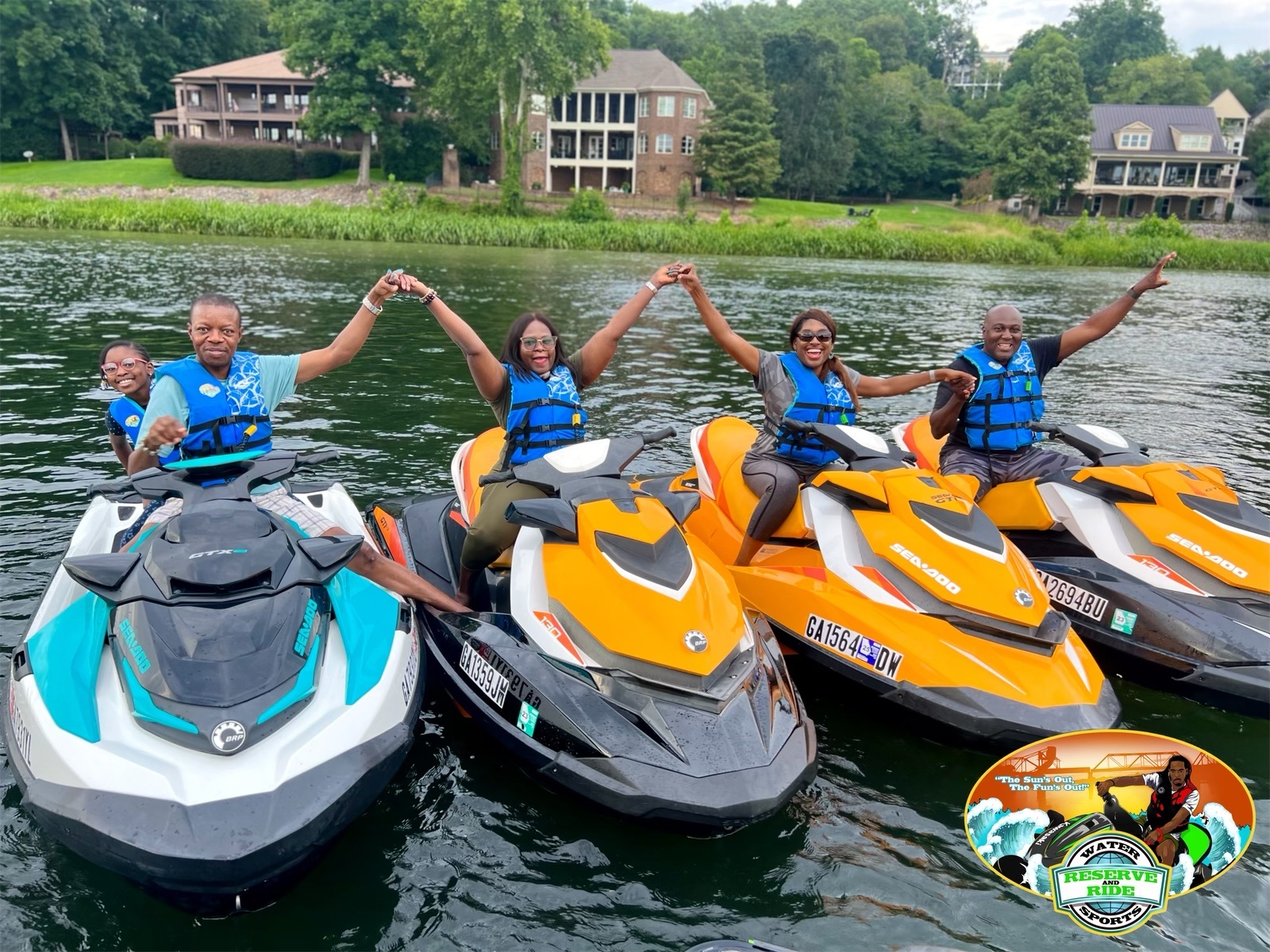
The river wakes early. It exhales mist across the dark water and dares you to loosen your grip on the dock’s last slat. The throttle hums, a low invitation, and then you’re off—planing across the Savannah River with the current nudging your bow and the shoreline sliding past in a blur of willow and cypress. The city of Augusta lingers upriver, but down here the water has the final word. Pelicans shoulder the breeze. An osprey draws a clean line across the sky. And in the distance, a silhouette resolves: gates and concrete, history and hydraulics—the New Savannah Bluff Lock & Dam, one of Georgia’s most storied river works.
What makes this ride different from a simple spin around a lake is the sense of purpose. You’re not just carving wake; you’re tracing a working river to a living landmark, guided by locals who pair small-group pacing with easy instruction. On the way, your guide threads in the timeline: how the lock and dam lifted barges toward Augusta’s mills, how navigation waned and the river reasserted its wild logic, and how today’s proposals for fish passage and river restoration still shape this bend in the southeast. It’s adventure with context—equal parts adrenaline and insight. Book the outing directly through the official New Savannah Bluff experience page here: New Savannah Bluff Lock & Dam Tour.
From the dock, you throttle southeast. The Savannah gets playful—curves tightening, sandy banks showing off fresh tracks where deer stepped out for a drink. The jet ski answers every contour, skimming smooth on glassy stretches and bobbing lightly where boat wakes breathe in. Water shoes grip the footwells, a cool spray salts your face, and the river’s rhythm sets the day’s metronome. In a small group, there’s no rush, just pace—room to open it up for a sprint, then settle back into the scenic glide.
The dam itself rises with quiet authority. Up close, the walls are honest about time and purpose: poured in the 1930s to create a navigable pool, a set of gates to lift freight toward the fall-line city. Look closely and you’ll see the lines of labor—engineering of an era that decided a river could be shaped as easily as steel. These days, you’ll keep a respectful distance, orbiting carefully as your guide explains how the lock once coordinated a choreography of water levels and how modern conservation thinking focuses on fish passage, habitat protection, and balanced flows. On the right light, the surface turns to hammered metal—then back to ink.
If you’re new to personal watercraft, relax. The pre-ride briefing is simple and deliberate: start-up checklist, throttle feel, emergency shut-off, hand signals, and safe spacing. Helmets aren’t necessary, but personal flotation devices are, and they’re provided along with goggles and floating phone cases. The tour is capped at three riders per jet ski and 600 pounds total, a clear nod to stability and comfort. Safety buffers stay in place; the guide sets a buoyant, no-drama tone that lets confidence slip in naturally. It’s just enough structure to keep you focused and just enough freedom to let the river do its work.
Beyond the physical ride, this is a tour of living geography. The Savannah River is a state line, a corridor, and a narrative. It’s where the Piedmont eases into the Coastal Plain, where red clay yields to low-country sand, where hardwood shade turns airy and marsh-minded. The current pushes forward with quiet persuasion, and the banks tell the story—mud-wisped roots, egret tracks stitched like cursive into the shore, cypress knees rising like a chorus of knuckles. You might spot an otter slipping across a seam of calmer water or a great blue heron taking a measured step, unbothered but watchful, as if granting you passage.
When the engines idle near the dam, the history lands. Built in 1937, the New Savannah Bluff Lock & Dam was the hinge that lifted commerce on a 360-foot-long lock chamber and a 13-foot lift—an industrial stride that kept Augusta supplied from the coast. As rail and road shifted the equation, the traffic faded; now the structure anchors debates about habitat, recreation, and heritage. Your guide distills the nuance without jargon, pointing out how fish move, how water levels support upstream communities, and why the river matters even when we’re not looking. For those who want a deeper primer or to compare dates and details later, bookmark the local expert listing at Savannah River jet ski tour.
For visitors, Augusta makes a practical base. The city’s historic core is minutes from the river, and the region’s trails, swamps, and greenways mean you can build a full day without repeating yourself. Early risers can paddle the canal, then trade paddle for throttle on the afternoon lock-and-dam run. Families can make it a quick hit—up to 90 minutes dock to dock—and still have space for dinner on Broad Street. The Savannah River doesn’t demand an all-day commitment; it rewards a well-timed dash.
Planning is straightforward: swimsuit or quick-dry layers, water shoes with grip, sunscreen that won’t slide at the first spray. Bring a driver’s license for the rental process, and expect a clear safety talk with time to practice. Weight limits and group sizing are non-negotiable, which keeps the ride smooth and the craft stable. Weather calls are conservative; wind and lightning end the conversation. If the forecast shifts, reschedules are common sense. For booking details, dates, and current conditions, go direct to the tour page: New Savannah Bluff Lock & Dam experience.
And when you’re back at the dock, the river isn’t done with you. It still hums in your knees and forearms, the echo of small chop and quick acceleration. That’s the gift of a good route: it lingers. The Savannah has a way of asking for your attention without shouting. It pulls you forward, sets your pace, taps your shoulder. This tour doesn’t just show you a landmark; it teaches you how to read a river—one throttle squeeze at a time.