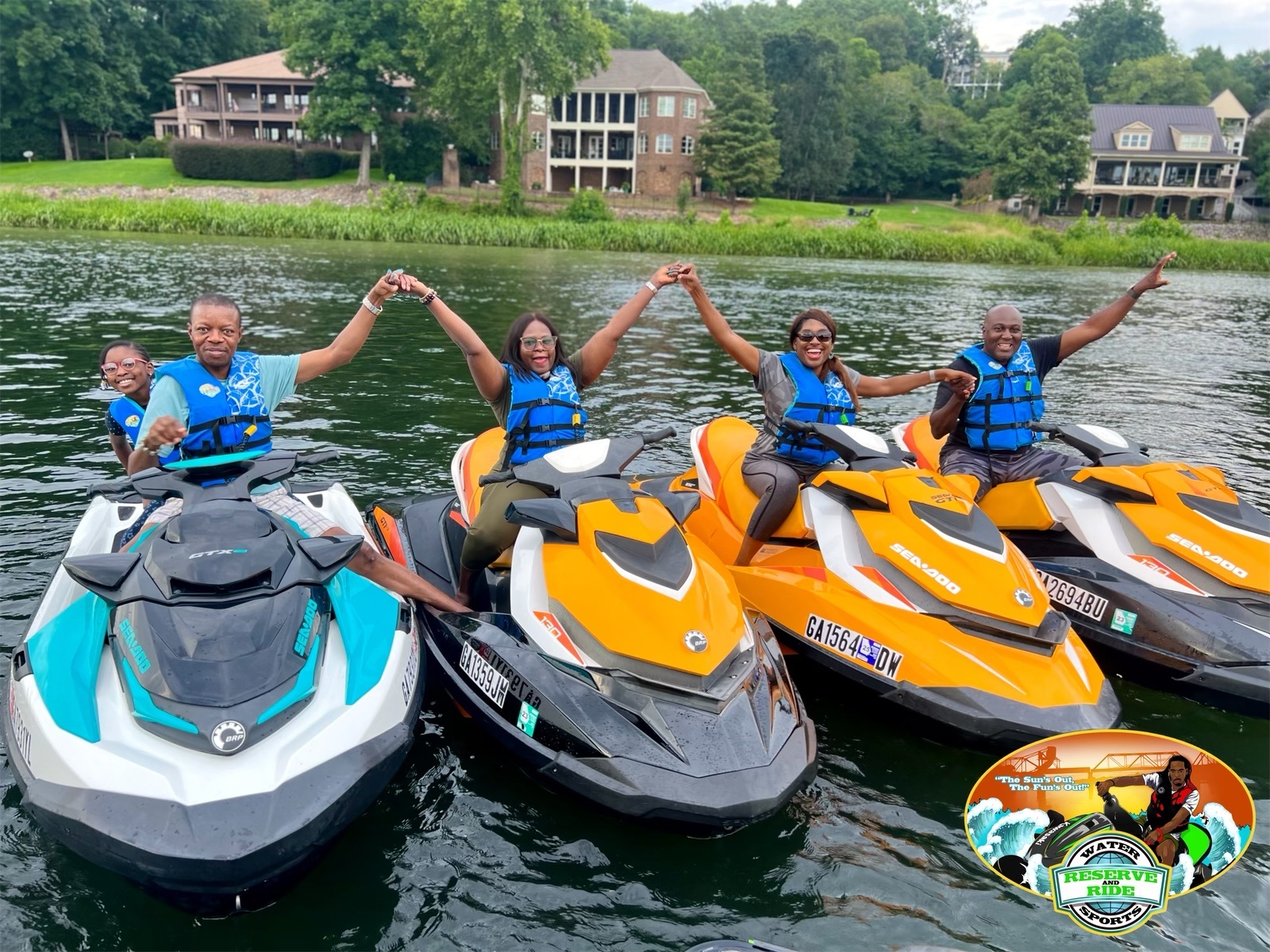
Riding History: A Jet Ski Journey on Augusta’s Savannah River

Riding History: A Jet Ski Journey on Augusta’s Savannah River

A one-hour guided ride that fuses river thrills with Black and Native American heritage.

Continue Reading

The Savannah River wakes early. At first light, the current turns glossy and deliberate, nudging against the docks as if to say: keep up. You straddle the jet ski, life vest snug, fingers wrapped around the throttle. Downtown Augusta glows to the west, North Augusta’s tree line to the east, and the river—wide, patient, full of memory—waits for you to press start. When the guide signals, the engine hums and the river answers, its low chop pushing you forward into a one-hour ride that blends spray and speed with a living history lesson you can feel in your bones.

This is the Black Native American Passage Tour—part cultural immersion, part water adventure, and all perspective. It’s a compact, well-paced loop along the Savannah River’s urban corridor where the storyline isn’t just told; it’s threaded through landmarks you can point to. You’ll skim past riverfront parks, under historic bridges, and along industrial relics while your guide lifts the curtain on centuries of Black and Native American life along these banks. If you want an experience that pairs adrenaline with meaning, this is it. Learn more at the official tour page: Black Native American Passage Tour.

The rhythm of the route mirrors the river’s: bursts of acceleration punctuated by slow, reflective pauses near sites that anchor the narrative. The banks here have held communities since the 1600s, when Yuchi and Muscogee (Creek) people navigated trade routes long before a city rose on the bluff. As Augusta took shape, the river became a working artery. Enslaved Africans built, labored, and worshipped along these waters; their descendants forged communities like Springfield and navigated Reconstruction’s promise and peril. Across the river in what is now North Augusta, Hamburg stood as a predominantly Black community during Reconstruction—its story marked by strength, enterprise, and tragedy, including the 1876 Hamburg Massacre. The river carries these names quietly, but it does not forget.

On a warm morning, the ride feels effortlessly modern—stable hulls, responsive throttles, guides trained to read conditions—but history moves in the periphery. You idle beneath the 5th Street pedestrian bridge and the river seems to speak in layers: industry, commerce, worship, protest, celebration. Look upriver toward the canal headgates and you’re seeing the edge of the Augusta Canal, a 19th-century engineering project that powered mills and altered the city’s trajectory—built in part by enslaved labor and later a driver of Black wage work as the city industrialized.

The tour stays tight to the heart of downtown, where the scenery shifts from shaded banks to brick facades and back to quiet coves that make you forget there’s a city at your back. You move in small groups, never far from a knowledgeable guide, with regular pauses to translate what you’re seeing into who stood here before you. The river gives each stop a different tone. Some sites invite silence. Others invite questions. All of them give context to the present.

Don’t mistake this for a lecture. It’s a ride. The current has a steady push, and when the guide opens a stretch, the jet ski leaps forward, tracking smoothly over wake. The river plays along—tossing a little twist of chop, flashing a heron between pilings, rolling a friendly shoulder into your turns. Then the throttle eases back and the guide calls out a story: a river church known for baptisms in the shallows; a landing where goods once changed hands; a neighborhood where oral histories say the drums carried across the water at night. The narrative never drifts into nostalgia. It stays grounded, precise, alert.

Practically speaking, this is a short, accessible experience that fits well into a broader Augusta day. The essentials are covered: life vests, goggles, and floating phone cases are provided, along with a clear safety briefing before you go. Each jet ski accommodates up to three people or a combined 600 pounds, which makes it ideal for couples, friends, or a parent-and-kid duo. The guiding style is patient and structured—new riders get comfortable quickly, while experienced riders appreciate how smoothly the group moves. For more on what’s included and how to book, see the tour’s water-activities and cultural exploration overview.

Augusta’s riverfront is changing fast—more public space, more access points, more energy—but on the water you still get the feeling of being outside the flow of the city. The Savannah has that knack. It pulls you into its cadence. Geologists will say the fall line—where the Piedmont drops to the Coastal Plain—helps explain the character of this stretch: broad river, distinct current, and a channel historically prized for mills and river trade. Culture explains the rest. The communities who shaped this place made the river a stage—of commerce, protest, worship, and joy—and this tour gives you a ticket to sit waterside.

As you finish the loop, the docks rise ahead. The guide drifts up beside you, the engine drops to a purr, and the river settles into its late-morning hush. You step off with river hair, a phone full of water-streaked photos, and the feeling that you’ve just seen Augusta from the inside out. Not just scenery. Story.

If you want a short, meaningful way to experience Augusta’s core, this is the move: one hour, high on perspective, rich with place. Bookings and details are available at the Black Native American Passage Tour page.

Duration45–60 minutes
Plan your visit

Trail Wisdom

Arrive Early for the Safety Briefing

Plan to be at the dock 20 minutes early to gear up and get the pre-ride overview—confidence on the water starts on land.

Dress for Spray

Wear a swimsuit or quick-dry layers and water shoes; the river likes to remind riders who’s boss.

Mind the Wake Zones

Follow your guide’s hand signals near docks and bridges to protect shoreline habitats and other users.

Secure Your Tech

Use the provided floating phone case and wrist lanyard; a sudden bounce can turn a photo into a retrieval mission.

Local Knowledge

Hidden Gems

  • 5th Street Pedestrian Bridge overlook for wide river panoramas
  • Augusta Canal Discovery Center for context on regional water-powered history

Wildlife

Great blue heron, Osprey

Conservation Note

Wake responsibly near docks and shorelines to reduce erosion and disturbance to nesting birds. Pack out everything, including micro-trash like torn wristbands or snack wrappers.

The Savannah River corridor around Augusta has been home to Yuchi and Muscogee (Creek) peoples and later became a center of Black labor, worship, and community; across the river, the Reconstruction-era town of Hamburg (now within North Augusta) figures prominently in regional history.

Seasonal Guide

spring

Best for:Mild temperatures, Clear water conditions
Challenges:Occasional windy afternoons, Pollen on gear

Spring is prime for comfortable rides and crisp visibility along the river’s urban corridor.

summer

Best for:Warm water, Evening golden hour rides
Challenges:High heat and humidity, Pop-up thunderstorms

Start early or go late to beat the heat; always watch forecasts for fast-moving storms.

fall

Best for:Pleasant temperatures, Lower crowds
Challenges:Shorter daylight, Variable water levels after rain

Autumn brings smooth water and relaxed docks—pack a light layer for breezy days.

winter

Best for:Quiet river scenes, Clear, crisp air
Challenges:Cold water temps, Wind chill at speed

Dress in insulating layers and limit splash exposure; calm weekdays can be stunningly peaceful.

Photographer's Notes

Shoot in early morning or late afternoon for softer light and fewer reflections; use a polarizing filter or enable your phone’s HDR to cut glare. Keep shutter speeds fast (1/1000+) to freeze spray, and wipe your lens often. Frame bridges and shoreline trees for scale, and use a wrist strap or lanyard for any device over water.

What to Bring

Water Shoes with Grip

Essential

Protects feet at the dock and improves footing when mounting or dismounting the jet ski.

Sun Protective Layer (Rash Guard or Long-Sleeve UPF Shirt)

Essential

Shields skin from intense sun reflected off the river.

○

Quick-Dry Towel

Useful for drying off and warming up after the ride.

○

Polarized Sunglasses with Retainer

Cuts glare on the water to help you spot features and reduces eye strain.

Common Questions

Do I need prior jet ski experience?

No. The tour includes an instructional review and on-water guidance to get beginners comfortable quickly.

What is the weight and capacity limit per jet ski?

Each jet ski accommodates up to 3 people with a combined maximum of 600 pounds.

What should I wear and bring?

Wear a swimsuit or swim trunks and water shoes. Life vests, goggles, and floating phone cases are provided.

Is there an age requirement?

Age policies vary by role (operator vs. passenger) and state rules; minors must ride with an adult. Confirm specifics at booking.

What happens in bad weather?

Tours may be delayed or rescheduled in the event of lightning, high winds, or unsafe river conditions.

Where is the meeting point?

The tour launches from Augusta’s downtown riverfront; the exact meeting location and parking details are provided in your confirmation.

What to Pack

Water shoes for grip; UPF shirt or rash guard to fight reflective sun; compact dry bag for post-ride clothes; reusable water bottle to hydrate pre- and post-tour.

Did You Know

The Savannah River forms most of the Georgia–South Carolina border and runs roughly 301 miles from the confluence of the Tugaloo and Seneca rivers to the Atlantic Ocean; its waters helped power the 1840s-era Augusta Canal, now a National Historic Landmark.

Quick Travel Tips

Park near Augusta Riverwalk for easy access; arrive 20 minutes early for check-in; bring a change of clothes for after the ride; check the forecast—thunderstorms can develop quickly in summer.

Local Flavor

After you dock, grab a slice and a slice of nostalgia at The Boll Weevil Café & Sweetery, or book a table at Frog Hollow Tavern for farm-driven Southern plates. Craving a post-ride pint? Savannah River Brewing Co. pours local favorites just a short drive away. Walk the Riverwalk to round out the day with live music or sunset views.

Logistics Snapshot

Closest airport: Augusta Regional (AGS). Launch area: downtown Augusta riverfront (exact meet-up sent after booking). Drive time: 5–10 minutes from most downtown hotels. Cell service: generally strong in the urban corridor. Permits: Included with the guided tour; bring a government-issued ID and follow all state PWC rules.

Sustainability Note

The Savannah is a living riparian system—keep wakes low near shore, avoid harassing wildlife, and leave no trace on docks or riverbanks. Small actions protect nesting birds and fragile shoreline roots.

Topics