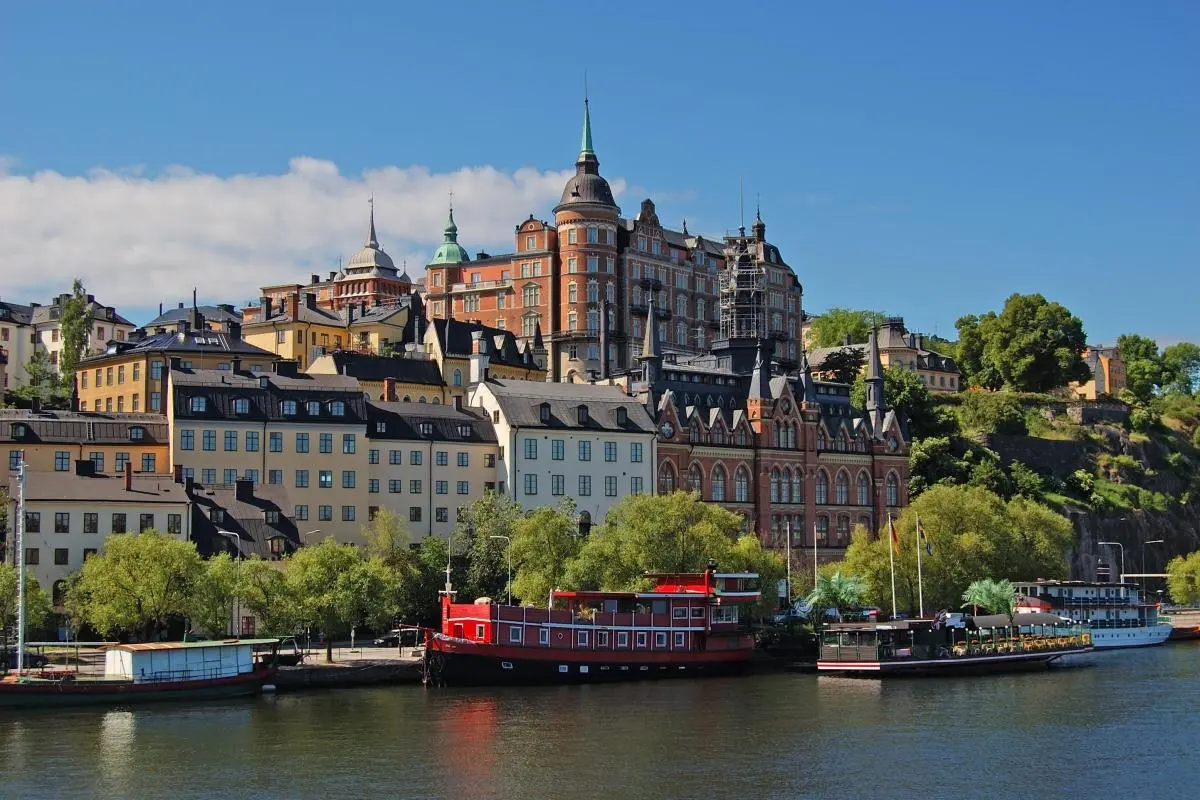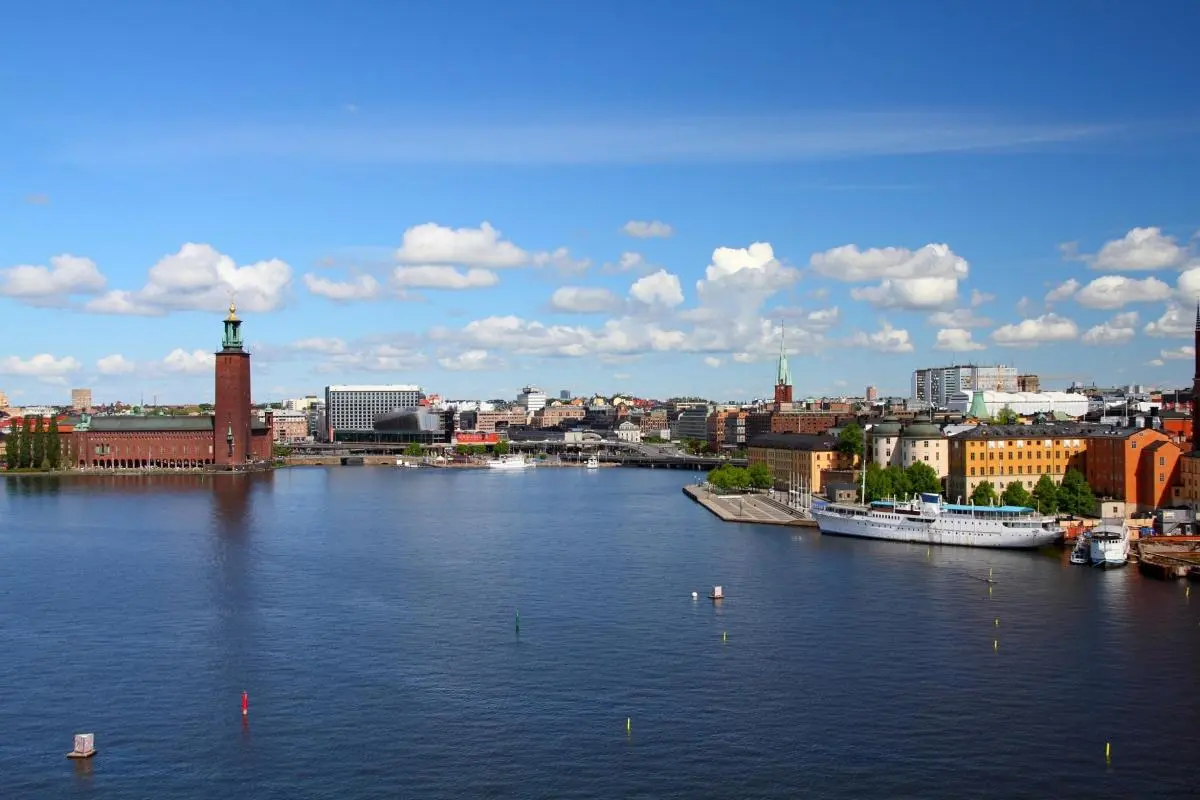
You step off the tram and the city exhales differently here. The granite facades and glass towers of central Stockholm recede, replaced by the low, deliberate rhythm of an island that doubles as a neighborhood—Kungsholmen. Water comes at you from two sides: a ribbon of canal reflecting sky and scaffolding, a harbor that keeps its own time. Commuters push bikes along the waterfront, elderly couples bench-watch the light, and across from the long curve of Stadshuset (Stockholm City Hall), tour boats slide by like chrome slow-moving fish. There’s a cadence here that asks you to slow down: to walk, to bike, to let the water set the pace.
Kungsholmen is not a wilderness; it’s a living urban shoreline. Its appeal is the way it frames everyday Stockholm—city hall fireworks, canal-side cafés, pocket parks tucked between apartment buildings—so that each small detail feels newly framed. You can stitch together a three-hour loop that starts at the blue-brick silhouette of Stadshuset, follows a 3–4 km waterfront circuit of paved promenades and cobbled streets, then slips into a quieter interior of playgrounds, community gardens, and thrift stores. Or you can step the experience up: book a private bike tour to cover more ground with a local, or take a champagne boat charter for 1.5–2 hours and see Kungsholmen from where it belongs—on the water.
History and context are embedded in the stones. Stadshuset—an early 20th-century nationalist landmark built between 1911 and 1923—anchors Kungsholmen’s skyline and gives the island civic gravity; its Blue Hall and tower are the stage for the Nobel banquet and annual ceremonies. The island’s name literally translates as “King’s Islet,” a reminder that the archipelago’s identities were once read as strategic outposts and royal holdings. Today those layers coexist: municipal halls, mid-century apartment blocks, and small businesses run by families who remember when the island was still semi-industrial and half backyard.
Geologically, Kungsholmen sits on the same Baltic bedrock as the rest of central Stockholm. Granite outcrops and old quayside stones appear in parks and along the shore, where the city’s relationship to the water is most visible: bridges link Kungsholmen to Norrmalm, Gamla Stan and Kungshatt; canals thread under arches and around locks, each one a micro-ecosystem of commuting birds and the occasional seal. The human scale of the island—short blocks, sheltered inlets, narrow bridges—makes it one of the easiest corners of Stockholm to explore by bike or foot.
Locals treat Kungsholmen as a daily retreat. Coffee culture is strong here; ‘fika’—the Swedish pause for coffee and something sweet—comes with a waterfront view. Second-hand shopping is another Stockholm obsession, and Kungsholmen is within striking distance of excellent vintage stores and flea markets if you’re hunting design pieces or Scandinavian wardrobe staples. That’s why a bespoke shopping walk is a fitting complement to a day of outdoor sightseeing: pairing the tactile joy of thrifting with a mapped route that avoids tram lines and keeps you on comfortable, bike-friendly streets.
The practical beauty of Kungsholmen is its accessibility. If you prefer atmosphere to intensity, spend the morning strolling the shore, ducking into cafés, and watching sunlight bruise on the water. For a kinetic afternoon, join a private bike tour—these usually run 2–3 hours, open up hidden alleys, and let you feel the wind across your face as you hop between vantage points. If you want the island framed in motion, take the private champagne canal charter: a 1.5–2 hour loop that departs from City Hall, circles Kungsholmen, and expands out to some of the 14 islands Stockholm is built on. The boat gets you close to the waterfront façades and shows the city from a slow, reflective angle; the bike gives you the speed to make sense of where those façades sit in the urban fabric; and a curated shopping tour helps you take a piece of Stockholm home.
Terrain and logistics are straightforward: mostly flat, paved promenades with intermittent cobblestones and short stairways near old quay walls. Bring layered clothing—Stockholm’s weather swings—and comfortable footwear for cobbled streets. For photography, the light is best at dawn and the hour before sunset when the water takes on color and the City Hall tower casts a long silhouette.
If you’re planning the day, think sequence: boat first if you want a broad orientation and a scenic highlight; bike second to investigate neighborhoods and parks; finish with shopping or a leisurely fika. Peak season is late spring through early autumn—summer mornings especially offer long daylight and warmer water reflections—but the island is calm year-round and particularly atmospheric in shoulder seasons when the crowds thin and cafés feel cozier.
Why travel here? Kungsholmen is where Stockholm’s civic pulse and domestic life meet the sea. It’s compact enough to feel intimate, diverse enough to keep a traveler curious, and practical enough to be tackled in a single day without losing depth. Combine different modes—boat, bike, and foot—and you’ll have a travel day that’s physically gentle but rich in texture: brick and water, design and daily ritual, history and honest neighborhood life.
Practical tips: book a private boat charter for a relaxed 1.5–2 hour panoramic introduction; reserve a private bike tour if you want local insight and pace; and if you’re hunting for vintage, plan a bespoke shopping slot so a local host can tip you toward the best finds. Above all, let the water dictate your tempo—this island rewards a traveler who moves with the tide of the city rather than against it.