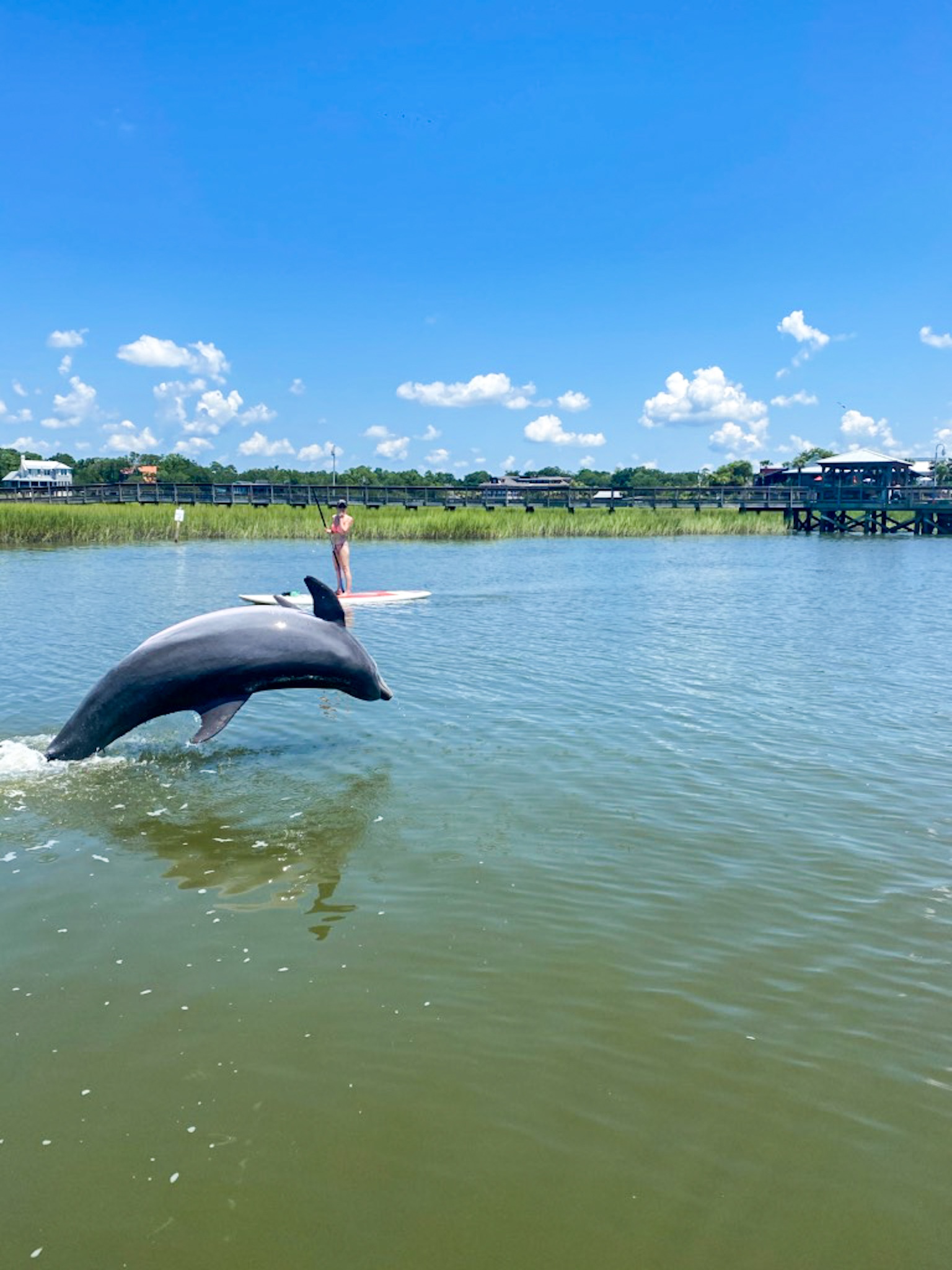
The sail begins where dock lines whisper and the tide exhales. One easy push from the pier and the boat glides into the green fringe of the Lowcountry, where spartina grass stands shoulder-to-shoulder like a stadium crowd and brown pelicans patrol the sky with calm authority. The captain cuts the engine, the mainsail climbs, and wind takes over. Water licks the hull, the marsh breathes, and then—there it is—a sleek dorsal fin arcs beside you. Another follows, and another. Bottlenose dolphins slip in and out of the tea-colored water like they own the place, because out here, they do.
Aboard the Dolphin Day Sail, a two-hour private charter designed for up to six people, the pace is easy and the setting is precise: tide-sculpted creeks, brackish smells, and birds that seem to draft on the breeze trailing your stern. It’s an experience built on simplicity—bring your favorite drinks and snacks, claim your corner of the cockpit, and let the coastal wind reveal the rhythm of this place. For booking details, current rates, and availability, see the official Dolphin Day Sail info here: Dolphin Day Sail.
This is the Lowcountry’s living classroom, and the salt marsh does the teaching. The grass is smooth cordgrass, Spartina alterniflora, and it tells the tide what to do with each lunar shift—pulling water onto its blades and pushing it back across the flats in a daily cycle that fuels everything from oysters to egrets. Charleston’s marsh network isn’t just scenic; it’s one of the most productive ecosystems on earth, outpacing rainforests in the sheer amount of life it supports. Out here, you can feel that abundance: tiny baitfish jitter at the surface, marsh hens giggle from the reeds, and dolphins work the banks with quiet determination.
Those dolphins are the headliners, and they know it. Bottlenose dolphins along this coast practice a remarkable strategy called strand feeding, when conditions are right—cooperating to herd fish onto the mud and rushing in for the catch. You won’t always see it on a short sail, but you will almost certainly watch dolphins traveling, socializing, and feeding in ways that make you feel like you’ve been welcomed into their neighborhood. This is not an amusement-park performance; the marsh sets the stage, the current turns the pages, and the dolphins write their own script.
History sits in these waterways too. The exact lattice of creeks and rice dikes that once underpinned the region’s economy still shapes the tides and the culture. Shrimp trawlers chug past on their way to open water, gulls stringing behind like a weathered pennant. Along the edges, remnants of old pilings and working docks remind you that the Lowcountry has always owed its living to water. This is Gullah Geechee country as well, where language, music, and tradition have been braided into life along the South Carolina coast for centuries.
A private sail like this is deliberately unhurried. The route changes with the tide and the wind; no two outings are exactly the same. That variability is part of the charm. You might nose along a quiet side creek to watch wading birds fish in perfect morning light, or ride a soft afternoon breeze toward open harbor, with the skyline tucked behind a screen of marsh. Because it’s a small, private trip, families find it easy to relax—kids can watch for fins and birds without feeling crowded, and adults can raise a toast to the breeze doing all the work. To see the latest schedule and secure your spot, check the private sailing charter page.
Practicalities make the experience click. The sail lasts about two hours—enough time to unplug, not so long you’ll need to reorganize a full day. Summer can be hot and reflective on the water, so pack more water than you think you’ll drink, and rely on breathable layers and a brimmed hat. Polarized sunglasses pull the glare off the surface and make it easier to track dolphins beneath the waterline. Non-marking shoes help keep the deck safe and scuff-free. And if you’re bringing little ones, a snug-fitting child life jacket is never a bad idea, even on a calm, sheltered sail.
Time of day matters, too. Mornings are often the calmest and coolest. Late afternoons reward you with softer light and the possibility of golden-hour drama as birds commute home and the marsh glows. Midday is the realm of big sky and clear sightlines for wildlife. There isn’t a bad window; there are just different moods. The captain will shape the sail to the day’s wind and tide, and you’ll feel that rhythm the moment the sail fills—acceleration that’s more exhale than push, a hush that replaces engine noise, and the marsh drawing a little bit closer with each tack.
For anyone who has only known motorboat tours, this quieter approach feels revealing. Without the rumble of an engine, you begin to notice the subtle cues: the way the current stitches a seam along a channel, the telltale arcs of mullet, the lazy pivot of an osprey above a channel marker. You’re not muscling through the marsh; you’re collaborating with it. Wind has opinions out here, and it will nudge you into better photographs, better conversations, and better wildlife encounters than a motor often can. For more on the route, what to bring, and how to customize your outing, start with the official Dolphin Day Sail guide.
Two hours later, you’ll likely return with sun on your shoulders and salt on your lips, fresher for the simplicity of it all. The marsh keeps its own time. You fall into it, one quiet reach at a time, and carry it back to shore.