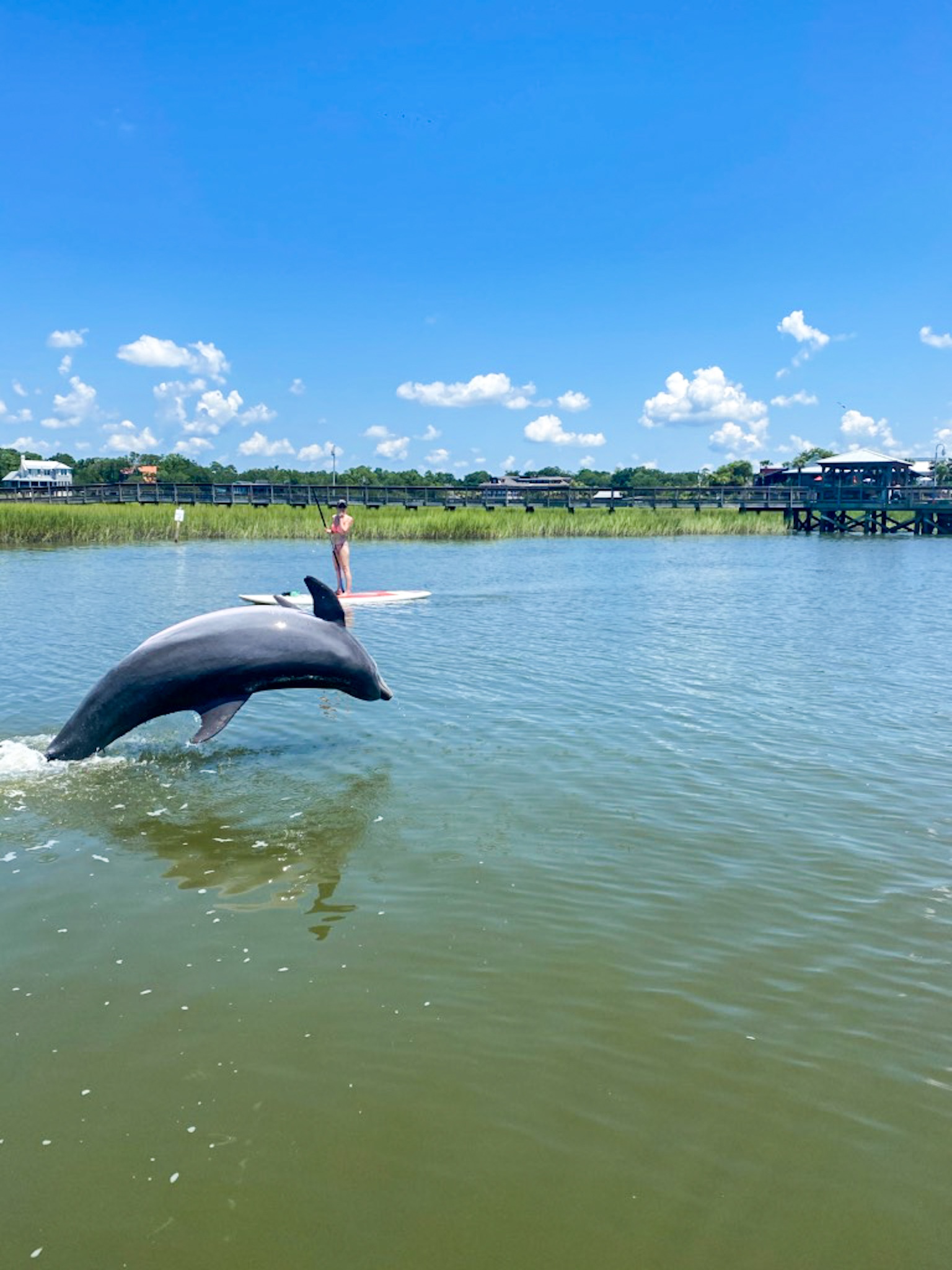
Low tide pulls the marsh flat like a deep breath, and the creek answers with a whispering rush. Spartina grass leans and then straightens, nodding to the morning breeze as if urging you aboard. From the Shem Creek public day dock in Mount Pleasant, the boat noses into a labyrinth of silver channels, and the city you left ten minutes ago already feels distant. The water is brackish and restless, a living seam where river and sea bargain all day long. A bottlenose dolphin surfaces to the starboard side, exhaling a soft puff that sounds like a greeting. An egret sidesteps the mud with surgeon’s precision. The Lowcountry doesn’t just show you wildlife—it assigns you a seat in its daily meeting, and the tide runs the agenda.
This is the rhythm of a two-hour Backwater Eco Tour, a calm, close-up look at the salt marsh and tidal creeks that underwrite life along the South Carolina coast. The boat idles past shrimp boats and stacked crab traps, then slips into quieter water, where the horizon turns green and the air tastes faintly of salt and sun-warmed oysters. An osprey rides the wind overhead—shoulders squared, eyes pinned to the surface—while fiddler crabs raise and lower their comically large claws in a slow-motion wave. The creek keeps a steady pulse beneath the hull, nudging the bow around each bend. Here, tides don’t merely rise and fall; they push, pull, and persuade, herding baitfish, turning oyster mounds into islands, and writing a new map every few hours.
Charleston’s estuary is a study in productive chaos: freshwater tumbling down the Cooper and Ashley Rivers meets ocean swells at the harbor, feeding an expanse of salt marsh dominated by Spartina alterniflora. This grass is the region’s workhorse, filtering water, stabilizing shorelines, and feeding an entire food web—shrimps, crabs, red drum, and the dolphins that hunt them. On any given morning you might watch a dolphin arc through the creek’s brown-green water or hear an unseen clapper rail bark from the reeds. The guide’s commentary is steady and grounded, toggling between bird behavior, tidal science, and local lore, the kind of knowledge that turns a pretty view into a layered landscape.
The setting also carries a distinctly human story. For generations, Shem Creek has been the domain of shrimpers and cast-netters, a place where workboats return trailing gulls and locals debate the tide as if it were a neighbor. You can still see the bones of that history in the rigging of trawlers and the docks lined with bait shops and seafood shacks. Beyond the creek, the broader Lowcountry bears the cultural imprint of Gullah Geechee communities, whose language, crafts, and cuisine evolved alongside the rhythms of the marsh. Understanding this connection—between water and livelihood—adds gravity to each ripple that reaches the boat.
The tour’s pace is gentle by design, perfect for families, photographers, and anyone who wants to feel the Lowcountry rather than blitz through it. Whether you go at sunrise, when the light gilds every grass blade, or in the violet drift of late afternoon, the experience is quiet and attentive. The wild does the heavy lifting: dolphins patrol the channels, ospreys ferry mullet back to nestlings, and herons trace the creek’s edge like careful calligraphers. The guide will point out the narrow cuts locals call “snakes”—tidal rivulets that swirl into the marsh and back out again—where you can watch the water muscle its way through the grass like a living creature intent on making its appointment with the sea.
Practicalities matter on the water, and this outing respects that. It’s two hours dock-to-dock with minimal motion compared to open ocean, so even those wary of seasickness tend to do fine. Bring sun protection—a hat, sunglasses, reef-safe sunscreen—and a lightweight layer if the breeze picks up. You can pack your own snacks and drinks; ice and coolers are provided. Booking is straightforward, with a 50% deposit at reservation and the balance due a week before departure. Arrive a few minutes early at the Shem Creek public day dock to settle in and listen to the gulls announce the day’s marine gossip. If you’re planning around weather, know that summer brings heat and the possibility of quick thunderstorms, while fall favors calm mornings and crisp light.
It’s easy to anchor a Charleston-area day around this tour: breakfast on the Mount Pleasant side, time on the water, and then a seafood lunch overlooking the creek as shrimp boats clink their rigging like wind chimes. This part of the coast isn’t about dramatic cliffs or alpine heroics. Its drama is subtler—a tide tugging at your ankles, a shadow flicker that turns into a dolphin, a marsh that breathes in metrics of inches and hours. The landscape asks for your attention, and rewards you for giving it.
If you’re new to the region, start with a guided outing like the Backwater Eco Tour. It orients you to the Lowcountry’s living map—where creeks feed the marsh, where birds nest, how to watch without intruding. You’ll learn how oysters build reefs that behave like living breakwaters, why the grass is tallest near the creek and shorter inland, and how tides can swing five to six feet in a single cycle. You’ll also learn how to be a good neighbor: keep distance from wildlife, stay quiet around rookeries, leave no trace of your visit beyond a few photos and an urge to return.
There’s a rhythm to these waters that’s easy to miss if you’re rushing. The marsh doesn’t rush. It turns the page slowly—ebb to flood and back again—and invites you to read along. Step aboard, let the boat idle into the channels, and let the tide introduce itself. By the time you step back onto the dock, you’ll have learned the Lowcountry’s first language—and you’ll want to keep practicing. For booking details, seasonal notes, and what to bring, see the official Shem Creek eco tour page and plan your timing around the light as much as the tide.