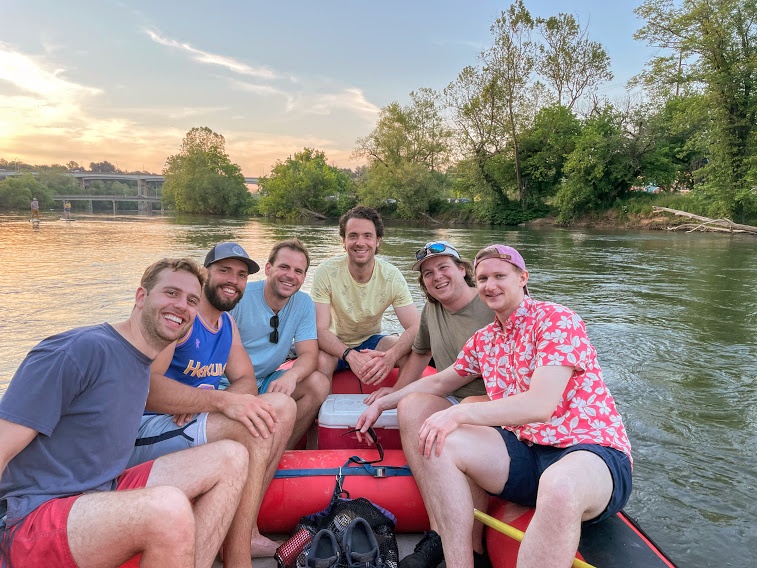
Morning gathers in soft layers over the French Broad, and the river answers with a quiet push, a nudge that invites you downstream. Paddle blades slip into tea-colored water as great blue herons rise from the shallows, their wings unhurried, like old friends who know the current’s secrets. Here, south of Asheville, the river threads through a corridor of sycamore and silver maple, past river islands that braid the flow, and into a stretch few visitors realize exists—a water-level tour of the Biltmore Estate’s backyard. For a brief window, the largest privately owned home in America shows itself from the water, a stone silhouette on a distant hill. The river doesn’t pause for the view; it dares you to match its steady tempo.
This half-day canoe trip covers roughly seven miles in about four hours, long enough to feel like a journey, short enough to leave room for a late lunch and a brewery stop. It’s a mellow Class I float: broad channels, occasional riffles, a tug of current that keeps you honest. The section is quieter than the in-town runs, which means more birdlife—belted kingfishers chasing each other through cottonwoods, osprey hunting the shoals, and swallows stitching the sky. Families, first-time paddlers, and anyone seeking a low-stress water day will find the rhythm forgiving and the scenery classic Blue Ridge.
There’s a practical heartbeat to this paddle. Your package typically includes transportation, a canoe, paddles, PFDs, a sponge, a river map, and a 5L dry bag with a first aid kit—everything you need to float with confidence. Keep an eye on sweepers (downed trees) along tighter bends and give anglers a wide berth. And while you float past the Biltmore grounds, remember: this is private property. State law and common courtesy say no landing here. Drift by, take a long look, and keep moving.
The river’s name hints at history. Early European settlers used “French Broad” to distinguish it from the nearby Broad River—the “French” nodding to the watershed that once connected to French colonial territories. Long before that, the Tsalagi (Cherokee) lived along these banks; archaeological finds point to millennia of human presence. Geologically, the French Broad is among the world’s oldest rivers, older than the Appalachians it cuts through. It flows north, stubbornly and elegantly, reminding you that not every river follows the same script.
South of Asheville, the valley opens. Farm fields tilt down to water, and the Biltmore Estate’s pastoral fringe slides by like a turn-of-the-century landscape painting. When the house appears—a gray crown on its ridge—it feels almost improbable, a flash of Gilded Age bravado in a river corridor that otherwise belongs to herons and sycamores. The French Broad doesn’t linger. It’s a working river, a moving classroom. The current pushes forward, the bends ask for small corrections, and the canoe hums when you hit your cadence.
For newcomers, a few essentials smooth the day. Start early to beat afternoon heat and summer crowds. Wear shoes you don’t mind getting wet. Pack water—more than you think—and sun protection. Tethers for phones or a waterproof case are smart even with a dry bag on board. Check the forecast and river levels, and when in doubt, lean on people who know this water intimately; local paddlers and outfitters are happy to share conditions and tips. If you want extra context or route advice, consult local experts before you go, and if you’re building a bigger Asheville itinerary, our curated Asheville river guides can help tune timing, shuttle logistics, and post-paddle plans.
Expect a social stretch near popular access points—fishermen working eddies, stand-up paddlers gliding by, a golden retriever in a drift boat. The river makes room for everyone as long as you hold course and communicate. Downstream, you’ll notice the smell of wild mint when your paddle brushes the bank, and in summer, the banks can bloom with ironweed and Joe-Pye weed. Rain, when it comes, often builds in the afternoon; if thunderstorms threaten, don’t launch.
Part of this river’s charm is how it lets you choose your energy level. Push the pace and finish in under four hours, or dawdle along gravel bars and eddies and stretch it to five. Either way, the current keeps time. The French Broad coaxes, never rushes. You’ll step onto the take-out with forearms pleasantly tired, a light sheen of river salt on your skin, and just enough appetite to go scout barbecue in the River Arts District.
And that glimpse of the Biltmore? It lingers. One minute you’re sharing a line of sight with Vanderbilt’s grand experiment in forestry and landscape planning; the next, the house slides behind trees and the present returns. For most travelers, that’s the perfect balance—nature in the foreground, history as texture, and a river old enough to make everything else feel new again.