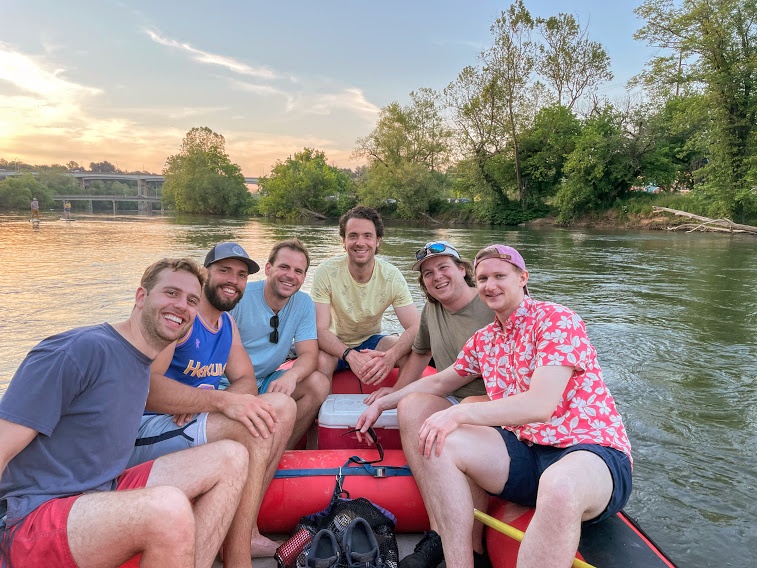
The raft noses off the bank at Hominy Creek, and the French Broad gives a slow push, like a friend guiding you into a crowded room. The river is unhurried here, curling past cottonwoods and sycamores, ferrying the day’s heat downstream. Turtles claim sun-warmed logs. A great blue heron lifts off with a disgruntled croak, then escorts you for a bend. Ahead, Asheville’s skyline peeks over the treeline and the scent of malt wafts on the breeze—hops and river, the city and its wild edge stitched together.
This is Asheville’s most easygoing odyssey: a brewery hop by raft. On the Floating Bar Crawl Tour, you’ll float a mellow stretch of the French Broad, stepping off at riverside stops like Wrong Way Cabins and Hi-Wire Brewery before ending near New Belgium’s riverside campus. It’s four hours of current-assisted ambling and clinking pints, guided by local river folk who keep the cooler iced, the pace relaxed, and the mood dialed to summer-camp-for-grownups. If you’re looking for a spirited, low-stress way to see the river that shaped this city, this is it. Bookings run through Cedar Rock Adventures—learn more and reserve via the Floating Bar Crawl Tour page.
The French Broad is famously ancient, older than the mountains it threads. Long before breweries lined its banks, Cherokee travelers knew these waters; traders and settlers followed the flow north (yes, north) through the Blue Ridge and into Tennessee. Its name—“French Broad”—distinguished this wide river from the “English” Broad River to the south during colonial days. Today it’s central to Asheville’s identity, a ribbon linking parks, the River Arts District, and an outsized craft beer scene that put this small city on the map.
From the put-in at Hominy Creek River Park, the day starts with a gear talk and an ice-clinked cooler inventory. The guides handle the rowing and navigation; you ride the rhythm, hop out at bankside stops, and let the afternoon roll. The route covers roughly 3.5–4 river miles in about four hours, depending on group pace and a few civilized pauses for pints. The river here is Class I—no rapids, no drama—just a steady glide. You’ll step ashore at spots like Wrong Way Cabins’ cozy lodge bar, then drift onward toward Hi-Wire’s riverside outpost for another round. The finale unfolds across from New Belgium Brewing, where lawn chairs, food trucks, and golden-hour light make it hard to say goodbye.
In the aftermath of 2024’s Hurricane Helene, parts of this corridor carry fresh scars. You’ll float past stretches where high water rearranged shorelines and shuttered beloved haunts along the way. It’s a pointed reminder that rivers are living things—rebuilding, shifting, insisting on their own timetable. Local brewers and river groups rallied in the flood’s wake, and your presence—buying local, packing out, treading lightly—helps that recovery continue. If you want to connect this experience with local stewardship, the Floating Bar Crawl Tour page links out to community partners and resources.
Culture here flows like the river itself. Asheville’s creative streak shows up in mural-splashed warehouses and patio strings of the River Arts District. Breweries are neighborhood living rooms, and the scene prides itself on flavor and community in equal measure. On the raft, conversations spool out: a trout fisherman’s tale, a guide’s quiet inventory of birdsong, the group’s running debate about hazy versus crisp. The French Broad plays moderator, nudging everyone forward, carrying stories downstream.
Practically speaking, this is as simple as adventures get. Park at New Belgium, rideshare to the put-in at Hominy Creek, and you’ll float back to your car. Wear river-friendly shoes and quick-dry clothing. Bring an ID, a card for drinks, and your preferred cans (the guides supply a cooler and ice). Expect a few short climbs getting in and out of the raft and up the banks—nothing technical, just enough to make your first sip taste earned.
Wildlife has a front-row seat to the action. Herons stalk the shallows with monk-like patience. Kingfishers heckle from branch to branch. If you’re lucky, you might glimpse a river otter tumbling through the riffles like a kid at recess. Even with a beer in hand, it’s hard not to feel the river’s rhythm tug at your senses. It’s the tour’s secret sauce: you come for the breweries, but the French Broad steals the show, setting an easy cadence and reminding you to slow down.
Safety here is simple and commonsense. It’s a guided trip with mellow water, and the team is used to balancing celebration with river etiquette. Keep glass off the boat and the banks; cans only. Hydrate between stops. And remember: this is the kind of day where the best planning is light-touch. Book your spot, invite a few friends, and let the river do what it does best—carry you.
For curious types and trip planners, here’s the gist: this is a four-hour, low-effort float with three convenient brewery stops, a soft landing at New Belgium, and the built-in bonus of Asheville’s outdoors-meets-arts vibe. It’s ideal for groups, celebrations, or anyone who wants to meet the French Broad without donning a helmet or shouldering a paddle all day. Ready to drift? Dive into details and book at the French Broad brewery float tour page, and let the river set your schedule.