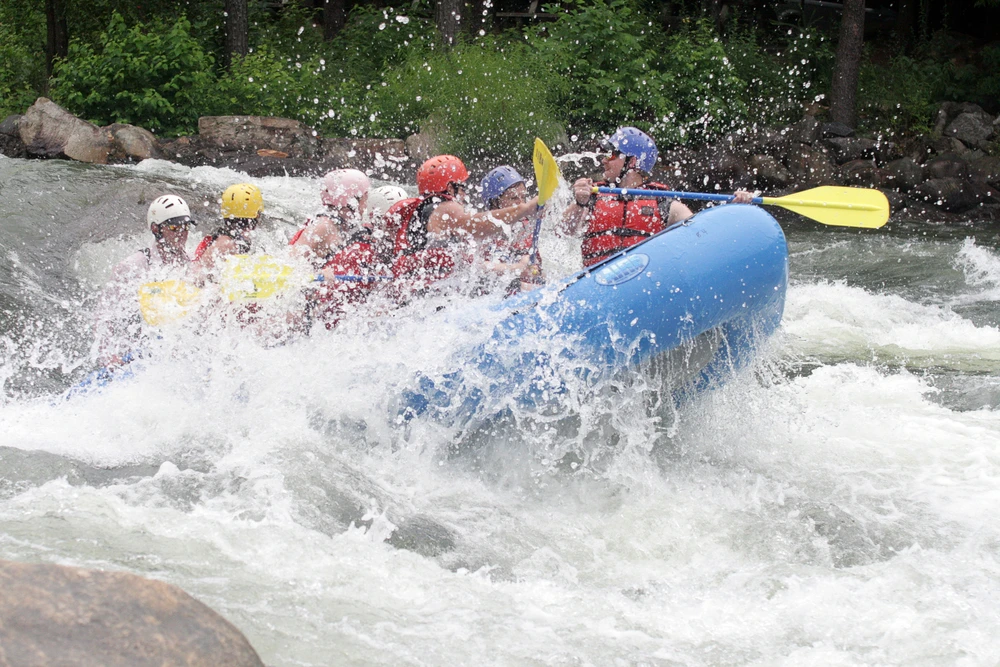
The morning light slices into the canyon in thin, bright ribbons. Pine needles glitter where they catch it; the river beneath seems darker for the contrast, a moving vein of glass and teeth. You can hear the Middle Ocoee before you see it — a distant roar that grows into the buzz of water hitting rock, then the crisp punctuation of a rapid. Guides in neon spraysuits move with calm purpose, checking straps and pointing downriver where the current will take you. When your raft launches, that first drop feels less like falling and more like joining a conversation with the river: the Ocoee daring you, the boat answering back.
The Middle Ocoee run is short on distance but long on decision points — three hours on the water, and each rapid asks for attention. This stretch is famous for being deliberate: the river was engineered by TVA in the 20th century with dam releases that, when open, turn otherwise tame water into a textbook of hydraulics. That makes it a training ground for rafters and a place for outfitters to push boundaries safely. OAR, the outfitter on many commercial trips here, highlights that their guides complete EMR certifications and Swiftwater Rescue courses; that emphasis on training is why companies can run guests through more dynamic lines than on many other commercial runs.
Geology and history braid through the landscape. The Ocoee carves a narrow gorge through the unglaciated Appalachian Plateau; stacked layers of sandstone and shale show how time pressed and folded this land. The river valley also carries human history — Cherokee footpaths once traced these hollows, and later the area became a hub of copper mining and small mill towns. The 1996 Atlanta Olympics left a modern imprint: the Ocoee hosted the Olympic canoe and kayak slalom events, an international affirmation of the river’s world-class whitewater. Today small towns like Copperhill and Ducktown wear that industrial past and the outdoor present side by side.
On the water, the experience is immediate. Rapids in the Middle run are short, punchy, and technical: boils that can pin a boat, waves that will test your timing. Guides call strokes in tight, efficient commands. If you’ve paddled before, you’ll be surprised at how fast lines move here; if this is your first real run, expect an adrenaline calibration — loud, immediate, and perfectly coached. Between rapids the river becomes conversational again: eddies that let the boat rest, cliffs where trees lean in and scrub the sky, and riffles where trout dart in the shallows. The gorge does a lot of the storytelling for you — every bend reveals another facet of the Ocoee’s personality.
Why come for the Middle Ocoee? It’s the combination of accessibility, engineering, and drama. Commercial runs condense high-quality whitewater into a half-day experience that still feels like stepping into something remote. The cost is modest (check current pricing; trips listed from about $54), the time commitment reasonable (this outfit’s trip runs roughly three hours from gear-up to final float-out), and the infrastructure around the river means you can pair a run with a long weekend in Chattanooga or a night in a cabin by the gorge.
Practical considerations: the run is best for people comfortable with quick bursts of exertion and not afraid of wet, noisy environments. Guides handle steering and safety but expect to paddle hard and to hold on through drops. Outfitters will provide PFDs and helmets; bring quick-dry clothing, river shoes with good grip, and a lightweight waterproof layer if the morning is cool. Expect limited cell service in the canyon. Weather matters: spring releases can be powerful and chilly; summer releases often bring warmer water but more crowds.
Safety and stewardship sit beside the thrill. The Middle Ocoee is managed through a mix of TVA infrastructure and federal and state recreational planning, so operators follow strict rules about timing and shore access. Leave-no-trace applies even where the river feels built for adventure: pack out all trash, avoid disturbing shoreline vegetation, and follow guide instructions for swim and rescue practice. If you want a little local flavor afterward, stop in Copperhill for barbecue or drive out to Chattanooga for breweries, riverfront parks, and museums — the transition from gorge to city feels like switching between two very different rhythms.
For travelers making the trip: mornings are quieter and cooler; late summer releases make for warm swims; reservations matter, especially on holiday weekends; and an experienced guide makes the difference between a memorable run and an awkward, soggy day. If you’ve ever wanted whitewater that feels big in a tight package, where every rapid has a name and a consequence, the Middle Ocoee gives it to you in a focused, accessible dose. The river asks for your attention; it pays you back with a few hours of pure, electric motion and a canyon that keeps its stories close to the current.