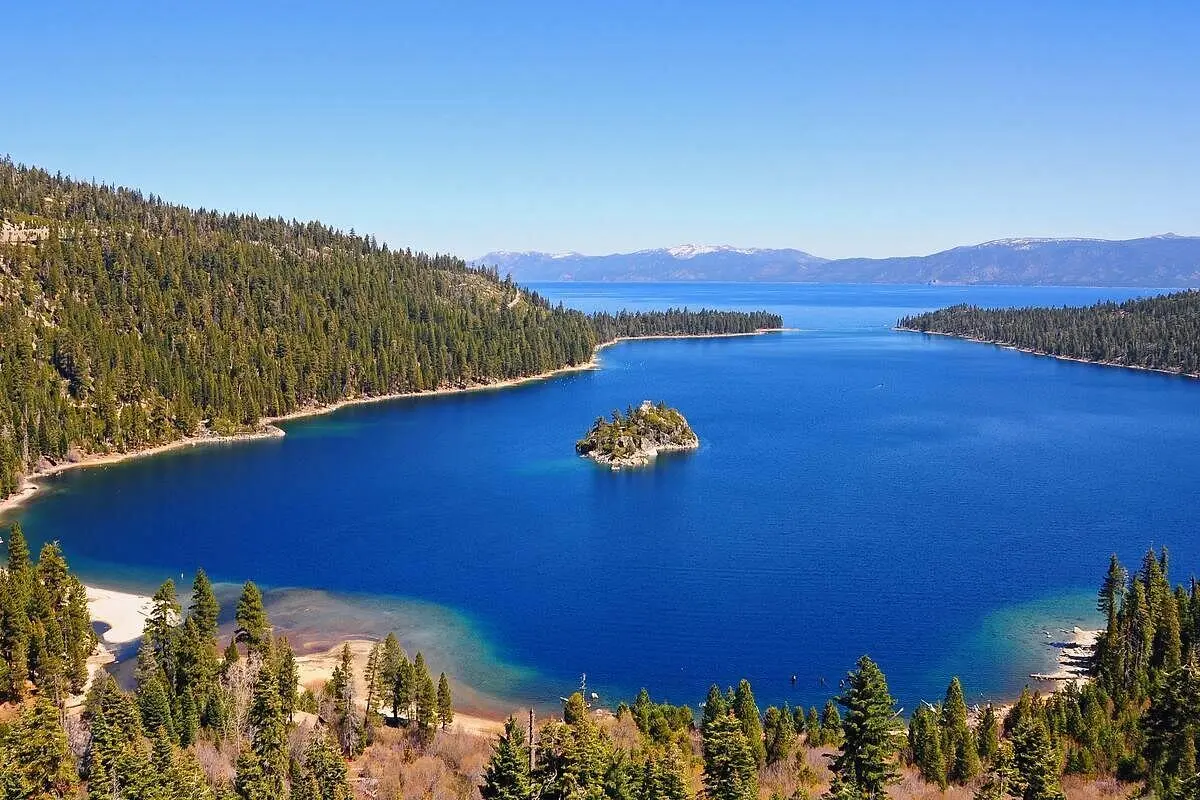
The trail drops away beneath your boots and the world rearranges itself—pine trunks crowding in, granite blushing orange where the sun finds it, and then, as if a curtain is pulled back, Emerald Bay opens: an improbably blue bowl cut into the western shore of Lake Tahoe. It’s a sight that steadies your breath and quickens your pace. You descend switchbacks toward Vikingsholm, the 1929 Scandinavian-style stone mansion sitting like an old sentinel against the water, and the lake—cold, glinting, and vast—seems to dare you to come closer.
Emerald Bay is all about edges: the edge of forest and water, of history and wilderness, of leisurely boat afternoons and sharply focused hikes. The most visceral way to know it is on foot and by water. Hike the steep Vikingsholm Trail—roughly a mile each way with about 500 feet of elevation change—to tour the remarkable stone house and its handcrafted details, then continue along the Rubicon Shoreline for long views and pocket beaches. Paddle or take a short boat ride to Fannette Island, the tiny outcrop crowned by a stone tea-house that stands like a punctuation mark in the bay. Combine those activities and you have a day that hits history, geology, and pure alpine lake play.
Geology here reads like a textbook written in granite and ice. Lake Tahoe occupies a fault-bounded basin carved and deepened by Pleistocene glaciers; the steep granite slopes that plunge into the water are the fingerprints of glacial scour. The pines and cedars that frame the trails are survivors of a Mediterranean mountain climate—dry summers and snowy winters—that shapes everything from trail conditions to the species of wildflowers you’ll see at the margins.
Culturally, Emerald Bay holds layers. Long before Vikingsholm, Washo people lived along Tahoe’s shores, using the lake seasonally for fish and travel. The name Vikingsholm only arrived with 20th-century wealth and one remarkable woman, Lora Josephine Knight, who built the lakeside house in 1929 as a summer home inspired by Scandinavian architecture. Today the house is a vivid reminder of how styles, resources, and human ambition have mixed with Tahoe’s raw landscape.
If you’re planning a visit, practical choices shape the day: start early for parking and light, bring shoes that can handle granite slabs and rooty singletrack, and consider a combo of hiking and paddling for the most complete experience. Recommended outings cluster into reliable options:
-
Vikingsholm Trail: A steep, well-maintained trail of roughly 1 mile each way with about 500 feet of elevation change; expect packed dirt, rock steps and switchbacks. The descent is harder on the knees on the return, so trekking poles are useful.
-
Rubicon Shoreline Trail: Walkable coastal trail with variable length depending on how far you go—short outings of 2–4 miles or longer stretches toward DL Bliss State Park if you’re feeling ambitious. The trail alternates granite outcrops, shaded groves, and small beaches.
-
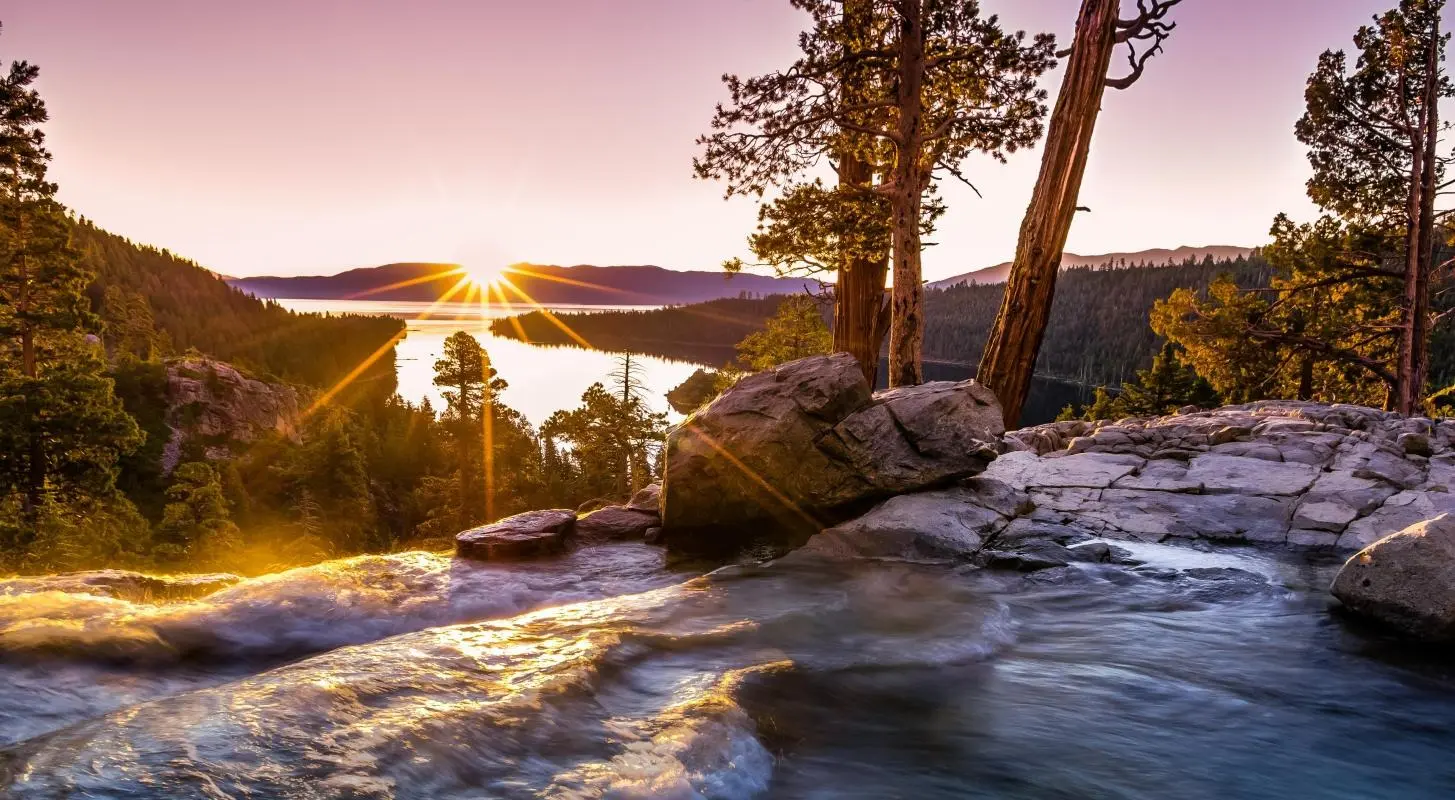
Eagle Falls to Eagle Lake: A shorter option close by—about 2 miles roundtrip with roughly 500 feet of gain—this route delivers a classic mountain-lake payoff and powerful waterfall views.
-
Boat or kayak to Fannette Island: The only island in Lake Tahoe, with a small stone tea-house; bring a dry bag and allow time to explore the tiny shoreline.
Practical packing and pacing decisions matter. Water depth drops suddenly off the beaches; the lake is astonishingly cold even in summer, and currents can surprise swimmers. If camping, note that Emerald Bay Campground runs seasonally and fills up fast—book in advance. Cell service is spotty, which is part of the point, but also reason to carry a physical map or download offline directions.
Timing is everything. Morning light through the pines gives you softer photos and cooler hiking; late afternoon sends the granite and lake into warmer tones but also can bring more visitors. For solitude, aim for shoulder-season weekdays in late spring or early fall.
Safety and etiquette are straightforward but crucial: pack out what you pack in, keep a respectful distance from wildlife (black bears and deer are present), and stick to designated trails to protect fragile soil and root systems. If you bring a kayak, be mindful of boat traffic near the public launch and remember that wind can push you quickly away from the shoreline.
Emerald Bay rewards layered attention. There’s the immediate sensory pleasure—the crunch of pine duff, the slap of lake water against rock, the cool scent of resin—and then there’s the slower accumulation of details: the mason’s seam on Vikingsholm, the pale bands of glaciated granite, the list of bird species that ride the thermals above the bay. For travelers who like to mix a disciplined itinerary with room for small discoveries—an unexpected beach, an isolated viewpoint, a close-up of a peregrine falcon—Emerald Bay delivers.
For a day that feels complete: hike Vikingsholm early, tour the historic mansion, lunch on the shore, paddle to Fannette Island, then finish with a late-afternoon stroll on the Rubicon trail. That sequence gives a bit of everything—history, shoreline hiking, and the intimate perspective of being on the water.
In short: Emerald Bay is a compressed Tahoe experience—wild and domestic in equal measure. It asks you to move through different modes—on foot, on water, standing still to look—and rewards the traveler who comes prepared to engage with the landscape simply and directly.