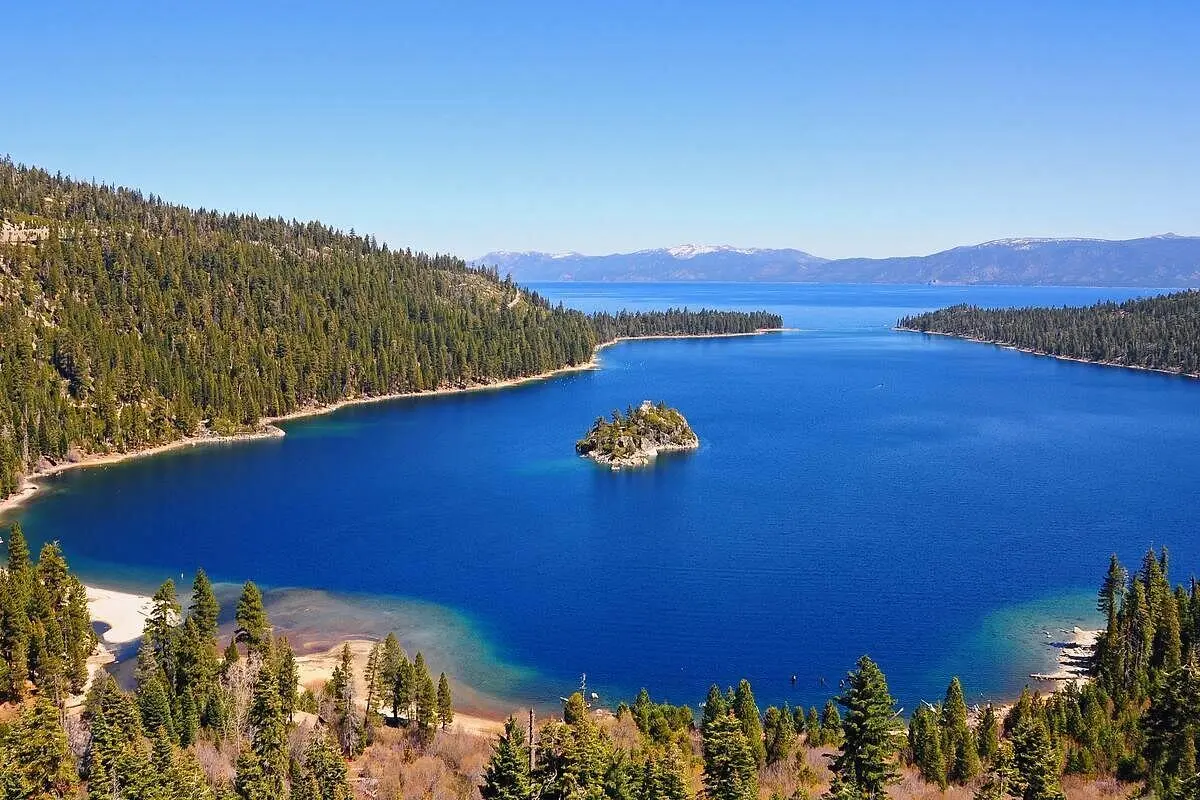
The first time you round the last conifered shoulder of the highway and Emerald Bay unfolds beneath you, the word that comes first is precise: blue. Not a flat postcard blue but a layered, glacial blue that deepens to teal where the bay narrows and light presses through clear water. The descent from the rim is a careful, fragrant lowering — pine and granite, cool air that seems to hold its temperature like a promise. At the bottom, the shore feels at once domestic and wild: a tiny Scandinavian mansion hugging the water (Vikingsholm), a single island with a ruinous teahouse, and trails that thread granite and shore like a hand through a sleeve.
Emerald Bay is a place where geology and human stories meet in well-defined layers. The bowl that holds the bay was carved by ice during the last glaciation; the cliffs and plunge pools are written in the language of ice and time. That same amphitheater has shaped human use for centuries — from the Washoe people who moved seasonally across Tahoe’s shores to early 20th-century patrons of the Sierra who built summer houses and trails to access its clearest water. Lora Knight’s Vikingsholm, finished in 1929, is a deliberate cultural flourish: a 38-room, finely detailed home built in a Scandinavian style, its stone foundation and intricate woodwork stepping into the landscape like something that belonged there all along.
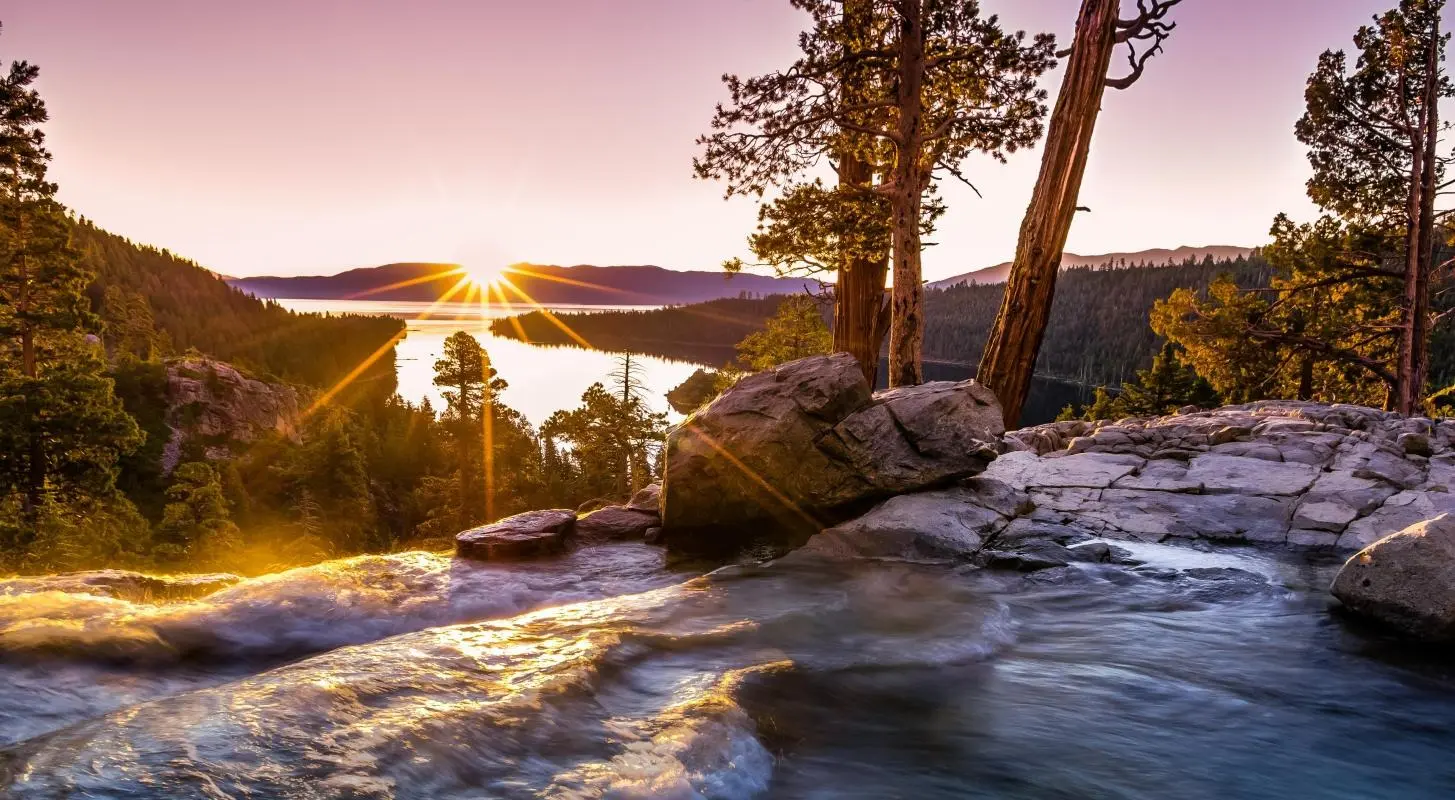
The bay’s geometry encourages play on multiple fronts. On land, the Rubicon and Eagle Falls trails give you two very different engagements with the place. The Rubicon is a shoreline walk that rewards patience: roughly 6.5 miles one way between D.L. Bliss and Emerald Bay, it traces pebble beaches, granite slabs, and lookout points where the water is a constant, companion-grade presence. It’s the slow, shore-parsing route for people who want to hike and keep one eye on the water for light, birdlife, or a sudden pull to wade. Eagle Falls is sharper and quicker: an accessible 1.7–2-mile round-trip scramble that drops about 400 feet to a sapphire lake cradled beneath waterfalls. It’s the kind of trail that punctuates the day with sound — the immediate percussion of falling water — and gives you a vantage to consider the larger bowl of the Sierra.
Water turns the place into a different animal. Rentals and guided boat charters converge on the bay’s focal point, Fannette Island, where you can land and trace the ruins of the tiny teahouse Lora Knight built for private afternoons. A paddle is easy to arrange: the crossing to the island is generally a half-mile or less from the main launch at Vikingsholm, and with typical summer winds the paddle is straightforward for anyone comfortable in a stable recreational kayak. Boat charters give you access without the exertion — or permit you to plan your own approach and timing for sunrise or late-afternoon light when the bay's blue becomes nearly liquid glass.
Why go? Emerald Bay condenses many Sierra experiences into a few shoreline miles: accessible hiking, distinct history, crystalline water that begs for a dip, and easy paddling with dramatic granite on the periphery. It’s also compact enough that a short stay can feel complete — an hour in the Vikingsholm gardens and museum, a two-hour paddle to the island, an afternoon on the Rubicon — yet varied enough that you won’t feel like you’ve ticked a box and left a hollow.
Practical edge: timing and logistics matter here. Parking at the main overlooks is limited — come early (before 9 a.m.) in summer or push for late afternoon shoulder times to avoid the crush. The Vikingsholm trail is steep: it’s about 0.7–1 mile down to the shore with roughly 300–400 feet of elevation change, which means the return climb can feel harder than you expect. Hydration and stance matter on the rubbly shoreline; footwear that grips both granite and sand will make the difference between a scenic wander and a careful, slowed shuffle.
Leave-no-trace is not optional in Emerald Bay. The clarity of the water and the vulnerability of shoreline ecosystems means your impact is visible and cumulative. If you’re paddling, be mindful of wakes and keep a respectful distance from wildlife; if you’re hiking, pack out what you bring in and stick to designated trails to protect fragile soils and meadows.
For the photographer and the contemplative alike, light is the currency here. Early mornings often yield still water and soft haze that turns the far headlands into indigo silhouettes; late afternoons bring angled light that chisels the granite and makes the teahouse on Fannette Island pop. If you want solitude, choose a weekday shoulder season. And if you want to feel the place fully, combine a short hike to a viewpoint in the morning with a paddle that afternoon: land and water give you a broader, more tactile intelligence of the bay.
Emerald Bay is an approachable, layered adventure — one that rewards both the person who wants a quiet lakeside walk and the one who wants to spend the day tracing the shoreline by kayak. It’s a compact wilderness with room for history, geology, and a clear invitation to slow your pace and match the lake’s steady, patient rhythm.
Practical snapshot (for planning): expect well-marked trails with mixed terrain — some steep granite steps, pebble beaches, and forested switchbacks. Aim to bring layered clothing (Sierra mornings can be cool even in summer), sturdy trail shoes, and a daypack with water and sunscreen. Rental outfitters in nearby towns handle kayaks and boat charters, and a ranger station or visitor center can confirm current trail and water conditions before you push off or descend.