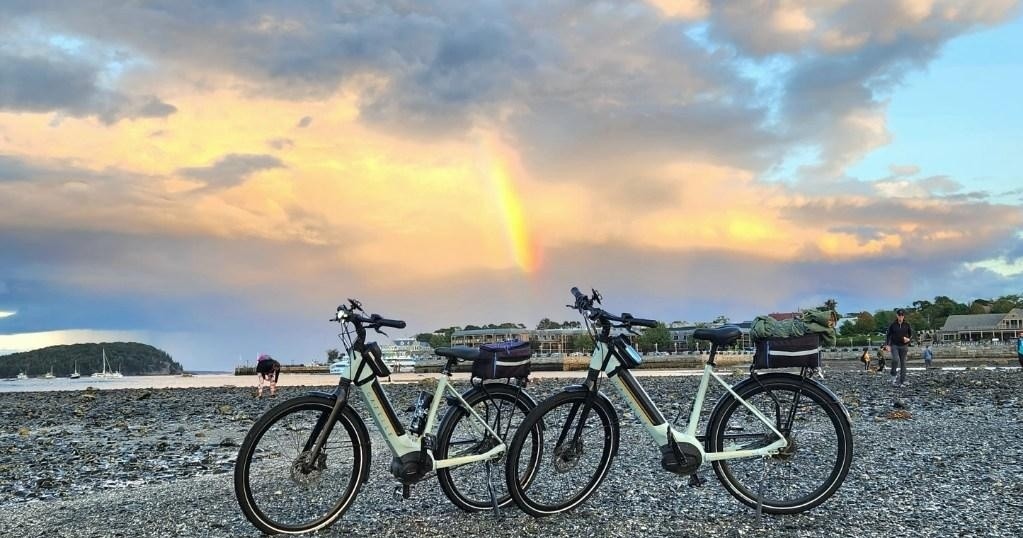
Gliding the Granite: A Full-Day Ebike Roll Through Acadia’s Carriage Roads

Gliding the Granite: A Full-Day Ebike Roll Through Acadia’s Carriage Roads

A full-day, pedal-assist spin through Acadia’s historic Carriage Roads—bridges, ponds, and granite views without the grind.

Continue Reading

The day starts with the scent of spruce and the soft grit of crushed stone beneath your tires. From the Hulls Cove Visitor Center, the Carriage Roads arc away like quiet invitations—curving between mossy boulders, over arched granite bridges, slipping past ponds that hold the sky in a calm grip. The park wakes gently. A loon calls from somewhere near Witch Hole Pond. The breeze nudges the trees and the forest answers with a hush. Your Class 1 pedal-assist ebike hums its approval, nudging you forward as Acadia dares you to keep exploring.

Renting an ebike inside the park is more than convenience—it’s a door swung open. With a full-day ebike rental starting inside Acadia, you’re riding directly onto the Carriage Roads, avoiding the parking scrums and busy pavement of summer. These historic gravel roads—meticulously placed by John D. Rockefeller, Jr. between 1913 and 1940—were built to keep cars out and scenery in. Their surface is a fine-grained mosaic of local stone, designed to shed water and arc smoothly around the terrain; the famed granite bridges rise like crownwork where brooks thread through the hills. Pedal-assist turns rolling hills into momentum rather than toil, letting more riders—newcomers and veterans alike—stack a handful of classic loops into one genuinely full day.

Set out early and let the landscape set the rhythm. From Hulls Cove, trace the Witch Hole Pond Loop for a gentle warmup: 3–4 miles of pond views, spurs through lichen-draped forest, and those first telltale glimpses of granite underfoot. The Carriage Roads are multi-use and well-signed; they ask for patience and a traditional trail etiquette made modern—yield to horses, announce with a bell, and ease your speed around blind turns. Your ebike’s assist whispers rather than commands, making climbs friendly but controlled. The road itself seems to approve, leaning into your line and guiding you onward.

With hours in your pocket, continue south toward Eagle Lake, the park’s broad, blue mirror. The six-mile loop around the shoreline is a study in coastal Maine geology: pink Cadillac Mountain granite shoulders the shore while glacially rounded boulders nap at the edge of the road. On calm days the reflection is a perfect double of spruce spikes and clean sky. Turn again and roll toward Jordan Pond, where the twin Bubbles rise like granite sentries. This is where the Carriage Roads reveal their engineering theater: the famed Cobblestone Bridge, the Waterfall Bridge at Hadlock Brook (best in spring’s runoff), and the handsome stone causeways that glide the road over inlets and streams. With the ebike’s range and assist settings, you can string these sights into an 18–25 mile sampler without feeling overextended.

Acadia’s Carriage Roads are a cultural artifact as much as a scenic ride. Rockefeller championed these routes to protect the experience of quiet travel; motor vehicles were out, horse-drawn carriages (and now bicycles) were in. That legacy is why only Class 1 pedal-assist bikes are allowed—no throttle, slower speeds, and a shared understanding that the forest sets the tempo. Your rental includes a helmet with MIPS protection, a mirror, and a bell—the basics for mixed-use riding on firm gravel. Age and height minimums (14 years old, 5 feet tall) keep things predictable. Maximum rider weight is 280 pounds, with a note that battery capacity tapers above 250.

Plan your day like a local: start early, ride the loops counterclockwise to keep grade manageable, and save a pause for Jordan Pond House, where popovers steam and butter melts in real time. If you prefer seclusion, aim for the Northern Carriage Roads toward Hadlock Ponds and the Parade route near Brown Mountain Gatehouse—less traffic, more forested calm. The park’s rock ribs—baked into shape 420 million years ago and carved by ice—give the roads a cadence: climb, contour, glide. The terrain never bullies; it nudges, invites, and occasionally tests you with a short rise to a view.

Midday, the sun presses down and the roadside ferns nod. This is where the ebike comes into its own. Dial assist to eco mode on flats, kick it up to standard on hills, and watch your range hold steady. A full day means time to stop at bridges, read the plaques, and listen to the layered soundtrack: horse hooves on stone, a bicycle bell ringing the all-clear, brook water tumbling like it can’t wait to meet the sea. When the light tilts golden, the forest relaxes. You’ll feel it in the tempo of your own ride—steady, content, still curious about the next bend.

The return is as easy as the start. This premium Class 1 ebike rental inside Acadia begins and ends at Hulls Cove Visitor Center with delivery and pickup included, so there’s no extra shuttle, no bike rack to wrangle. Summer start times—8:00, 8:30, 9:00, and 9:30 a.m.—get you ahead of heat and crowds. And the no-penalty late return policy reflects a simple truth: it’s hard to leave when the roads keep urging you onward.

For first-timers, worry less about fitness and more about time. A well-paced day on an ebike can comfortably cover 15–30 miles, including photo stops and a long lunch by the water. Gravel is predictable and wide, but it’s still gravel: wear secure footwear, keep two hands on the bars through the marbles, and be kind on the brakes when descending. The Carriage Roads reward attention—with textures, views, and that subtle pleasure of good design under your wheels. If you’re curious about classic Maine scenery without the lung-busting climbs, this is the ride.

Ready to roll? Book your full-day ebike rental inside Acadia National Park and let the park set the pace. The rocks hold their ground; the roads do their slow dance. You just glide through, part of the rhythm for a day.

Duration4–6 hours
Plan your visit

Trail Wisdom

Mind the Multi‑Use Etiquette

Yield to horses and pedestrians, slow to a walking pace at blind curves, and use your bell before passing—these roads are shared and often busy.

Manage Your Battery

Keep assist in eco on flats and bump to standard on climbs to preserve range for a 20–30 mile day.

Gravel Is Still Gravel

The surface is well-packed but can be marbly; keep both hands on the bars and feather brakes on descents.

Start Early, Ride Smart

Take the 8–9 a.m. start times to beat heat and crowds; ride loops counterclockwise for steadier grades.

Local Knowledge

Hidden Gems

  • Witch Hole Pond Loop in the early morning for wildlife and calm water reflections
  • Waterfall Bridge at Hadlock Brook after spring rain or snowmelt

Wildlife

Common loon, White-tailed deer

Conservation Note

Stay on designated Carriage Roads to protect fragile vegetation and shoreline habitats; announce your approach to reduce wildlife disturbance and user conflicts.

Between 1913 and 1940, John D. Rockefeller, Jr. funded and oversaw the construction of 45 miles of Carriage Roads and 16 granite bridges to preserve a car-free, scenic travel experience.

Seasonal Guide

spring

Best for:Waterfall Bridge flow, Cool temperatures
Challenges:Wet gravel, Changeable weather

Expect cool mornings, budding forest, and lively streams. Pack a light shell; roads can be damp and slick after rain.

summer

Best for:Long daylight, Family rides
Challenges:Crowds, Heat and humidity

Arrive early to avoid congestion and midday heat. Afternoon sea breezes help, but hydration is key.

fall

Best for:Foliage views, Crisp riding temps
Challenges:Leaf litter on corners, Popular weekends

Golden light and color-splashed hillsides make this prime time. Watch for slick leaves in shaded turns.

winter

Best for:Quiet scenery, Snowy solitude (roads may be groomed for skiing)
Challenges:Limited rentals, Icy surfaces

Ebike rentals may pause; check ahead. Carriage Roads can be snow-covered and are often used for Nordic skiing.

Photographer's Notes

Arrive at first light for glassy pond reflections at Eagle Lake and Witch Hole. Use a polarizer to cut glare on water and bring a short telephoto for compressing granite bridges against foliage. Shoot low for lead lines along the gravel curve, and bracket exposures in dappled forest. Late-day backlight can rim spruce needles—expose for highlights and let the shadows fall.

What to Bring

Lightweight Rain Shell

Essential

Coastal weather shifts quickly; a compact shell keeps you dry and blocks wind on open causeways.

2–3 Liters of Water (Hydration Pack or Bottles)

Essential

Staying hydrated is essential on long, rolling rides with limited refill points.

○

Cycling Gloves

Gloves improve grip on gravel descents and add warmth on cool mornings.

○

Paper Map or Offline Map Download

Cell signal can be spotty; a map helps connect loops like Eagle Lake, Witch Hole, and Jordan Pond.

Common Questions

Are ebikes allowed on Acadia’s Carriage Roads?

Yes—Class 1 pedal-assist ebikes are allowed. Throttle-enabled ebikes are not permitted on the Carriage Roads.

How far can I ride on a full-day rental?

Most riders comfortably cover 15–30 miles with stops, linking loops like Witch Hole, Eagle Lake, and Jordan Pond.

Do I need a park pass?

Yes. A valid Acadia National Park vehicle or annual pass is required for parking at Hulls Cove Visitor Center.

What’s the minimum age or size for riders?

Riders must be at least 14 years old, 5 feet (152 cm) tall, and under 280 lbs. Battery capacity may be reduced for riders over 250 lbs.

What happens if it rains?

Rides run rain or shine. Pack a light shell and ride carefully—wet gravel can be slick, especially on corners and bridges.

Where do I pick up and return the ebike?

Pickup and drop-off are at Hulls Cove Visitor Center inside the park. Delivery, pickup, and a no-penalty late return policy are included.

What to Pack

Light rain shell: coastal weather shifts quickly; 2–3L of water: limited refill spots on the Carriage Roads; Sun protection: hat, sunscreen, and sunglasses for open causeways; Snacks or picnic: fuel up at scenic pullouts without leaving the park.

Did You Know

Acadia’s Carriage Roads include 45 miles of crushed-stone lanes and 16 hand-built granite bridges, funded by John D. Rockefeller, Jr., many featuring unique masonry and carved blocks that match the surrounding bedrock.

Quick Travel Tips

Book an early start time to beat crowds and heat; Download an offline Carriage Roads map—cell service is spotty; Bring your park pass to park at Hulls Cove; Use eco mode on flats to preserve battery for the afternoon.

Local Flavor

Refuel at Jordan Pond House for classic popovers with jam and tea overlooking the Bubbles. Back in Bar Harbor, cap the ride with a lobster roll at Side Street Cafe or wood-fired pies at Blaze, then sample local pours at Atlantic Brewing Company. If you have time, stroll the Shore Path for sunset and salt air.

Logistics Snapshot

Closest airport: Hancock County–Bar Harbor (BHB, 12 mi) or Bangor (BGR, 50 mi). Trailhead: Start/return at Hulls Cove Visitor Center. Drive time from Bar Harbor: ~10 minutes. Cell service: Spotty on Carriage Roads; better near town. Permits: Acadia vehicle or annual pass required for parking; Class 1 ebikes only on Carriage Roads.

Sustainability Note

Ride only on designated Carriage Roads, yield and announce to reduce conflicts, and keep a respectful distance from wildlife. Pack out all trash; these historic roads and bridges are part of Acadia’s cultural resources.

Topics