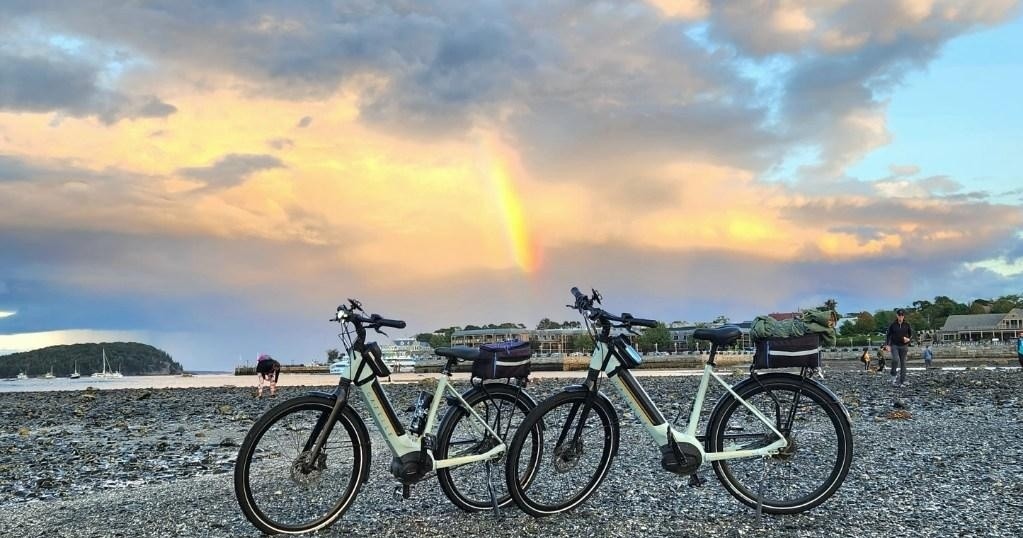
The road eases along the pink granite like a ribbon laid by the tide, and the Atlantic keeps pace on your right, shouldering the cliffs, daring you to lean into the wind. Spruce and fir crowd the bends, their resin bright in the air. Granite ledges catch early light and throw it back across the water as if the coast itself were awake and talking. A gull rides the updraft near Otter Cliff. Waves muscle into Thunder Hole with a hollow boom, then withdraw as if reconsidering their bravado.
This is Acadia’s Park Loop Road—27 miles of coastline, forest, and granite domes—and the best way to get to know it is to let someone else do the driving. On The Scenic Escape, a three-hour private tour for up to seven people, you slide into a premium SUV with dual sunroofs and a local guide who knows where the fog lingers and where the views break open. Bottled water and snacks ride along; stories ride shotgun. It’s a sampler with substance, a quick immersion that orients you to one of America’s most compact yet varied national parks.
The loop swings past the headliners: Cadillac Mountain, Thunder Hole, Eagle Lake, the Wild Gardens of Acadia, and the ocean-facing ledges near Otter Point. Cadillac—at 1,530 feet the highest point on the U.S. Atlantic coast—lifts you above the firs, where the Porcupine Islands stitch a green quilt across Frenchman Bay. In the cooler months, Cadillac’s summit sometimes catches the first sunrise in the nation; any season, wind tugs at jacket zippers and makes you feel pleasantly small. Down at Thunder Hole, the sea performs on a schedule written by the moon. At mid-tide, swell and rock conspire to compress air and water into a percussive roar. On the quiet side of the loop, Eagle Lake lies still as glass, except when a breeze scribbles across its surface.
Acadia’s bones are granite, smoothed and muscled by ice during the last glaciation. You can see the glacier’s handwriting in striations across bedrock at pullouts and along the shore, and in the rounded summits that shed water in all directions. The coastline pairs this hard geology with unforgiving sea; together they’ve shaped a tough-limbed spruce-fir forest and a culture used to weather. Long before roads and carriage paths, the Wabanaki—the People of the Dawnland—fished, hunted, and gathered here. Later, artists and rusticators arrived, drawn by the collision of ocean light and mountain silhouettes. Philanthropists, including John D. Rockefeller, Jr., laced the interior with 45 miles of motor-free carriage roads—a conservation-minded gesture that still defines how visitors move through the park.
Your guide on The Scenic Escape is one of the area’s true local experts—deeply versed in the park’s ecology and human history—and the conversation moves with the road. You’ll learn why balsam fir scents the air so distinctly, how peregrine falcons reclaimed these granite faces, and which coves harbor seals on a slack tide. The vehicle’s intercom makes it easy to hear even when the wind kicks up. You’ll roll past the Wild Gardens of Acadia, a compact, volunteer-created microcosm of the park’s habitats, and—if time and traffic allow—step out to walk the short paths that browse through spruce bog, meadow, and marsh.
The pace is unhurried, but efficient. That rhythm matters in Acadia, where seasonal congestion can slow things to a crawl. With a private vehicle, you’re nimble enough to pivot for weather and crowds. Your guide keeps an eye on tides for Thunder Hole, haze for long views, and the pulse of the one-way sections of the loop. If Cadillac Mountain vehicle reservations are in effect (typically late spring through mid-fall), your guide will manage timing and provide alternatives when summit access is limited. Either way, there’s no shortage of vistas: ocean turning slate then cobalt, lichen stippling pink stone, and birches flashing white as they edge the road.
The Scenic Escape is also a primer for the rest of your stay. Use it as a compass session: identify the overlooks that call to you for sunset, note which trailheads look inviting, and tuck away intel on where to find popovers, lobster, and a good local beer afterward. Families appreciate the low-stress format; photographers appreciate not having to hunt for pullouts; first-time visitors appreciate being oriented by a human who lives and breathes this park. If you want to extend what you learn, tap into the same crew of local experts for deeper dives into Acadia’s quieter corners, or simply book the same The Scenic Escape experience again at a different time of day.
Practicalities are straightforward. Meet in Bar Harbor, Southwest Harbor, or Northeast Harbor; rides begin promptly and the three hours go quickly. The vehicle is comfortable and climate-controlled; bring layers, because the coast writes its own script, and Cadillac’s summit can steal degrees even in July. Sturdy-soled shoes are wise for the rock steps at overlooks. Your guide will point out safe places to wander and will keep an eye on slippery ledges after rain or surf. This is not a technical outing; it’s an orientation to the drama, color, and cadence of Acadia—delivered with a calm voice from the front seat and a windshield that’s all view.
By the time the loop closes, the park feels less like a maze of turnouts and more like an atlas of moods. The ocean nudges and insists. The lakes keep secrets. The granite holds heat from the sun and releases it after dusk. Acadia doesn’t just sit there—it converses. On The Scenic Escape, you get three well-spent hours listening in.