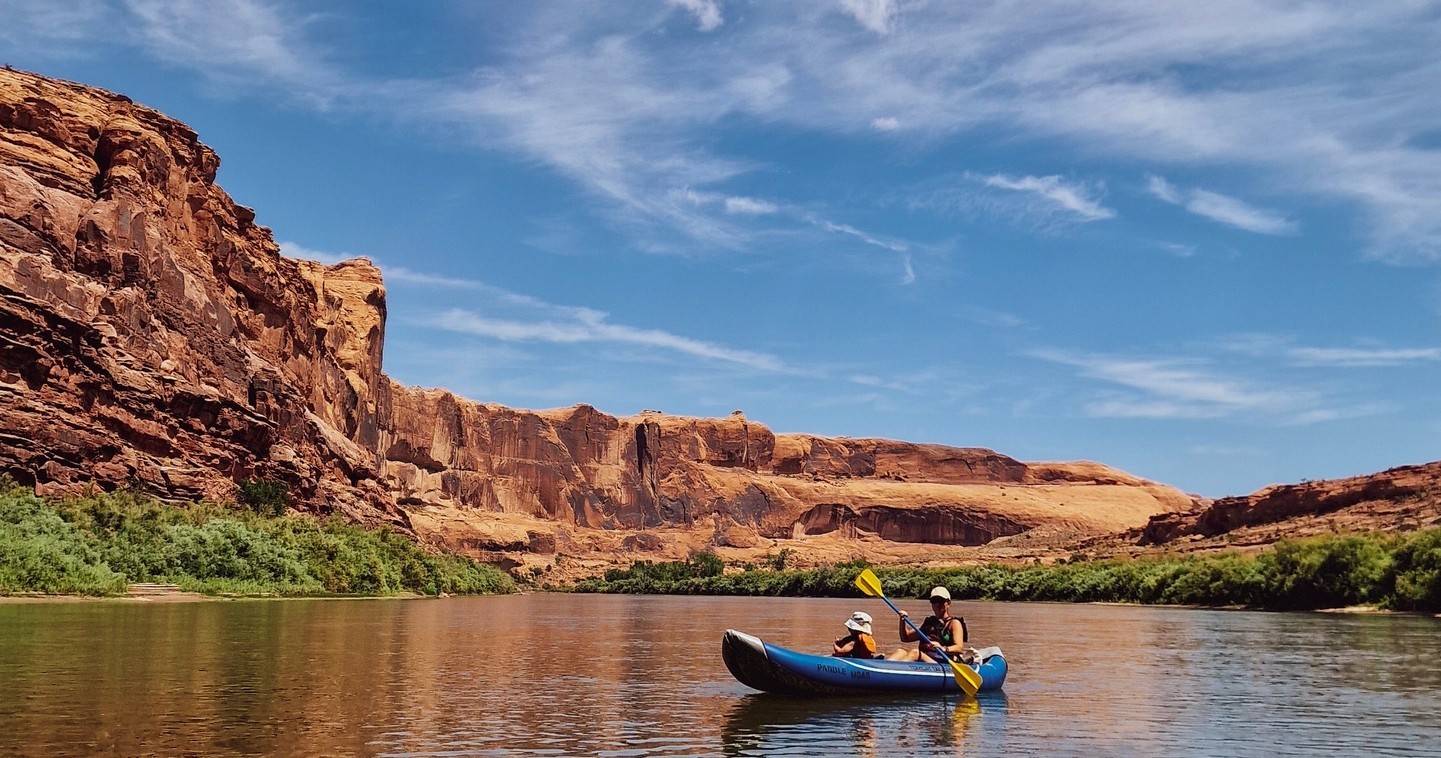
Go With the Flow: A Self-Guided Kayak Day on Moab’s Colorado River

Go With the Flow: A Self-Guided Kayak Day on Moab’s Colorado River

A self-guided paddle down the Colorado—no logistics, just you and the current.

Continue Reading

By 8 a.m., the canyon has already found its voice—swallows skimming the river, cottonwoods whispering along the bank, the current quietly insisting on downstream. At Lion’s Park, just two miles from Arches National Park, a shuttle van idles beside a rack of inflatable kayaks. This is the easy button for a Moab classic: a drop-off upriver along UT-128 and a mellow, meandering glide back to your car. No puzzling over take-outs. No car shuttles to wrangle. Just the Colorado River, doing what it does best—pulling you through a red-rock corridor that makes time feel slow and generous.

That’s the beauty of the Kayak Rental & Ride Package: the simplicity. Your boat, paddle, and PFD are included, plus a one-way ride upriver—anywhere up to 12 miles—before you set off on your self-guided float. The river takes the lead while you learn its mood: a gentle, steady push most days, rising to playful riffles when flows spike in spring. The boats are stable and forgiving, the shoreline never far, and the canyon walls—burnt umber and cinnamon—track your progress like sentinels.

From the first strokes, the landscape does the storytelling. La Sal Mountains stand snow-patched on the horizon, and the Entrada Sandstone seems to glow from within. Raven shadows ripple across the water. The current nudges you past sandy beaches and cattail thickets, past eddies that beckon like cul-de-sacs. On calm mornings, the river is slack-jawed and glassy. In the afternoon, a desert breeze might wake up and press a firm hand against your bow, asking if you’re paying attention. It’s a friendly test—this is moving water, not pond paddling—but for anyone with basic kayak experience, it’s a rewarding rhythm.

Moab’s river story is older than the town’s mining-era boomtown past, older than the first river runners who came here chasing whitewater lore. For thousands of years, ancestral peoples traveled and camped along this corridor, leaving behind quiet traces in sheltered alcoves. Today, you ride a corridor carved by persistence: sand-laden currents patiently grinding through rock, the canyon widening and deepening with each season. If the geology feels cinematic, it’s because it is—around nearly every bend, you get the long, slow reveal of another cliff face and another curtain of light.

Self-guided doesn’t mean you’re left guessing. The shuttle driver, a local who probably knows every mile marker on UT-128 by smell alone, will brief you on river levels and wind patterns, point out likely sandbars, and suggest a launch that matches the day’s pace. You’ll carry your own snacks and water, you’ll read the current for fun, and you’ll keep an eye out for the river’s moods—especially in spring, when snowmelt adds speed and the water stays cold. Helmets aren’t standard here for mellow flows, but PFDs are mandatory, and common sense is part of the adventure kit. The river will always tell you what it wants; your job is to listen.

As the miles slip by, canyon life plays out around you. Desert bighorn sheep skitter across talus fields like it’s easy. A great blue heron lifts off the shallows, its shadow briefly folding over your deck. Cottonwoods arch toward the channel and flicker silver-green, gossiping in the light. Every so often, a riffle unfurls—small wave trains that straighten your torso and wake your paddle blades. The current tests your edgework, dares you to read the tongues of smooth water and the lazy curls of eddies. This is not a white-knuckle run; it’s a conversation.

On shore, Moab’s outdoor culture hums along—the shared languages of rubber and rope. Climbers tap cams into crack systems up-canyon, mountain bikers weave the path that parallels the river, and road cyclists trace the shoulder under wing-like overhangs. After your paddle, downtown waits with burritos and local brews, the day’s dust turning to stories as the buttes pinken and the temperatures drop.

For planning, think of this trip as a 6–12 mile float depending on your drop-off—two to five hours at a relaxed pace under typical conditions. Early starts are gold in summer heat, while shoulder seasons offer crisp air and stable flows. Spring can be chilly on the water even when the sun feels warm—dress smart. Always check the day’s forecast and river level; the Colorado is a working river, and it likes to keep things interesting.

What makes this package stand out is the frictionless logistics. Your car stays at Lion’s Park, exactly where you’ll finish. You deflate the boats at the take-out and return them to the shop in town by 7 p.m. That’s it. For travelers who want flexibility and a self-reliant day without juggling two vehicles or guessing at river etiquette, it’s a clean, confidence-boosting setup.

If you’re collecting beta before you book, bookmark this local outfitter’s page for the Kayak Rental & Ride Package at kayak rental and shuttle in Moab. It’s also a useful hub for details on timing, inclusions, and seasonal notes. Thinking ahead about your route? You can study maps, but the best course often reveals itself boat-length by boat-length. Let the river set the tempo. Keep your paddle in the water. Listen to the canyon breathe.

When the pedestrian bridge comes back into view late in the day and the current rounds you toward shore, notice how the river has quietly done its work. The dust in your shoulders has shaken loose. Your rhythm has matched the water’s. The Colorado will keep moving, whether you’re here to witness it or not. But for a few hours, you got to be part of its plan.

Ready to float it yourself? Learn more and reserve your spot through this Moab kayak rental with shuttle, and give the river its say.

Duration2–5 hours
Plan your visit

Trail Wisdom

Start Early for Smooth Water

Morning hours are usually calmer with lighter winds—ideal for a mellow downstream glide and fewer crowds at the launch.

Read the Current, Not the Shore

Look for the V-shaped “tongues” of smooth water to line up your kayak and avoid shallow sandbars and snaggy eddies.

Dress for the Water, Not the Air

Spring water can be cold even on sunny days—quick-dry layers and a light shell beat cotton every time.

Mind the Afternoon Wind

Canyon breezes can build after lunch; plan turns and breaks in protected eddies so gusts don’t stall your progress.

Local Knowledge

Hidden Gems

  • Big Bend Recreation Area’s sandy beach for a mid-float snack stop
  • Grandstaff Canyon Trail (formerly Negro Bill Canyon) for a shaded hike to Morning Glory arch-span

Wildlife

Desert bighorn sheep, Great blue heron

Conservation Note

Stay off fragile cryptobiotic soil, use established launches, and pack out all trash. Riparian areas are critical habitat—land and re-launch only where durable surfaces exist.

Moab’s river corridor has been used for millennia by Indigenous peoples; the town later boomed during the 1950s uranium rush, while nearby Arches National Park was established as a national monument in 1929 and a park in 1971.

Seasonal Guide

spring

Best for:Cooler temperatures, Higher flows
Challenges:Cold water, Variable wind

Expect livelier current from snowmelt and crisp mornings. Dress warm, wear your PFD at all times, and keep snacks handy.

summer

Best for:Warm water, Family floats
Challenges:High heat, Afternoon gusts and monsoon storms

Launch early to beat the heat, bring extra water and electrolytes, and be off the river before afternoon storms build.

fall

Best for:Stable flows, Golden cottonwoods
Challenges:Cooler evenings, Shortening daylight

September–October brings ideal temps and fewer crowds; pack a light layer and keep an eye on sunset times.

winter

Best for:Quiet river miles, Crisp light
Challenges:Cold air and water, Limited outfitter schedules

Expect solitude and short days; dress in insulating layers and confirm shuttle availability well in advance.

Photographer's Notes

Golden hour pops on the Entrada cliffs—face upriver for warm side light and downriver for silhouettes. Use a circular polarizer to cut glare and reveal river texture, keep the sun hooded to avoid flare, and shoot low from the cockpit for leading lines across the water. Store camera gear in a dry bag and keep a microfiber cloth handy for spray.

What to Bring

Sun Hoody or UPF Shirt

Essential

Strong desert sun reflects off the water—lightweight UPF layers beat sunscreen alone.

Polarized Sunglasses with Retainer

Essential

Cuts surface glare to spot shallow bars and keeps your glasses safe if a breeze or splash hits.

Small Dry Bag (10–15L)

Essential

Protects snacks, phone, and an extra layer from spray and the occasional splashy riffle.

Closed-Toe Water Shoes or River Sandals

Essential

Secure footing for sandy launches and rocky shallows makes getting in and out far easier.

Common Questions

How difficult is this section of the Colorado River?

It’s typically a mellow, moving-water float with occasional Class I–II riffles depending on flow. Basic paddling experience and comfort on moving water are recommended.

What’s included in the rental and shuttle package?

Inflatable kayak(s), paddles, PFDs, and a one-way shuttle up to 12 miles upriver. You float back to Lion’s Park where your car is waiting.

Do I need prior kayaking experience?

A little helps. If you can paddle straight, make simple turns, and read gentle current, you’ll be set. Newer paddlers should choose shorter distances and calm weather windows.

What should I wear on the river?

Quick-dry layers, a sun hoody or UPF shirt, secure water shoes, and a brimmed hat. In spring and fall, add a light shell and avoid cotton.

Are there age restrictions?

This operator welcomes all ages for this mellow section. For very young children, confirm appropriate PFD sizing with the shop before booking.

When do I need to return the gear?

Boats must be returned to the downtown Moab shop by 7 p.m. after you take out at Lion’s Park and deflate your kayaks.

What to Pack

UPF sun hoody and hat for relentless desert sun; 2–3 liters of water with electrolytes to stay ahead of heat; small dry bag for snacks, phone, and a warm layer; secure water shoes for sandy and rocky entries.

Did You Know

Arches National Park, just up the road from Lion’s Park, contains over 2,000 documented natural stone arches—the highest concentration on Earth.

Quick Travel Tips

Park at Lion’s Park early to snag shade; check USGS river flows and wind forecasts before committing to distance; book your shuttle/rental in advance during spring and fall; plan your paddle to be off the water before afternoon storms in midsummer.

Local Flavor

Refuel at Moab Brewery for a cold Dead Horse Amber and a burger, or hit Quesadilla Mobilla for quick handheld fuel right downtown. For coffee and a quick bite, swing by Love Muffin Cafe in the morning. If you have energy left, stroll the Moab Arts & Recreation Center for local events or catch sunset from the pedestrian bridge.

Logistics Snapshot

Closest airport: Canyonlands Regional (CNY), 16 miles; Grand Junction (GJT) ~110 miles. Trailhead/launch hub: Lion’s Park at the Colorado River bridge on UT-128. Downtown Moab is ~2 miles away. Cell service is spotty in the canyon; download maps offline. No permits needed for day-use on this mellow section; some BLM sites may have small parking fees.

Sustainability Note

This desert river corridor is fragile—pack out all trash and food waste, avoid trampling cryptobiotic soil, and use existing launches and beaches to prevent erosion and vegetation damage.

Topics